Pick up a Ragdoll, and it may do something no other cat does: go limp in your arms, like a child’s toy, trusting you completely with its whole weight. That is where the breed gets its name — PetMD puts it plainly: the Ragdoll’s name comes from relaxing to the point of floppiness when being petted, cuddled, or held. It is a wonderful image, and a misleading one on its own. Some Ragdolls flop. Some do not. And a cat that goes limp in your arms still needs grooming, play, and measured food. This guide starts with ragdoll cat personality as the registries describe it, and with what varies from one Ragdoll to the next.
What a Ragdoll actually is
The Ragdoll is a large, affectionate, semi-longhaired cat with blue eyes — that is TICA’s opening description, and it covers the four things that define the breed at a glance. It is one of the largest breeds in the cat fancy: fully grown males weigh 15 to 20 pounds, and females 10 to 15 pounds, according to TICA. They are slow to mature: a Ragdoll may not reach full weight and size for four years, and full coat colour is not reached until about three years old.
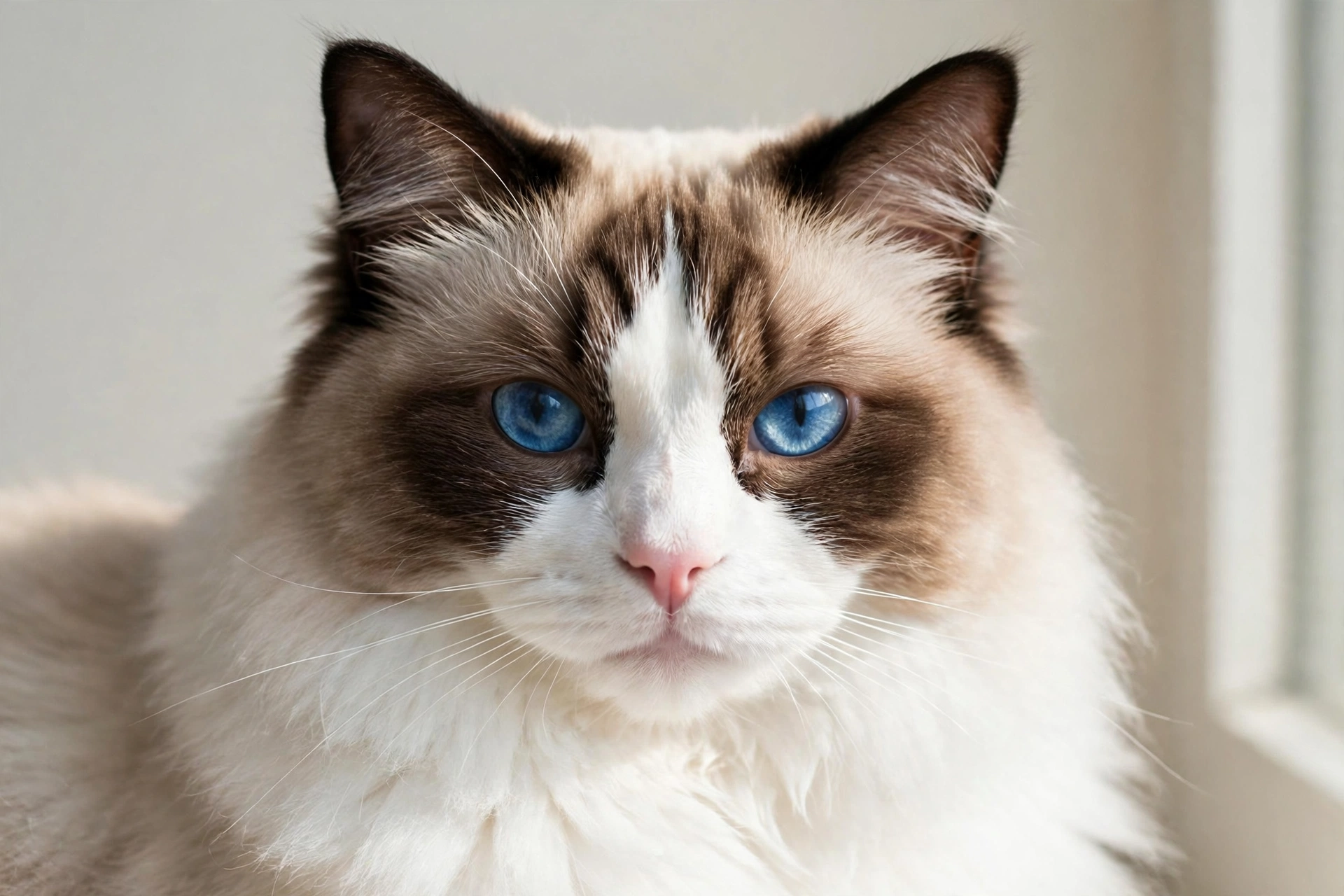
The coat is semi-long and silky, with a soft, rabbit-like texture, shedding mostly in spring and autumn. Every Ragdoll is a pointed cat — darker face, legs, tail, and ears, with a lighter body — and every Ragdoll has large, vivid blue eyes. There are three patterns: colourpoint (dark points, no white), mitted (white mittens and boots), and bicolour (a white chest and an inverted V on the face). The point colours are seal, blue, chocolate, lilac, red, and cream, and the colour darkens with age.
The personality, as the registries describe it
What the registries say about ragdoll cat personality is consistent — and it is worth quoting, because it is the standard every Ragdoll is measured against. The Cat Fanciers’ Association describes Ragdolls as “loving without being demanding”, as well as “gentle, calm and sociable”. Owners, the CFA says, call their cats “kittens that never quite grow up” — playful and trainable, able to be taught to fetch and to come when called. A Ragdoll can be expected to greet you when you come home and stay close to your side.
TICA’s description runs in the same direction: “a loving, quiet cat with a laidback disposition”, one that gets along well with children and other pets, including dogs. TICA also notes their “tolerant attitudes with other animals, as well as with children”, and the frequent comparison to dogs for friendliness and intelligence. On activity, the CFA calls Ragdolls “moderately active”, and TICA warns that a relaxed temperament does not mean no exercise is needed. Ragdolls are not talkative cats — the CFA says they “may greet you with a soft mew from time to time” — and they are rarely aggressive or temperamental, which is why the CFA says they make excellent pets for children.
The flop — what it is and what it isn’t
The flop is real, and it is the reason for the name. TICA describes it directly: “like a child’s ragdoll, many of these cats will go limp in your arms and flop like a stuffed doll when cuddled.” PetMD’s breed-chair source, Amy Stadter of the TICA Ragdoll Breed Committee, puts it plainer: the breed’s name comes from relaxing to the point of floppiness when petted, cuddled, or held.
The important word in TICA’s sentence is “many”. Not all Ragdolls flop, and the ones that do may not flop for everyone. PetMD’s Stadter is explicit: “Not every Ragdoll loves to be carried around or sit on laps, but they definitely want to be in the middle of whatever the family is doing.” A Ragdoll that does not go limp is not a defective Ragdoll. It is a Ragdoll with a preference — and a Ragdoll’s preferences are worth respecting, because the flop is a trust behaviour. A cat that goes limp in your arms is a cat that feels safe enough to stop bracing. Do not test it on a cat that does not offer it, and do not hold a cat that is trying to leave.
One more thing the flop is not: it is not a sign that a Ragdoll feels no pain, or that it can be handled roughly. Neither the CFA nor TICA makes that claim, and no reputable source repeats it. A Ragdoll feels pain like any other cat — handle them gently, and on their terms.
What varies cat to cat
If the registries agree on average ragdoll cat personality, they also leave plenty of room for the individual. Here is what varies most.
Energy. Most Ragdolls are calm, but kittens and young adults can be very rambunctious. PetMD’s Stadter puts the daily rhythm memorably: “We like to say they have their ‘crazy 15 minutes’ once or twice a day.”
Vocalness. Ragdolls are rarely overly vocal, but they are not silent. Stadter notes they will “make little noises to get your attention” when they are hungry or want extra affection.
Lap vs. nearby. This is the biggest variation, and the one that surprises new owners most. Some Ragdolls are lap cats who sleep on their owners. Others prefer to be in the same room, on the next cushion, watching everything.
Alone time. Ragdolls are social cats, and they do worst alone. Stadter’s line is blunt: “A lonely Ragdoll is an unhappy Ragdoll, and may develop bad or annoying habits out of frustration.” PetMD notes that Ragdolls prefer to live with other pets, especially in homes where people are gone during the day.
Daily care: the routine that keeps a Ragdoll happy
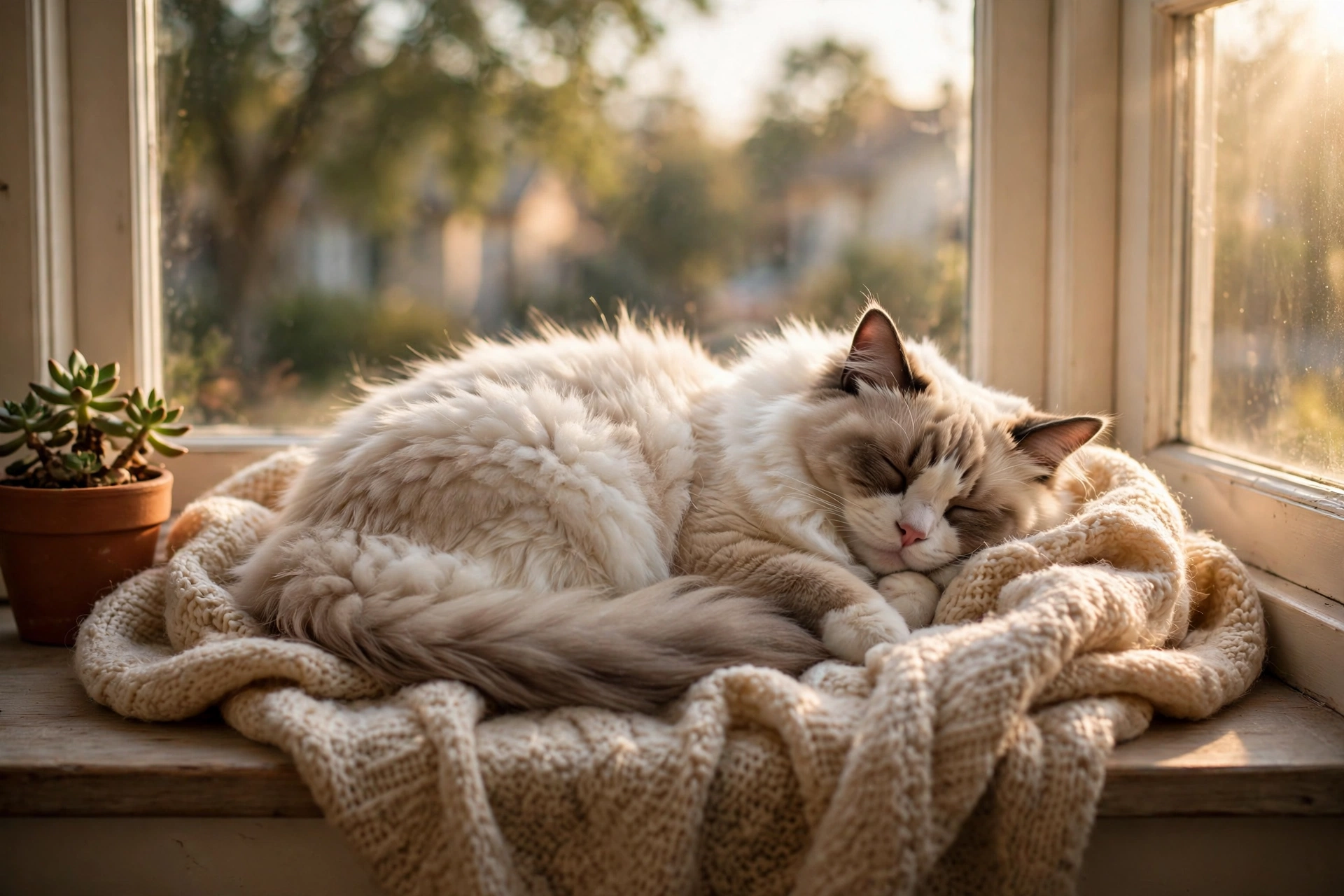
Indoor life. This comes first, because it is not optional. PetMD is direct: “this breed must live inside with you.” Ragdolls need to be indoor-only cats unless they have access to a safe, fully enclosed catio or yard, because they are social and friendly and “not street-smart enough to be wary of potential dangers”. The CFA adds that a Ragdoll’s trusting nature means introductions to existing cats or dogs need extra care.
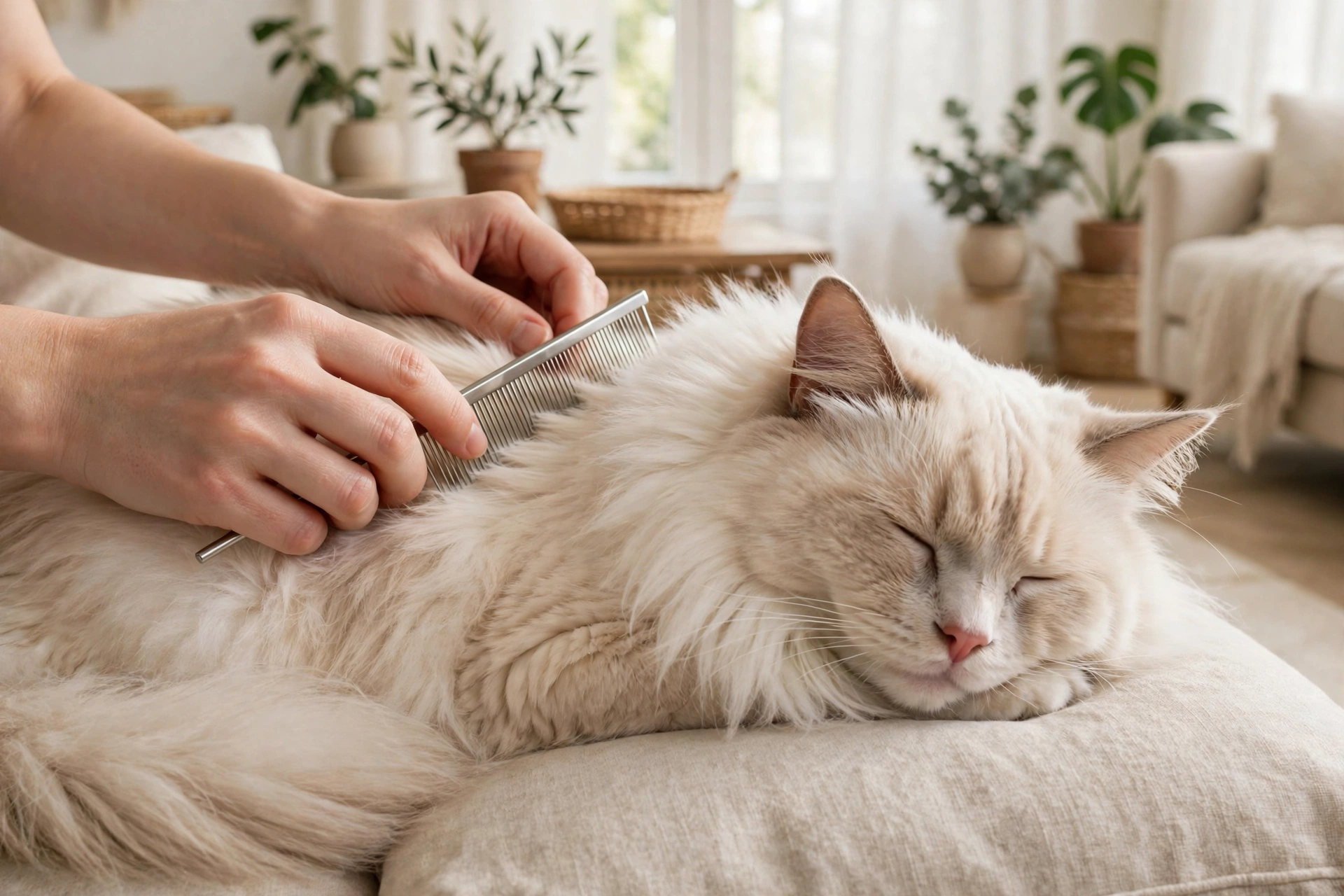
Grooming. The coat looks high-maintenance and is not. TICA says it should be brushed or combed weekly with a steel comb to remove dead hair and separate tangles, and to watch for tangles under the armpits during shedding season. PetMD’s Stadter recommends two metal combs — a larger one and a smaller, finer one — and says some Ragdolls only need combing once or twice a week, while others have a heavier undercoat that needs more attention. Combing beats brushing for this coat, and it should go down to the skin. Start from kittenhood, and trim nails once a month.
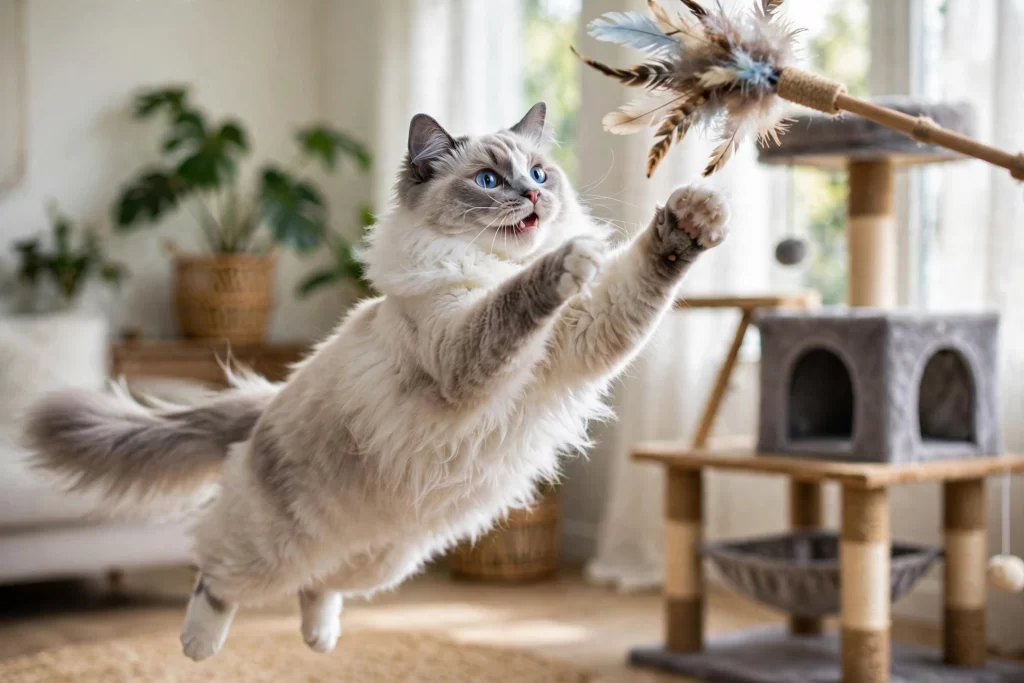
Play. Ragdolls love to play, and they love it best with their people. TICA lists balls, catnip toys, cat trees, scratching posts, and feather wands as the essentials. PetMD adds fetch — many Ragdolls can be taught to retrieve small toys — and clicker training, which most Ragdolls take to readily.
Feeding and weight. Ragdolls are hearty eaters, and the CFA warns plainly that their love of food puts them at risk for obesity — “monitor portion sizes to ensure that your Ragdoll maintains a healthy weight.” Measure an appropriate amount of life-stage food (kitten, adult, or senior) at each meal, and remember that treats count toward the daily calories. PetMD reports that many experts recommend wet food to help Ragdolls stay hydrated, and that its veterinary source generally recommends a mix of dry and wet food meeting Association of American Feed Control Officials (AAFCO) standards. A fluffy coat can make a Ragdoll look larger than it is, so feel along the spine and ribcage. Extra weight on a large frame leads to arthritis and mobility problems as the cat ages — if you are unsure about portions, ask your vet.
Nails and teeth. Nails need trimming once a month — your breeder or vet can show you how. Teeth need attention too: PetMD notes all cats are prone to dental problems, and wet food can let tartar build up. Ask your vet about the best routine, and keep up the annual visit.
Health to discuss with your vet or breeder
A Ragdoll from a reputable breeder is generally healthy, and many live to their mid- or high teens, with a typical lifespan of up to 17 years. A few things are worth discussing with your vet or breeder.
Hypertrophic cardiomyopathy (HCM). This is the hereditary heart condition the registries name first. The CFA says it has been found in the breed but that breeders now routinely test for it. TICA explains why the test matters: HCM causes abnormal thickening of the heart and is the most common cause of heart disease in cats — and Ragdolls have the good fortune of having a DNA test for it. When choosing a Ragdoll, ask the breeder whether the cats they breed have had the HCM DNA test. It is the single most useful question you can ask.
Bladder stones. PetMD lists these as a health issue to be aware of. The signs it names are peeing more frequently but in small amounts, straining to urinate, urinating outside the litter box, and crying out while peeing. If you see these signs, contact your vet promptly — a complete urinary blockage can be life-threatening.
Weight and joints. Ragdolls are prone to gaining excess weight, and extra weight on a large frame leads to arthritis and mobility problems as the cat ages. Keep portions measured and play regular, and talk to your vet about arthritis pain management in the senior years.
Food and seasonal allergies. Ragdolls can be more sensitive to food and seasonal allergens than some other breeds, according to PetMD. Watch the coat, skin, and bathroom habits, and talk to your vet if the cat seems itchy.
None of this is a reason to avoid the breed — it is a reason to buy from a breeder who tests and to keep a vet who knows the cat.
A short history
The Ragdoll is a young breed, and its history is stranger than most. It was developed in the early 1960s by Ann Baker of Riverside, California. TICA records that a pure white longhaired cat named Josephine is believed to be the matriarch of the breed, along with a seal point mitted male named Daddy Warbucks and a solid black cat named Blackie. Baker claimed that Josephine’s genes had been altered at a nearby medical centre where she was taken after being hit by a car, and that the litters born after her return had the limp, loving personalities Ragdolls are known for. That is Baker’s claim, as TICA reports it — not an established fact.
Baker ran her breeding program as a franchise, and as she became more eccentric, breeders broke away. TICA accepted the Ragdoll for championship competition in June 1979, and in just a few decades, the CFA says, Ragdolls rose from obscurity to become the most popular breed of cat in the world by CFA registration statistics.
Who a Ragdoll suits — and who it doesn’t
Ragdoll cat personality suits a home where someone is around most of the day, with other pets or children for company, and an owner who wants a cat that is part of everything the family does. They do well in apartments — the CFA notes they do not need a lot of living space — and with children and other animals, provided introductions are slow and supervised. They suit people who want a cat that greets them at the door.
A Ragdoll does not suit a home where the cat would be alone for long hours every day, or expected to go outdoors unsupervised. It does not suit someone looking for a very active or talkative cat — TICA is clear that if that is what you want, a Ragdoll probably is not the breed for your family. And it does not suit someone who wants an independent cat that keeps its distance. A Ragdoll’s whole character is closeness. If you want a cat that mostly leaves you alone, get a different breed.
Cost. PetMD reports that you should expect to pay $1,800–$2,500 for a Ragdoll from a reputable breeder, and warns that the breed’s popularity makes homework essential. A reputable breeder will have done the HCM DNA test and socialised the kitten. Ragdoll-specific rescue groups also rehome adult Ragdolls, which is worth considering if you would rather adopt than buy.
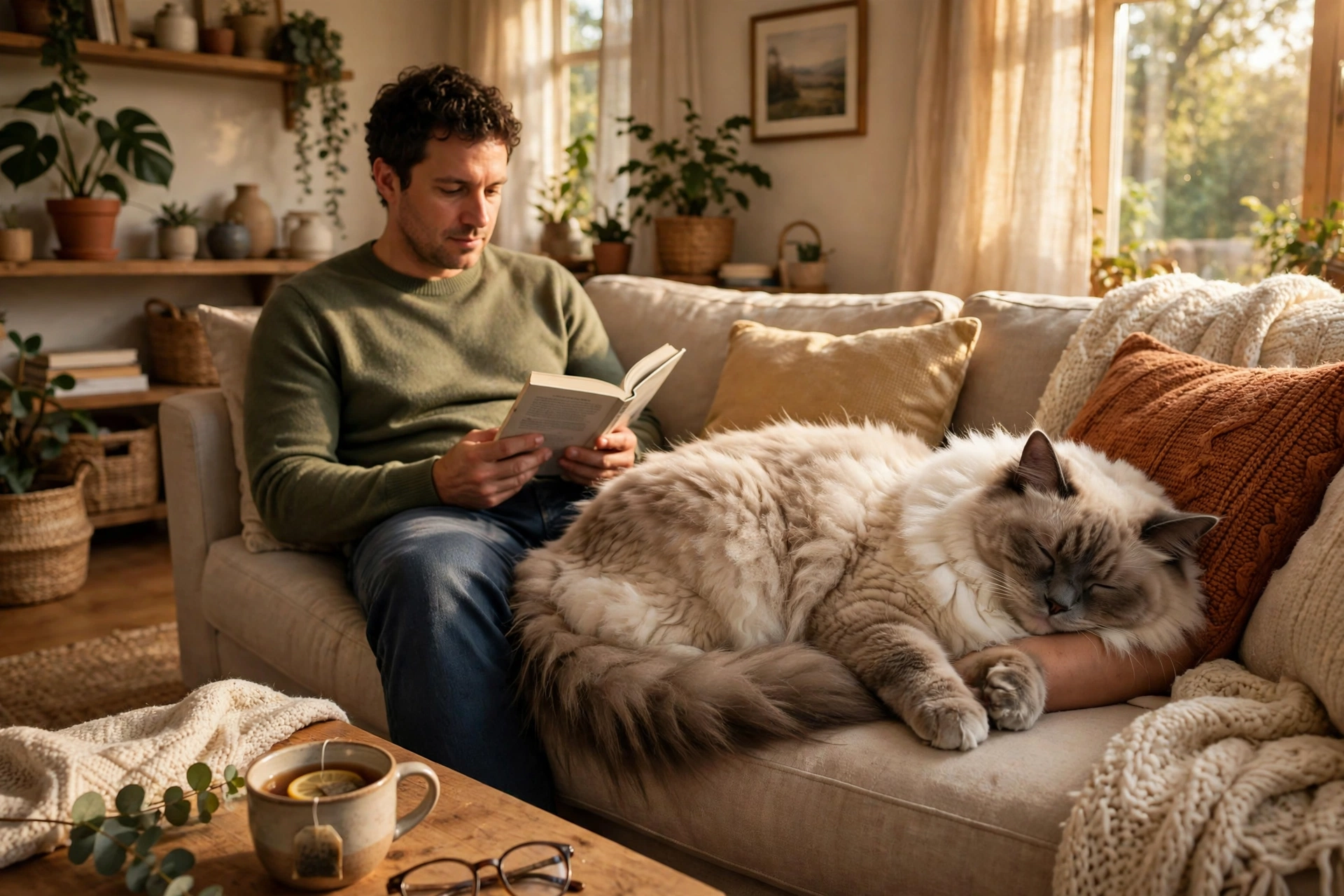
Frequently asked questions
Are Ragdoll cats hypoallergenic?
No. Ragdolls are not considered hypoallergenic. They have longer fur, they need regular grooming, and they shed seasonally — and some have a thicker undercoat than others, which can mean additional shedding. If allergies are a concern, spend time with the breed before committing.
Do Ragdoll cats go limp when held?
Many do — TICA says “many of these cats will go limp in your arms and flop like a stuffed doll when cuddled” — but not all of them. PetMD’s breed-chair source notes that not every Ragdoll loves to be carried around or sit on laps. A Ragdoll that does not flop is not defective.
How big do Ragdoll cats get?
Large. Fully grown males weigh 15 to 20 pounds and females 10 to 15 pounds, according to TICA, and they are slow to mature — full size can take four years, and full coat colour three.
Do Ragdoll cats need a lot of grooming?
Less than the coat suggests. A weekly comb with a steel comb is enough for most Ragdolls, with more frequent combing during spring shedding and attention to tangles under the armpits. Comb down to the skin, and start from kittenhood.
Are Ragdoll cats good with children and other pets?
Yes, with supervision. The CFA says Ragdolls make excellent pets for children and get along well with other animals, because it is rare for one to be aggressive. Introductions should still be slow and supervised, and children should be taught to play gently.