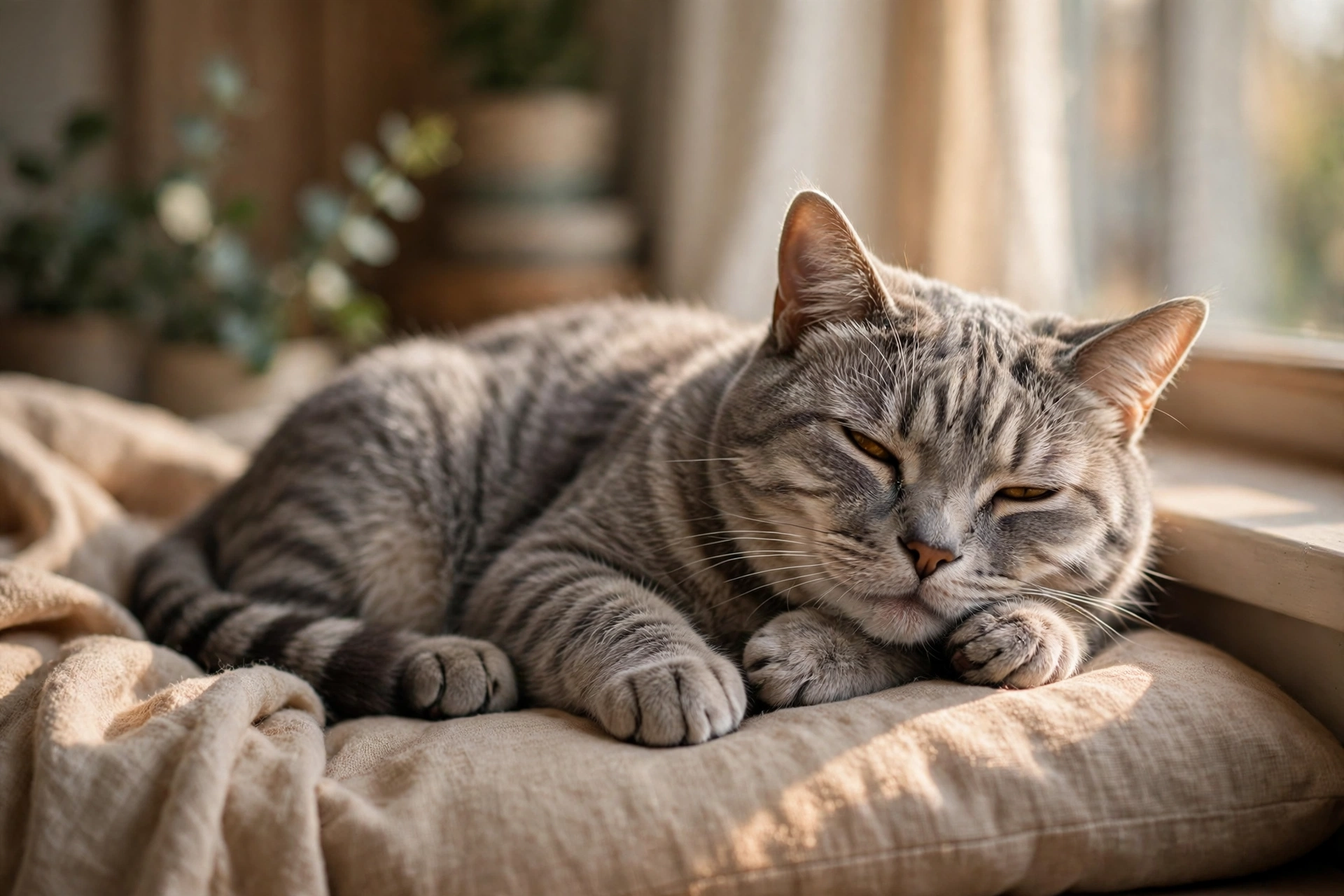
The cats at the back of the shelter
Walk past the kitten room at any shelter and you will hear it first — the squeaks, the scrambling, the crowd pressed against the glass. Walk a little further, to the quiet row at the back, and you will find the cats nobody is looking at. They are older, greyer, and slower to get up. They have been waiting the longest. And that is a strange thing, because the cat at the back of the shelter is often the best cat in the building.
If you are thinking about adopting a senior cat, the oldest cat in the shelter might be your best match — and not for the sentimental reasons you expect. November is Adopt a Senior Pet Month, which makes this a good month to look, but the reasons to choose an older cat hold all year round.
What “senior” actually means — and why the label varies
There is no single birthday on which a cat becomes a senior, and the label means different things in different places — a cat listed as a “senior” at one shelter might be listed as an adult at another.
The 2021 AAHA/AAFP Feline Life Stage Guidelines — the framework most US vets use — call cats over 10 “seniors” and cats aged 7 to 10 “mature adults”. The AAFP’s Senior Care Guidelines split it further: senior at 11 to 14, geriatric at 15 and older, while noting there is no specific age at which a cat becomes senior. Shelters often draw the line earlier, commonly at 7 or 8, because that is where adoption patterns start to change.
None of these is wrong. The veterinary guidelines track health and disease risk; shelters track how long a cat is likely to wait. What matters is not the label but the cat in front of you — its health record, its mobility, and how it behaves in the room with you. When a shelter says “senior”, ask what age they mean. The number is a starting point, not a verdict.
Why older cats wait longer for a home
Walk through a shelter and the pattern is easy to see: the kittens draw the crowd, and the older cats wait. The numbers back up what your eyes tell you. Shelter Animals Count’s 2025 data, reported by PetFairs, found senior cats had a 61% adoption rate, compared with 69% for adult cats and 71% for juveniles. In that dataset “senior” meant 7 years and older, and the figures come from shelters reporting through its system — not a census of every shelter in the country — but the direction matches what shelters report year after year. The ASPCA puts it more bluntly: senior pets are often the last to be adopted.
Why? People worry, reasonably, about how much time they will get. A grey muzzle and a slower gait do not photograph the way a kitten does. And there are quiet assumptions: that an older cat must be sick, difficult, or set in ways that will not fit a new home. Some of that has a grain of truth — health costs do arrive sooner, as explained below — but as a judgement of the cats themselves, it is mostly wrong. An older cat is not a damaged kitten. It is a finished cat, and what you see is largely what you get.
That waiting has a practical side for adopters, too. Because older cats stay longer, shelters often know them better — their habits, their quirks, how they take to strangers — than they know a kitten who arrived last week. And many shelters reduce or waive adoption fees for senior animals, particularly during November. That is not universal, so ask yours.
What you actually get with a senior cat
The best reason to adopt an older cat is also the least sentimental one: you know what you are getting.
A senior cat’s personality is already formed. A kitten is a promise — it may grow into a lap cat or it may grow into a cat that tolerates you from the top of the bookcase. An older cat has already decided who it is. Spend half an hour with one in a meet-and-greet room and you will learn more about your future together than a kitten’s first month at home will tell you. The ASPCA makes the same point: because a senior pet is fully grown, you know its size, its personality type, and its grooming needs from the start.
The pace is usually calmer. Most older cats are past the phase of climbing the curtains at 3 a.m. That is not a guarantee — some seniors stay playful well into their teens — but on average, a senior cat asks for a warm lap and a sunny windowsill more often than it asks for a chase.
Most senior cats are already litter-trained and used to living in a home. If the cat lived in a house before, the basics — litter box, scratching post, sleeping through the night — are usually already learned. That makes the first week easier, though it is not a promise: a stressed or unwell cat can still have accidents, and that is a settling-in problem to solve, not a character flaw.
What a senior cat will not do is be grateful in the way people imagine. Cats do not keep ledgers. An older cat may bond deeply and quickly, or it may take weeks to decide you are safe — both are normal. Adopt one because the cat in front of you fits your life, not because you expect a thank-you.
The honest part: health, vet visits, and costs
This is the section to read twice. Adopting a senior cat is a good decision, but it is a better decision made with open eyes.
Book a vet visit within the first one to two weeks. Even if the shelter has done its own checks, your own vet should establish a baseline: a full examination, and usually bloodwork, a urine test, and a blood pressure check. The AAHA/AAFP guidelines recommend diagnostic testing for seniors at least yearly, with every six months recommended — blood count, biochemistry, urinalysis, thyroid (T4), and blood pressure. A baseline taken while the cat is well is far more useful than the first tests taken during a crisis.
Expect check-ups about every six months. The AAHA/AAFP guidelines recommend examinations at least annually for all cats and at least every six months for seniors. The AAFP Senior Care Guidelines say the same: apparently healthy senior cats should be examined every six months, because changes in kidneys, thyroid, joints, and teeth move faster in older animals. Twice-yearly visits are the single most predictable part of the senior-cat budget.
Know the conditions to discuss with your vet. The age-related problems that come up most often are dental disease, chronic kidney disease, hyperthyroidism, arthritis, and weight change. None is a reason not to adopt — many are manageable for years — but they are reasons to ask the shelter what it already knows and to budget for treatment rather than be surprised by it. Do not change your cat’s diet on the basis of an article; diet decisions for a senior cat belong with your vet.
Budget for sooner, not later. A kitten’s vet bills are mostly in the future. A senior cat’s may start in the first year — not necessarily large, but the honest budget includes the six-monthly exams, dental work if needed, and the possibility of long-term medication. Pet insurance, if you want it, is worth pricing before you adopt; some policies exclude pre-existing conditions, so the shelter’s records matter here.
Watch for the quiet changes. Older cats hide discomfort well. Mention to a vet any change in drinking, eating, weight, sleep, jumping, litter box use, or coat condition. Any one of these can mean nothing, or the first sign of something treatable — and the six-monthly visit is what catches it early.
Questions to ask the shelter before you decide
The shelter knows this cat. Before you sign anything, ask:
- Why is this cat here? Surrender, stray, or owner passed away — the answer shapes what to expect in the first weeks.
- What vet records exist? Vaccinations, spay/neuter status, dental work, bloodwork, known conditions, and current medication. Ask for copies, not just a summary.
- Is the cat on any medication, and what does it cost? A daily tablet is a small thing if you know about it; a surprise prescription is not.
- How is the cat eating, drinking, and using the litter box? The shelter watches these every day, and they tell you most about a cat’s health.
- How does the cat move? Can it jump, climb stairs, or use a standard litter box, or does it need a low entry and a ramp? Arthritis often shows up as reluctance, not limping.
- How does the cat do with people, other cats, and dogs? What the shelter has actually observed matters more than a general label like “friendly”.
- How long has the cat been here, and has it been adopted and returned? A long stay is not a warning sign by itself, but it is worth knowing.
- What does the adoption fee cover, and is there a senior discount? Many shelters reduce or waive fees for older animals — ask what vet care, if any, is included.
- What support do you offer after adoption? Some shelters offer a settling-in call, behaviour advice, or a trial period. Knowing that in advance is better than finding out when you need it.
If a shelter cannot answer most of these, that may only mean the cat arrived recently. The questions are worth asking either way.
Setting up your home for an older cat
An older cat does not need a renovated house. It needs a small, predictable space to start from, and a few adjustments that make daily life easier on stiff joints.
Start with one quiet base room. A spare bedroom or a quiet corner with a door that closes is ideal for the first days. Put the bed, food, water, litter box, and a hiding spot in that one room, all on the same floor. The cat should not have to cross the house, climb stairs, or pass the dog to eat or use the litter box. Once the cat is eating, using the box, and coming out to explore, open up the rest of the house gradually.
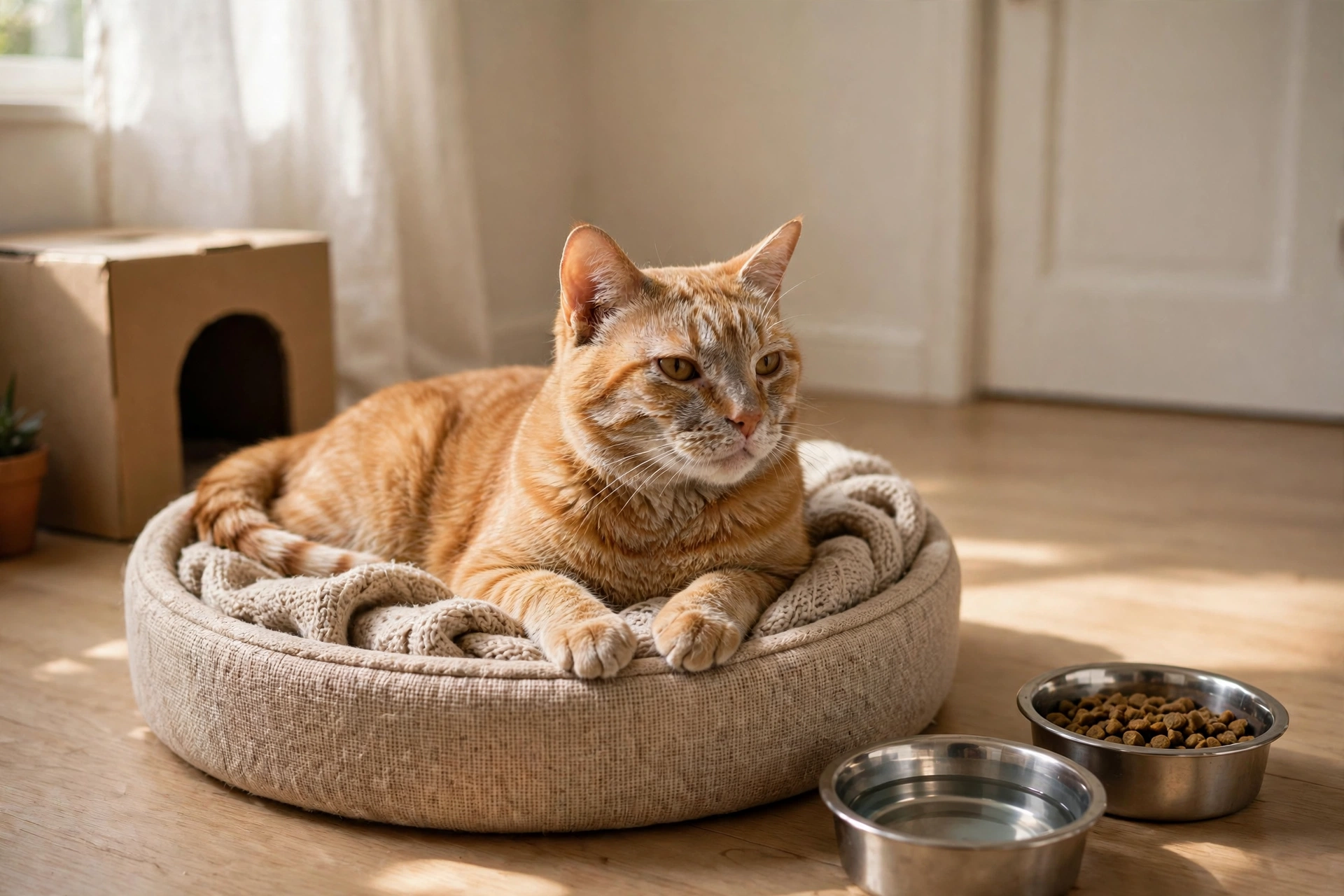
Make the litter box easy. A low-entry box matters more than a fancy one. Older cats with stiff joints may avoid a high-sided box, and avoiding the box looks exactly like a litter problem when it is really an access problem. Keep the box in a quiet spot, scoop daily, and if you have a multi-level home, put a box on each floor the cat uses.
Give the cat a way up. A favourite windowsill or bed that now requires a jump may quietly become a place the cat stops going. A sturdy set of pet steps or a ramp, or simply a chair placed as an intermediate step, keeps those spots available. Watch where the cat hesitates — that is where help is needed.
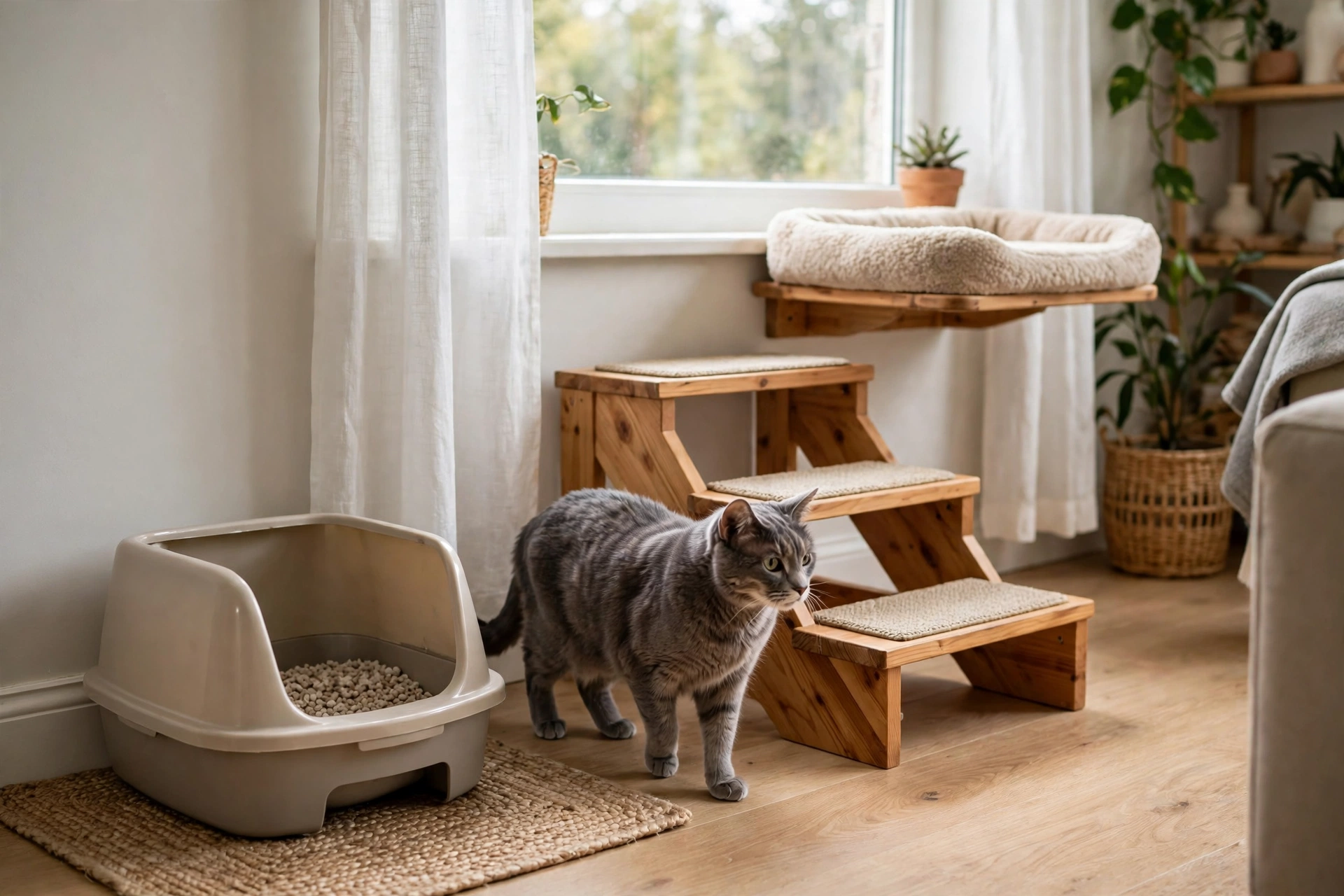
Mind slippery floors, and keep everything close. Wood, tile, and laminate are hard going for arthritic joints — a rug or non-slip mat on the route between bed, food, and litter box helps a lot. Keep food, water, and bed reachable without stairs, especially at night, but keep a little distance between food and litter.
Offer warmth. Older cats feel the cold more than younger ones. A warm bed in a sunny spot, away from drafts, is often the thing a senior cat values most. A self-warming mat — no cable, no plug, nothing hot enough to burn — is a safe option; never place a heating pad directly on a cat.
The first weeks at home
Rescue circles talk about the 3-3-3 rule: three days to decompress, three weeks to learn the routine, three months to feel at home. It is a widely shared rule of thumb, not a scientific timetable — no study pins settling-in to those numbers — but it sets expectations in the right order: the first days will look worse than the cat you met at the shelter.
The first three days: decompress. Do not expect the cat you met at the shelter. Many cats hide, eat little, and use the litter box at night when the house is quiet. That is normal. Keep the base room calm, keep visits short, and let the cat come to you. Do not force cuddles, do not introduce the cat to the whole household on day one, and do not rearrange the room once the cat has chosen a hiding spot.
The first three weeks: learn the routine. By now the cat should be eating regularly and using the litter box reliably. Keep the daily pattern — feeding times, play, quiet evenings — boringly consistent. This is also when the real personality starts to show, which may be quite different from the shelter version in either direction.
The first three months: feel at home. By three months most cats have chosen their spots, their routines, and their person. If a problem has not improved by then — persistent hiding, not eating, litter box avoidance, aggression — ask your vet or the shelter for help rather than waiting it out. It may be medical, it may be environmental, and it is almost always fixable once the cause is found.
Introduce other pets slowly, through a closed door first, then supervised short meetings. An older cat that has lived with other animals may slot in easily; one that has not may need weeks. There is no prize for the fastest introduction.
Is a senior cat right for you?
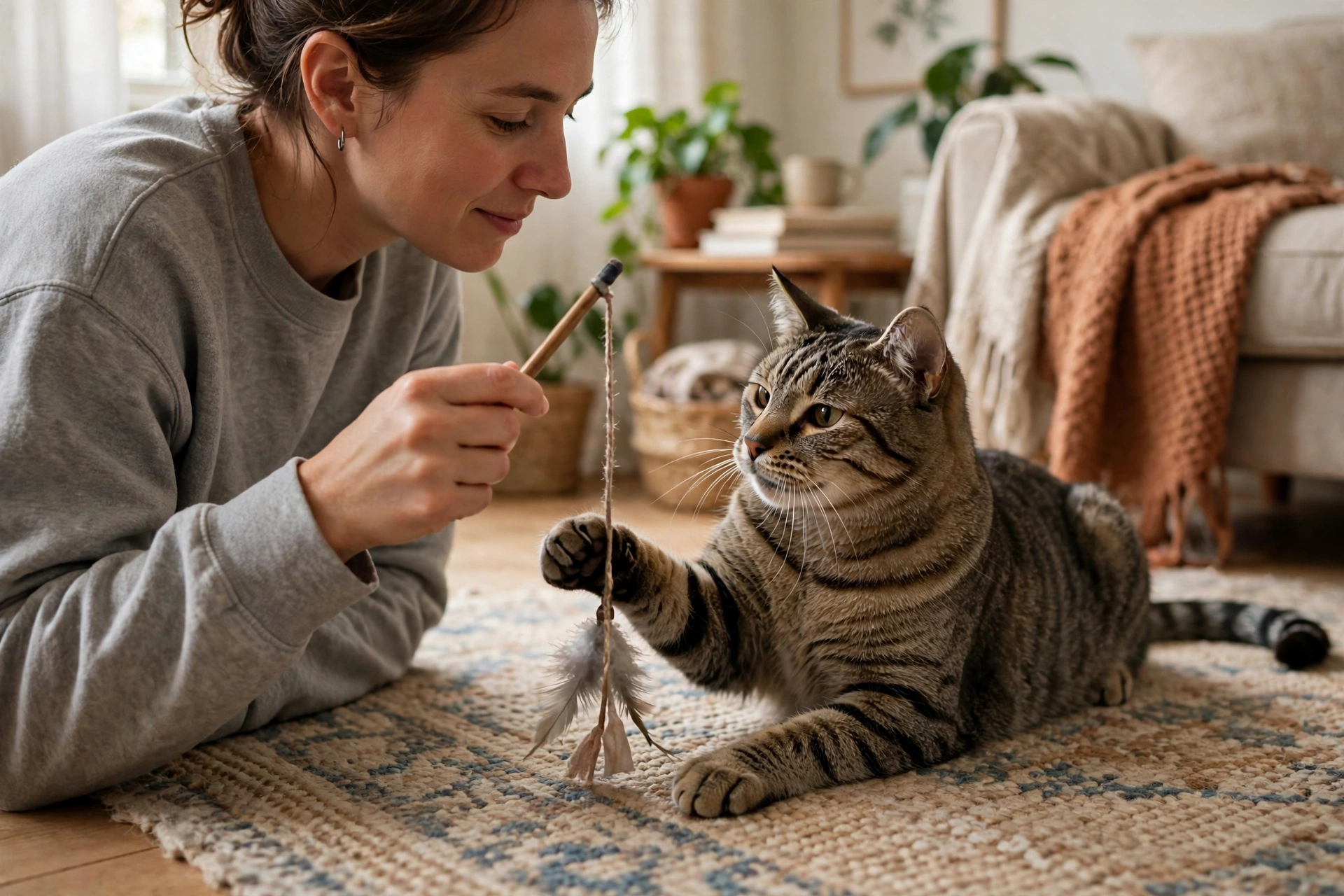
A senior cat fits best with someone who wants a companion more than a project. If you want a cat that will sit with you, follow a routine, and be fully itself from the start, an older cat is a strong choice. If your household is calm, your schedule is steady, and you can afford twice-yearly vet visits, you are well placed.
Think carefully if the honest answers are different: if your budget has no room for a dental procedure or a new prescription; if you are away for long stretches with no one to check in; if your home has small children who want a playmate rather than a quiet companion. None of these is a verdict against adopting. They are the questions that turn a kind impulse into a good home.
One question worth asking yourself plainly: what will you do when this cat gets older still — when it needs medication, or cannot jump any more, or needs you to carry it to the vet? Senior cats do not stay the age they are adopted at. Adopting one is a promise that runs in the direction of more care, not less. If you can make that promise, the years you get are often the best years a cat has.
Frequently asked questions
What age is a senior cat?
It depends who you ask. The 2021 AAHA/AAFP Feline Life Stage Guidelines call cats over 10 seniors and cats aged 7 to 10 mature adults. The AAFP’s Senior Care Guidelines split it further — senior at 11 to 14, geriatric at 15 and older — and note there is no single age at which a cat becomes senior. Shelters often use 7 or 8 as the cut-off. Ask what the shelter means, and judge the individual cat.
How much does it cost to adopt a senior cat?
The adoption fee itself is often lower than for a kitten — many shelters reduce or waive fees for senior animals, particularly in November, so ask yours. The real cost difference is in care: a vet visit within the first one to two weeks, check-ups about every six months, and a budget that allows for dental work, bloodwork, or long-term medication. The fee is the small part; the vet care is the honest part.
Are senior cats good for first-time owners?
Often, yes. A senior cat’s personality is already formed, so you know what you are getting, and most are already litter-trained and past the most destructive kitten phase. The trade-off is comfort with vet visits and watching for the quiet health changes older cats show. If you can do that — or you have a vet you trust — a senior cat can be an excellent first cat.
How long does it take a senior cat to settle in?
Expect three quiet hidden days, three weeks to learn the routine, and around three months to feel at home — the widely shared 3-3-3 rule of thumb, not a scientific timetable. If eating, litter box use, or hiding has not improved after a few weeks, ask your vet or the shelter for help.
What should I ask the shelter before adopting a senior cat?
Ask why the cat is there, what vet records and medications exist, how it eats, drinks, moves, and uses the litter box, how it does with people and other animals, how long it has waited, what the fee covers, and what post-adoption support exists. The answers matter more than the age on paper.
Leave a Reply