Your Cat Chirps at Birds — and Nobody Knows Exactly Why
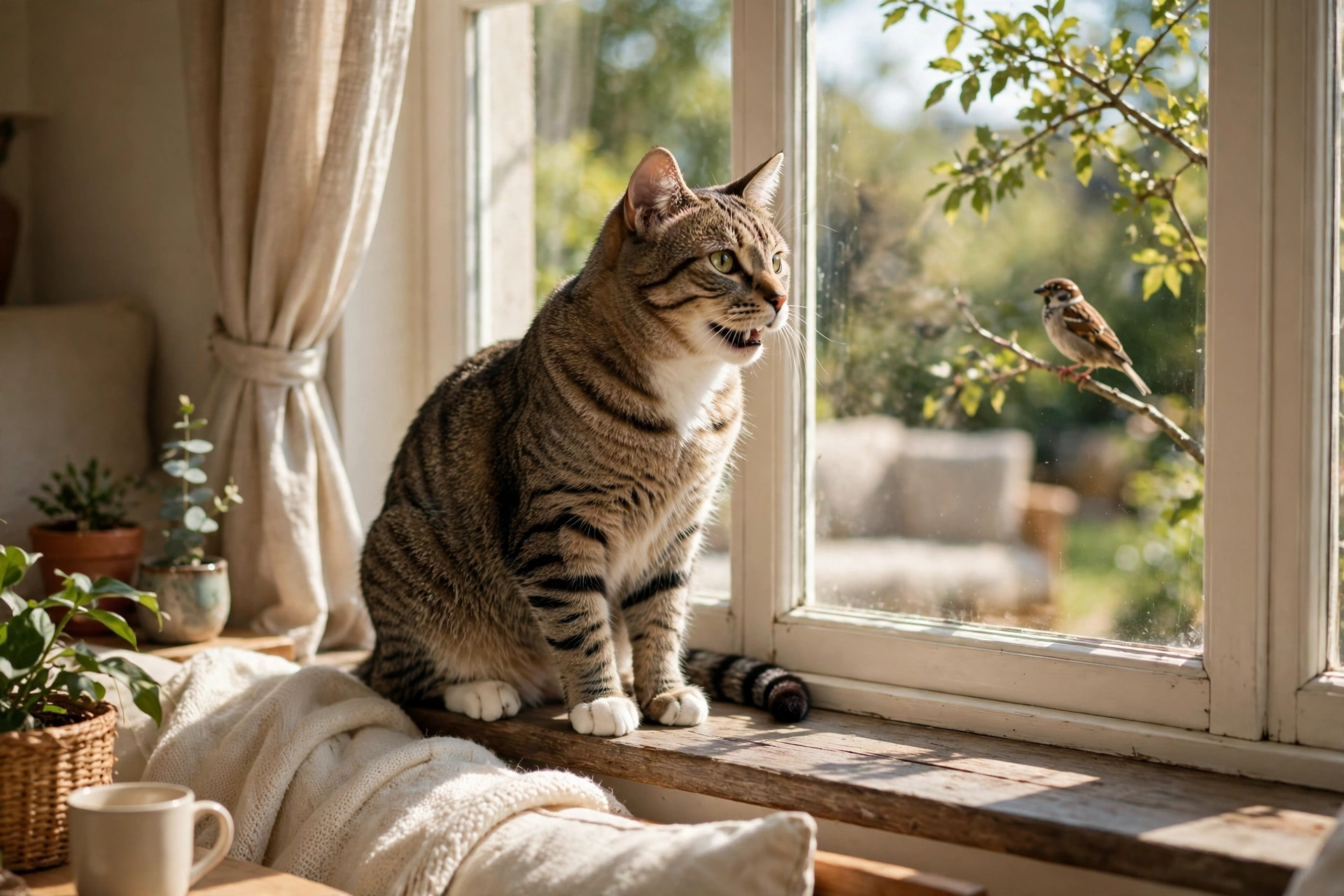
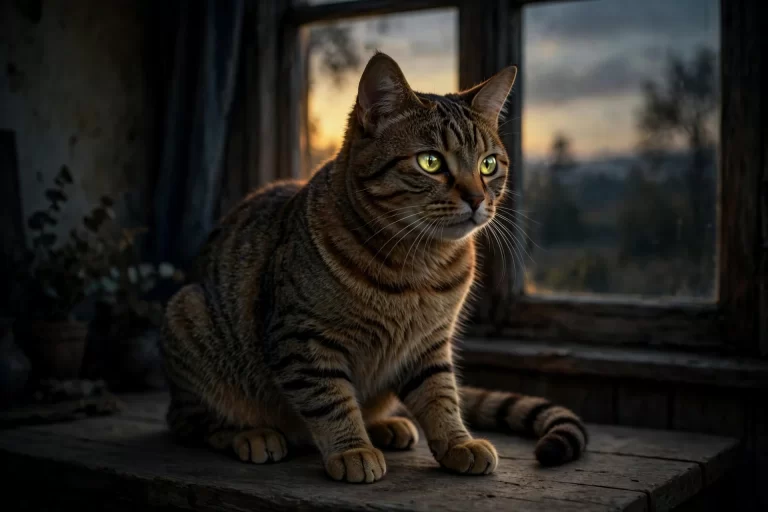
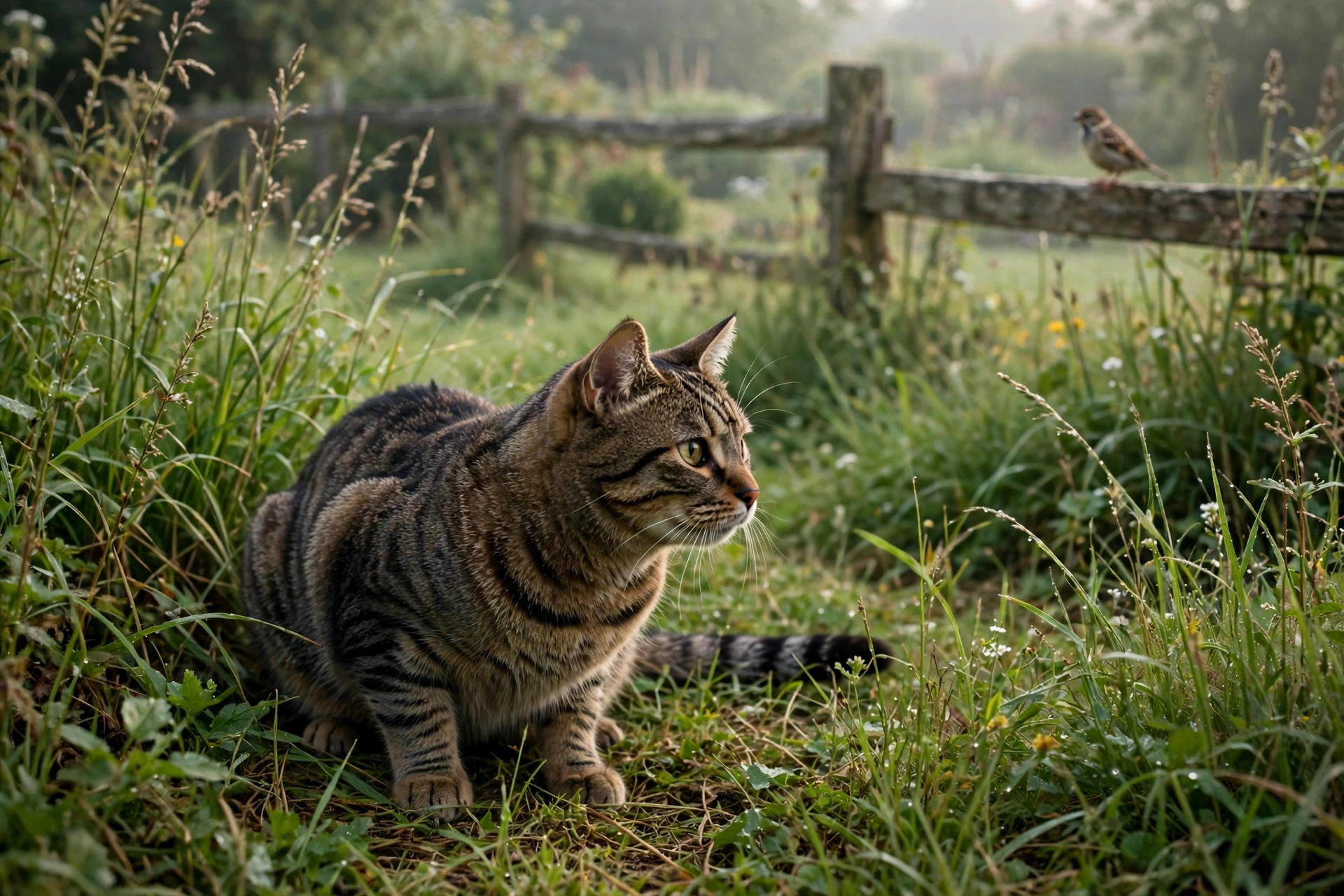
The sparrow lands on the fence, and the cat changes completely. A moment ago it was asleep on the windowsill, limp as a dishcloth. Now it is low and still, ears forward, eyes locked, tail twitching in short jerks — and from its throat comes a sound that is not a meow at all. A rapid, stuttering chirp, half birdcall, half teeth chattering, aimed straight through the glass at a bird that has no idea it is being hunted.
Every cat owner who has seen it has asked the same question: why do cats chirp at birds? The honest answer is that nobody knows for certain. Behaviorists have studied the sound for decades and still disagree. What they agree on is that it is normal, it is ancient, and it is one of the clearest windows into the hunter inside a house cat. There are four serious explanations, and the truth is probably a mix of more than one.
First, what the sound actually is
Cats make more sounds than most people realise, and the names get tangled. Three of them sound similar and mean different things, so it helps to sort them out before going further.
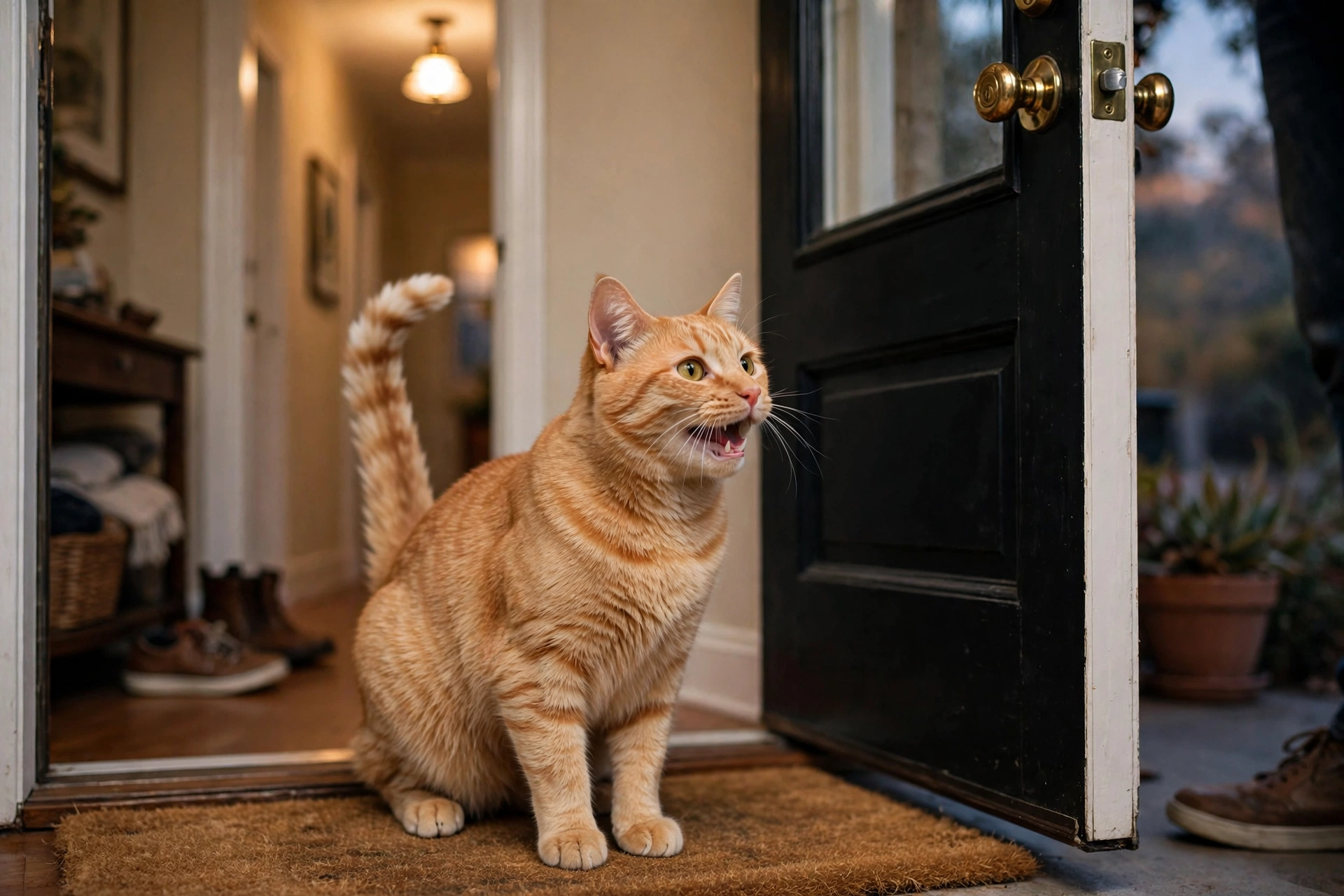
A chirp (or chirrup) is a short, high, birdlike peep, often repeated two or three times. It sounds like a small bird answering another bird. Cats use it at the window, and also as a greeting — a mother cat chirps to call her kittens, and many pet cats chirp at their owners when they walk through the door.
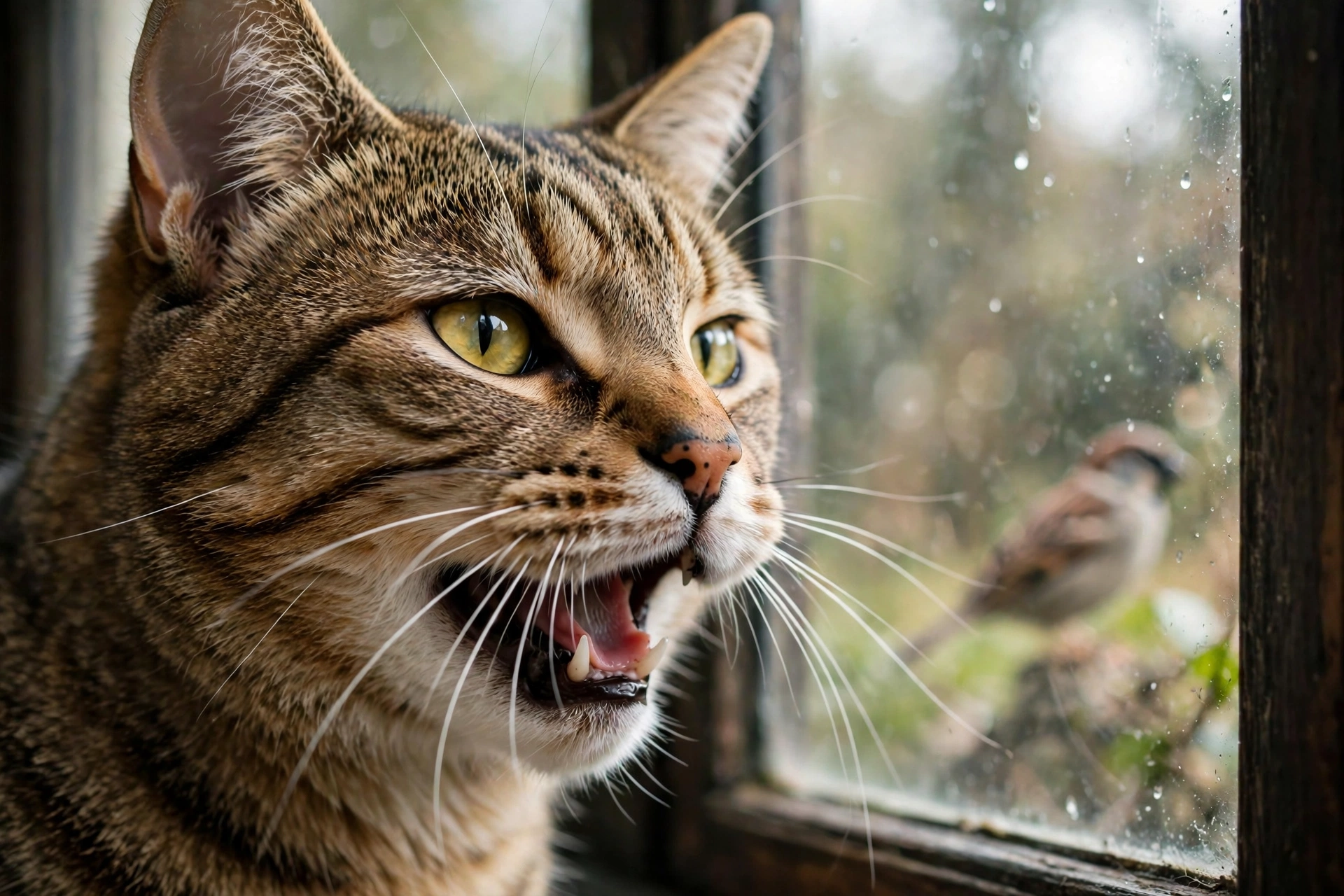
Chattering is the rapid, stuttering jaw movement — the teeth clacking together in a fast vibration, usually with short chirps mixed in. This is the sound most people mean when they talk about a cat “chattering at birds.” It comes with a fixed stare, ears forward, and a tail that flicks or twitches.
A trill is a rolling, musical sound, a cross between a meow and a purr. It is a greeting and a “follow me” sound, and it is different from the sharp, staccato chirp at the window.
The three sounds sit on a sliding scale. A cat watching a sparrow may start with a chirp, slide into hard chattering as its focus sharpens, and finish with a trill when it gives up and comes to find its owner. Dr. Susanne Schötz, a phonetician at Lund University who leads the Meowsic research project on cat vocalizations, has catalogued chirps, trills, and chatters as part of a feline sound system far richer than the basic meow — and the window chirp is one of its most distinctive entries.
The hunt, switched on by a window
To understand the chirp, start with what the cat is doing before it makes a sound. A cat that spots a bird runs through the first steps of the hunting sequence: watch, stalk, chase, pounce, and the killing bite. Outdoors, the sequence runs to its end. Indoors, behind glass, it stops at step one — and the energy has nowhere to go.
That interrupted sequence is the frame every explanation fits into. The chirp is not a random noise. It appears at exactly the moment the hunting drive switches on and the body cannot follow through. The disagreement is about what the sound itself is doing: excitement leaking out, frustration, a rehearsal, or a trick?
Theory 1: It is excitement, leaking out
The explanation most feline behaviorists favour is the simplest one: the chirp is an involuntary burst of excitement. The cat sees prey, the hunting drive fires, adrenaline rises, and the sound escapes before the cat can help it.
Marci Koski, a certified feline behavior and training consultant, puts it plainly: cats are excited when they see a bird, and they want to get their paws on it — that excited energy comes out as chattering. Ingrid Johnson, a certified cat behavior consultant, adds that it may be an involuntary reflex, a way of spending excitement without scaring the prey away or rushing after it too soon. Mieshelle Nagelschneider, a certified cat behaviorist, compares it to a person’s mouth watering at the sight of dessert: the teeth chattering together is the closest the cat can get to having the prey in its mouth and biting down.
On this reading, the chirp is not a message at all. It is arousal with nowhere to go — the body revving while the glass holds it still. It fits the body language: the fixed stare, the twitching tail, the crouch that never becomes a pounce. It also fits the fact that cats chirp at things they cannot possibly catch, including bugs on the ceiling and dust in a sunbeam. The trigger is the sight of something small and moving that the hunting brain recognises as prey.
Theory 2: It is frustration at the glass
The second explanation starts from the same moment but reads the emotion differently: the cat is frustrated. It can see the bird, it wants the bird, and a sheet of glass stands between them.
Marilyn Krieger, a certified cat behaviorist, describes chattering as the sound of a cat separated from its prey by a barrier — the urge to pounce with no way to act on it. The chirp becomes a vocal outlet for blocked energy, the way a person mutters under their breath when something is just out of reach.
Nagelschneider points out that frustration at the window is not a welfare problem: in nature, cats fail to catch their prey most of the time, and the most exciting part of the hunt is often the chase itself. A cat chirping at a sparrow is not suffering. It is doing, safely, what its ancestors did with real stakes.
The frustration theory and the excitement theory are not really rivals. Excitement is the fuel; frustration is what happens when the fuel has nowhere to go. Many behaviorists treat them as two halves of the same moment.
Theory 3: It is a rehearsal for the killing bite
The third explanation is older, and it comes from the cats themselves — from the mechanics of how a cat kills. When a cat catches prey, it delivers a precise bite to the back of the neck, severing the spinal cord. It is a fast, exact movement, and it depends on the jaw closing at exactly the right moment.
The theory, traced to the pioneering cat ethologist Paul Leyhausen, is that the rapid jaw vibration of chattering is an involuntary predatory motor pattern — the jaw rehearsing the killing bite it cannot deliver. The cat cannot practise the bite voluntarily, so the pattern fires on its own when the hunting sequence is switched on and stopped short. The chattering jaw is, in this view, a hunter shadow-boxing.
It is a neat explanation, and it fits the most distinctive feature of the sound: the teeth. A chirp is a voice; chattering is a jaw. The vibration is hard to explain as pure excitement, and easy to explain as a motor pattern borrowed from the kill. But it is still a theory, not a proven fact — no one has measured a chattering jaw against a killing bite and shown them to be the same pattern. The idea survives because it explains the sound’s shape better than any other, not because it has been demonstrated.
Theory 4: It is mimicry — the cat trying to sound like a bird
The fourth explanation is the most entertaining, and the weakest. It says the cat is imitating the bird — making birdlike sounds to lure the prey closer.
There is a real story behind it, and it is worth telling properly, because it is often told wrong. In 2005, researchers from the Wildlife Conservation Society and the Federal University of Amazonas were watching pied tamarins feeding in a fig tree in the Reserva Florestal Adolpho Ducke in Brazil when a margay — a small, spotted wild cat — began making calls that sounded like tamarin babies. The tamarins came to investigate instead of fleeing, and the margay nearly caught one. The observation, published by Fabiano de Oliveira Calleia and colleagues in Neotropical Primates in 2009, was the first documented case of a wild cat in the Americas mimicking its prey’s calls, and it confirmed stories Amazonian residents had told for years about jaguars and pumas doing the same.
It is a wonderful story. The problem is that it is about a margay, not a house cat — and about monkeys, not birds. There is very little scientific evidence that domestic cats deliberately mimic bird calls, and the house cat’s chirp does not sound much like any particular bird. What the margay story proves is that cats are capable of vocal trickery. It does not prove that the cat at the window is doing it. Most behaviorists treat mimicry as an intriguing hypothesis, not an established explanation.
The other chirp: the one aimed at you
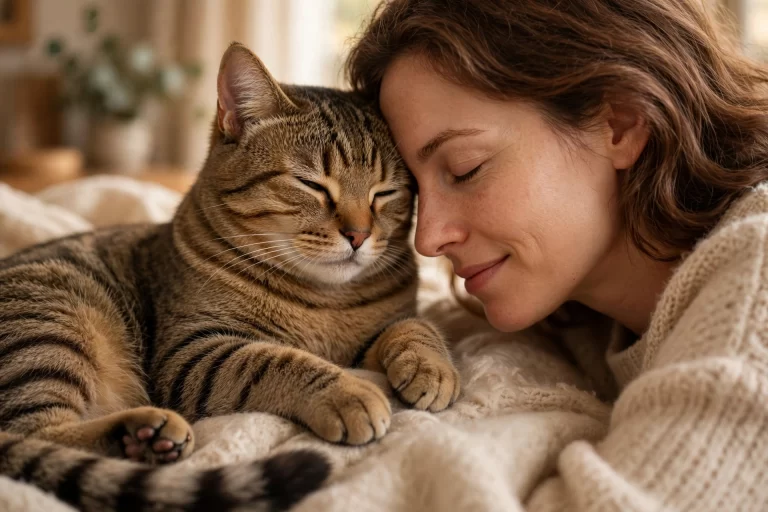
There is a second chirp that complicates every theory above, and it is the one aimed at people. Many cats chirp at their owners — a short, bright sound when the owner comes home, or when the cat wants to be followed to the kitchen. Mother cats use the same sound to call their kittens, and kittens answer it. It is a greeting and a summons, not a hunting sound at all.
That matters, because it shows the chirp is not one behaviour with one job. It is a sound with at least two uses: one switched on by prey, one switched on by social contact. The hunting chirp and the greeting chirp may even be the same vocalisation borrowed for different purposes — the way a human “hey” can mean hello, or look at this, depending on the moment. It is another reason to be careful about single explanations. A cat that chirps at a sparrow and a cat that chirps at its owner are doing two different things with the same small sound.
What to do with a chirping cat
The short version: enjoy it, and give the hunter something to do afterwards.
A chirping cat is a stimulated cat, and stimulation is good — but a hunting sequence that never finishes can leave a cat restless. The fix is to finish it for them. A five- or ten-minute play session with a wand toy after a chirping episode lets the cat stalk, chase, and pounce, and ends the sequence the window started. Research backs the instinct: in the University of Exeter’s 2021 trial, households that played with their cats for five to ten minutes a day brought home 25 percent fewer animals — play gives the hunting drive somewhere real to go.
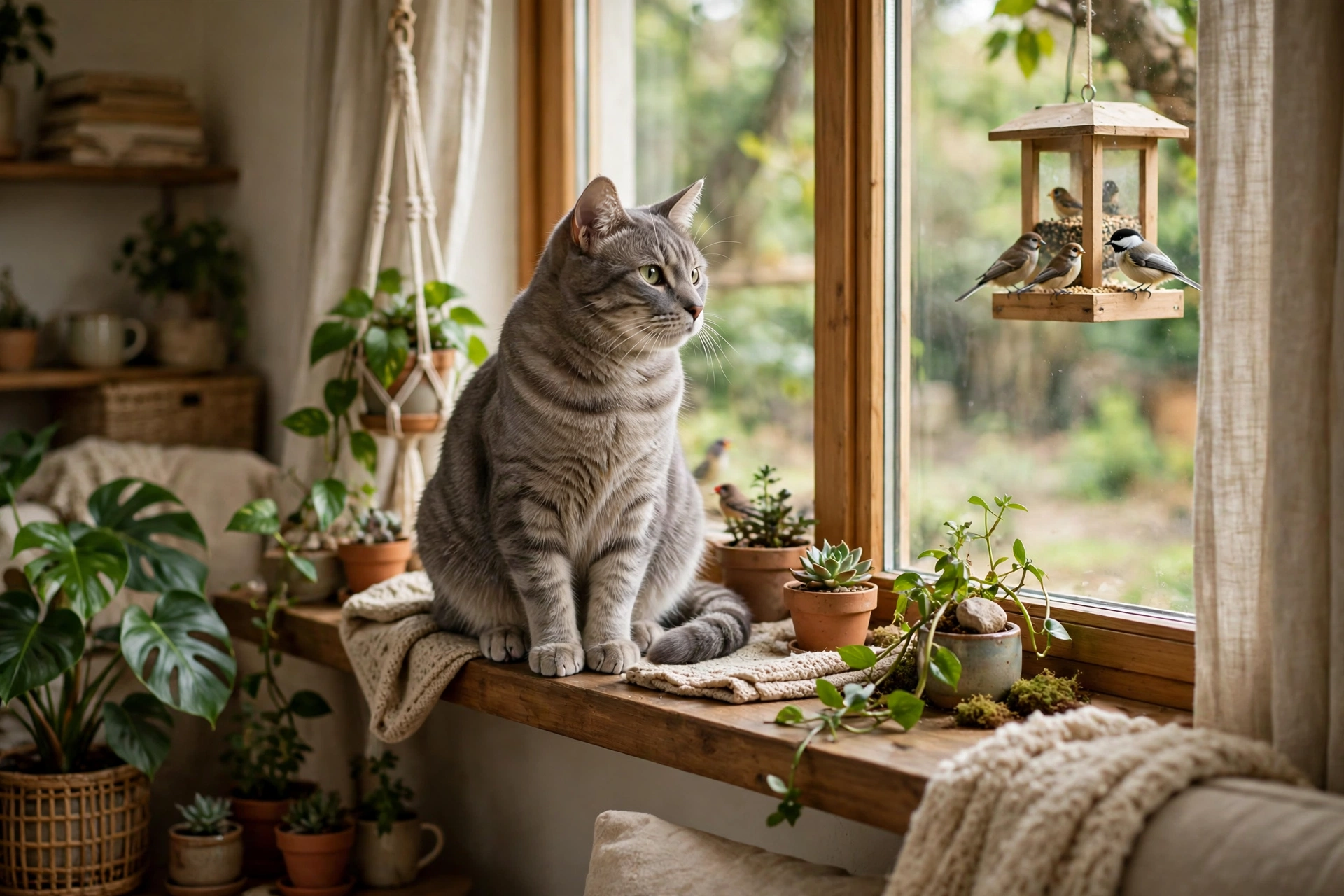
A window perch helps too: a cat that watches from a comfortable perch, rather than pressed against the glass, chirps less frantically and settles faster. A bird feeder outside the window is the classic version of the same idea — but place it at a distance from the glass, so birds are not lured into striking the window. The show is for the cat; the birds should not pay for it.
When a chirp is worth a closer look
Chirping itself is not a problem, and it is not a symptom. A cat that chirps at birds is doing something normal, and it should be encouraged rather than discouraged.
What is worth noticing is change. A cat that suddenly starts vocalising far more than usual — chirping, yowling, or crying at night, especially an older cat — is telling its owner something has shifted, and that is worth a vet visit. The same applies to any new sound paired with a change in appetite, weight, grooming, or litter-box habits. The chirp is not the signal. A sudden change in how much a cat talks is.
Frequently asked questions
Why do cats chirp at birds — is it normal?
Yes. Chirping at birds, bugs, squirrels, and other small moving prey is normal, common, and healthy. It is the hunting instinct switching on, and it is a sign of an engaged, alert cat — not a problem to fix.
Is my cat frustrated when it chirps at the window?
Probably a little — and that is fine. The chirp is excitement with nowhere to go, and the glass is the reason it has nowhere to go. In nature, cats fail to catch their prey most of the time, so a thwarted hunt is the normal state of affairs, not a source of suffering. A play session afterwards finishes the sequence.
What is the difference between a chirp, a chatter, and a trill?
A chirp is a short, high, birdlike peep, often repeated. Chattering is the rapid jaw vibration — teeth clacking — that usually comes with a fixed stare at prey. A trill is a rolling, musical sound between a meow and a purr, used as a greeting or a “follow me.” A cat may slide from one to another in a single minute at the window.
Do cats chirp at people too?
Yes. Many cats chirp at their owners as a greeting, or to summon them — the same sound mother cats use to call their kittens. A chirp at a person is social, not predatory, and it usually means the cat is pleased to see you or wants you to follow.
Should I let my cat outside to catch the bird?
No. Letting a cat out to chase birds puts the cat at risk — traffic, other animals, disease — and it is hard on local wildlife: free-ranging cats kill billions of birds a year in the United States. A window perch and a wand-toy play session give the cat the hunt without the cost.
The sparrow will land on the fence again tomorrow, and the cat will be waiting — low, still, ears forward, chirping at glass. Nobody can say with certainty why cats chirp at birds. What can be said is what it is: a hunter’s voice, switched on by a bird and stopped short by a window, doing the only thing it can do with all that excitement — saying it out loud.