Your Cat Headbutts You Because You Belong to Them
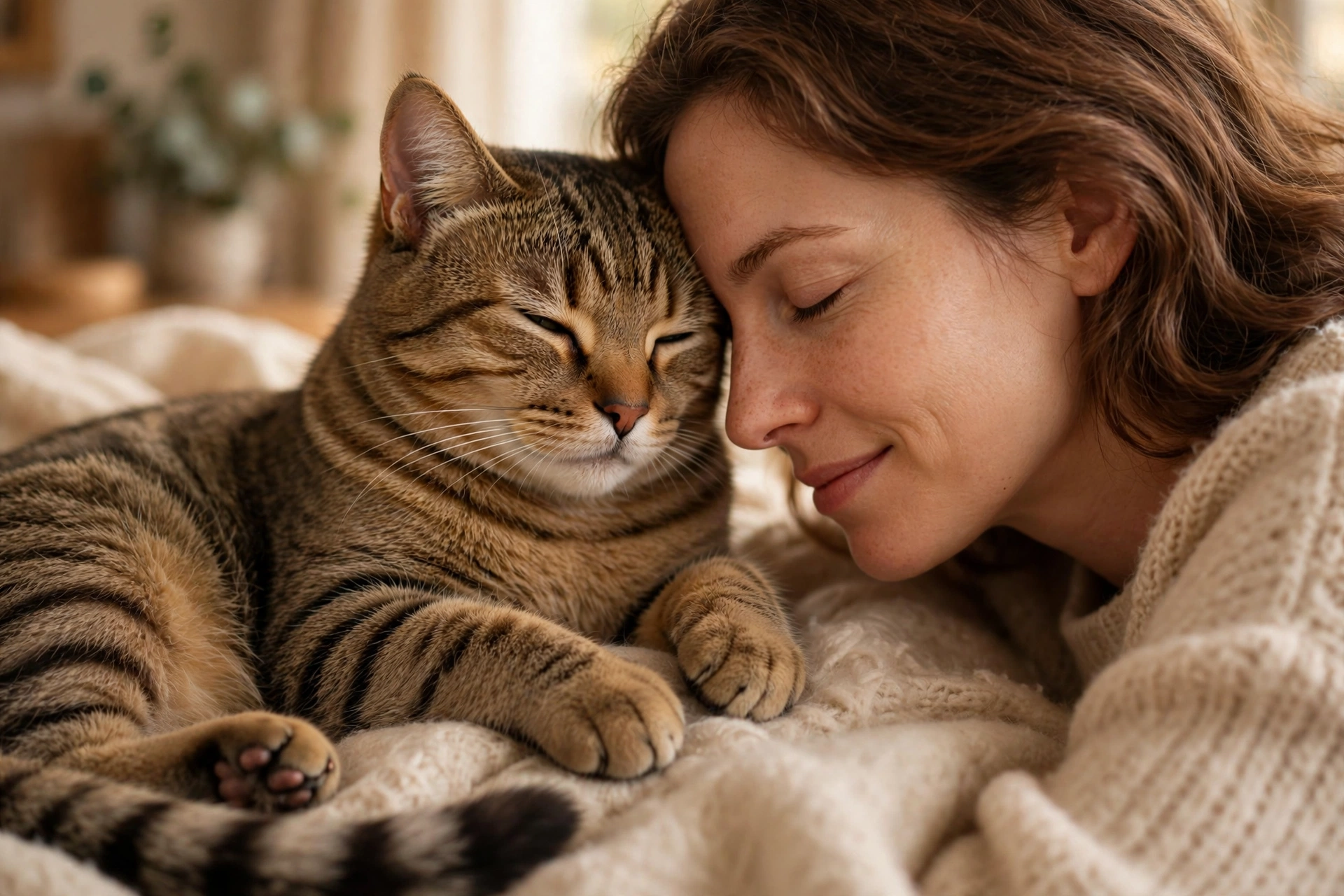
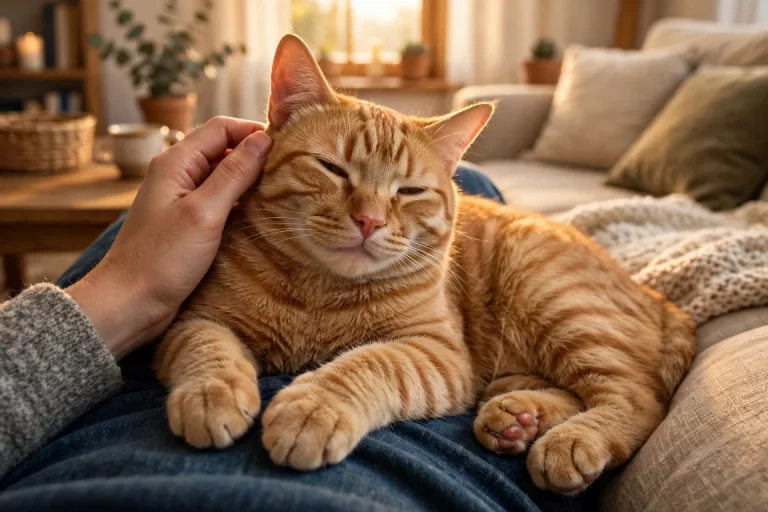
You are reading, or working, or doing nothing at all, when a small, warm forehead presses against your chin, your cheek, or your shin. The cat leans in, rubs its face along yours, and stays there, eyes half closed. It is not an accident: the cat chose the spot, the moment, and you.
Cat owners call it a headbutt. Behaviourists call it bunting, or facial marking. Whatever the name, it is one of the most deliberate things a cat does — which is why the question matters: why do cats headbutt you? A headbutt is not just affection. It is a message written in scent, and once you know how to read it, the bump starts to make sense.
What bunting actually is
Bunting is a forehead press followed by a rub: the cat places its forehead against a person, another cat, or an object, then slides its face along the surface, cheek and chin included. It can be a light tap or a long, slow rub. Some cats follow it with a gentle nibble, which is not a bite — it is part of the same greeting.
It is worth naming two things bunting is not, because both get confused with it. It is not a cat pushing its head against you because it is ill — that is a different behaviour, called head pressing, and it looks and means something entirely different (there is a full section on it below, because the distinction matters). And it is not random. Cats do not bunt things by chance. They bunt the things they have decided belong in their world.
The scent map on a cat’s face
The reason bunting works is written on the cat’s face. Cats carry scent glands on their forehead, cheeks, chin, lips, and the corners of the mouth, with the densest cluster just in front of the ears. When a cat rubs those glands against something, it leaves behind pheromones — chemical messages that other cats can read and humans cannot smell at all.
PetMD puts the pheromone glands just in front of a cat’s ears. The marked person or object now carries the cat’s scent. To another cat, the message is that this thing has been claimed. To the cat that left it, the message is reassurance: this smells like me, so this is familiar, so this is safe.
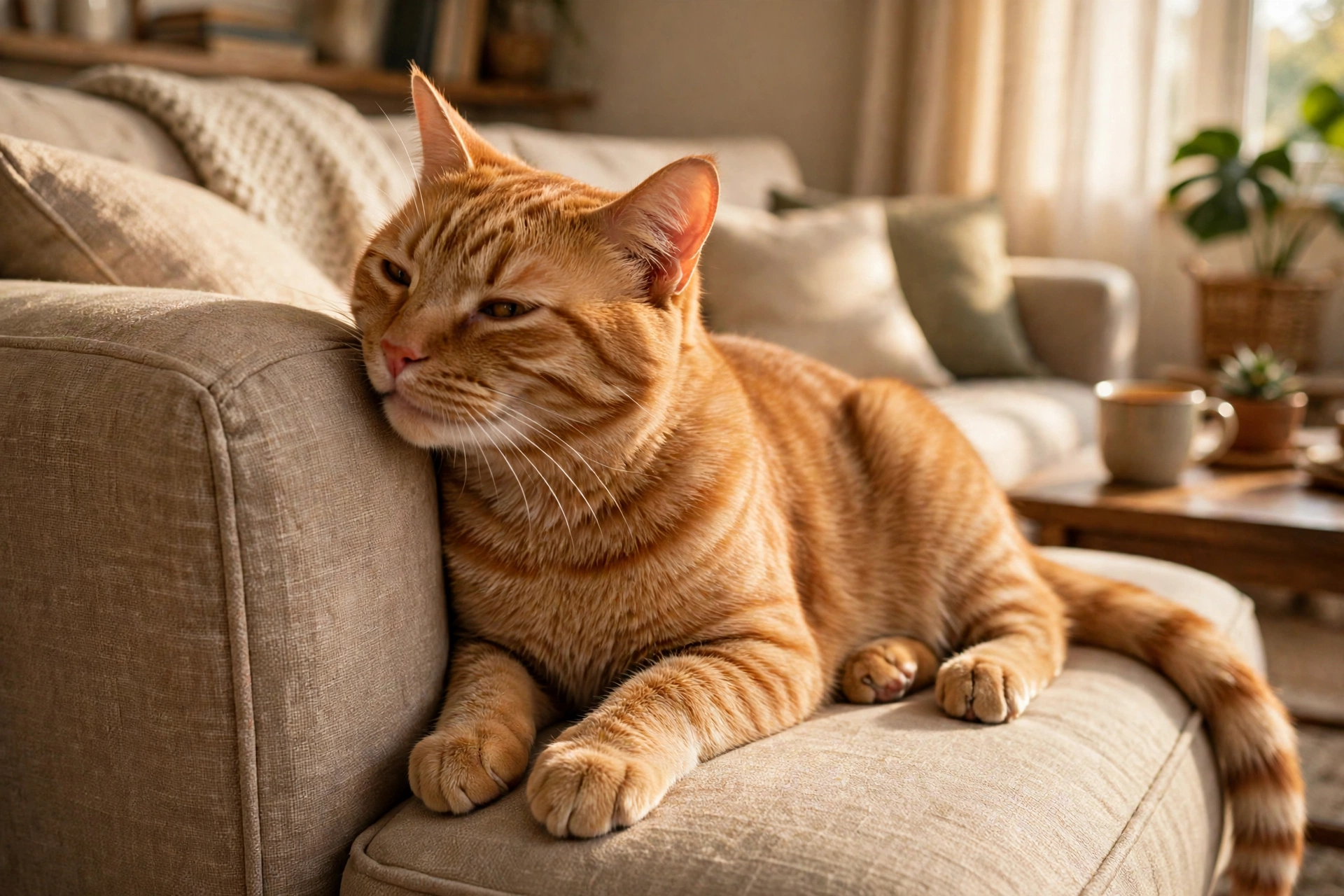
That is why bunting is so often aimed at the same places — the corner of the sofa, the leg of the table, the side of your face. The cat is building a map of its home in scent, and you are on it.
Reason 1: You are theirs
The first reason a cat headbutts you is the simplest: it is marking you. Cats are territorial animals, but their territory is not a patch of ground they defend with aggression. It is a network of familiar things, and the way they claim those things is by scent.
When a cat bunts your leg as you walk past, or your chin as you sit down, it is refreshing a mark. The scent fades, the cat tops it up. It is the same behaviour as rubbing the sofa arm — you are simply a more interesting piece of furniture. Purina puts it directly: headbutting is a way of marking territory, expressing trust, and saying hello, all at once.
This is also why cats bunt visitors. A stranger on the sofa is an unmarked object in the cat’s territory, and the cat’s answer is to mark them. A headbutt from a cat that has just met you is not necessarily affection — it is investigation and claiming, and a compliment of a different kind: the cat has decided you are worth including.
Reason 2: The colony scent
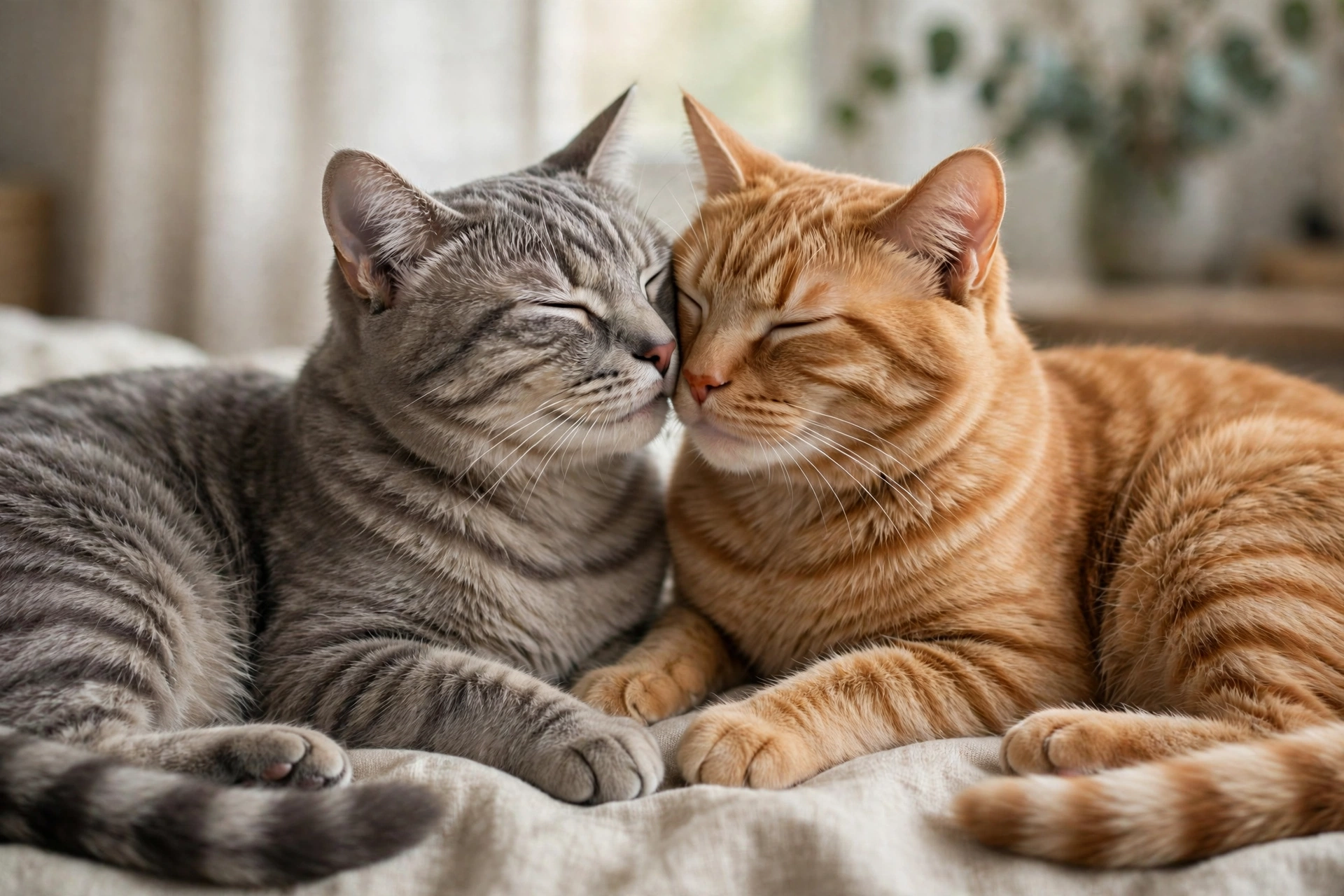
Bunting has a second job, and it is social. When cats that live together bunt each other, they are not just marking — they are mixing. Each cat deposits its scent on the other, and over time the group builds a shared smell: the colony scent. It is how cats that live together recognise each other as part of the same group, and it is why a cat that comes home from the vet smelling of clinic and strangers may be greeted with suspicion, or even hissing, until the familiar scent returns.
The behaviour is not limited to house cats. Lions do it too — pride members greet each other with head rubs when they return from a hunt, and the shared scent tells the group everyone is present and accounted for. In a home with more than one pet, the same thing happens across species: a cat that bunts the dog is folding the dog into the household’s scent.
The cat is not just marking you. It is telling you that you are part of its group.
Reason 3: A greeting from someone who trusts you
A headbutt is a vulnerable move. To bunt, a cat has to put its head — its eyes, its ears, its throat — within inches of another animal, and keep it there. A cat that does not trust you will not do it. That is why a headbutt is worth more than it looks: it is a cat saying, with its body, that it feels safe with you.
The greeting bunt is the most common version: the cat comes to you when you sit down, or when you come home, and offers its forehead first. Pam Johnson-Bennett, a certified cat behavior consultant, describes bunting toward a human as an affiliative display — a deliberate act of depositing scent as a way of reinforcing familiarity and bonding. The cat is not asking for anything. It is saying hello in the only language it has for it.
Watch what comes with the bunt. Relaxed ears, slow blinks, a purr, and a body that leans in rather than pulling away all point the same way: this is a contented cat, not a demanding one.
Reason 4: It wants something — and it knows how to ask
Sometimes the headbutt is a request. A cat that bunts your leg while you are cooking, or your hand while you are typing, may be asking for food, play, or attention — and it has learned that bunting works. You stop what you are doing. You look down. You give the cat a scratch, or you get up and fill the bowl. The cat has trained you, gently, and it knows it.
This is the version of bunting that owners notice most, because it is the one that interrupts them. It is also the easiest to misread. A cat that bunts you at 5 a.m. is not being affectionate at that moment — it is telling you that breakfast is late. The behaviour is the same; the context is what changes the meaning. A bunt at rest, with slow blinks and a purr, is a greeting. A bunt at the kitchen counter, with an insistent stare at the cupboard, is a negotiation.
Neither is a problem. But if the requests are constant — bunting, meowing, pacing, every hour of the day — check the basics first: enough play, food at regular times, enough attention. A cat that asks all day is often a cat whose day is too empty.
Reason 5: Comfort, and checking the new thing
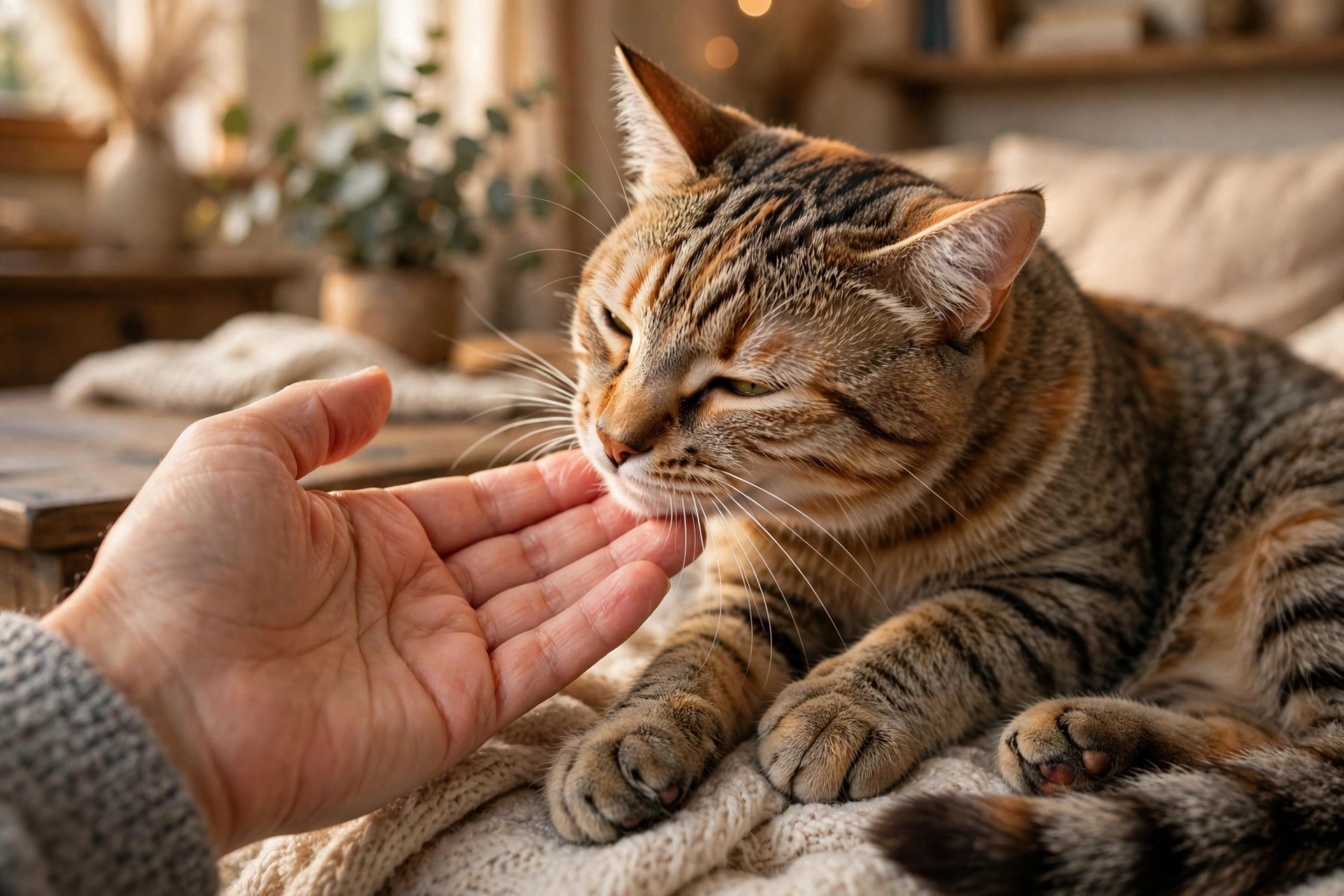
Bunting also has a quieter job: self-soothing. Cats deposit their own scent when they are settling in — after a move, after a vet visit, after something in the house changes. The familiar smell is calming, and the act of rubbing is calming too. A cat that bunts its bed, its blanket, and then your leg is rebuilding its sense of home, one surface at a time.
The same instinct explains why cats bunt new things. A new chair, a new person, a bag left by the door — all get investigated with the face, because the face is how a cat reads the world. Scent comes first; sight comes second. A cat that bunts your guest’s shoe is not being rude. It is reading the label.
How to answer a headbutt
The right answer is simple: let it happen, and answer in kind.
Lean your forehead toward the cat, or offer the back of your hand for a rub. Stay still and let the cat set the pace — some want a brief tap, others a long rub. A slow blink back is the closest thing to a reply in the cat’s own language, and most cats respond to it by relaxing further.
What not to do is just as simple. Do not grab the cat’s head, push it away sharply, or punish a headbutt — there is nothing to punish, and a sharp reaction teaches the cat that approaching you is unsafe. If the bunt comes with a nip, that is usually overstimulation rather than aggression: the cat got excited and its mouth joined in. Stay calm, stop petting for a moment, and let the cat settle. If the nipping is hard, frequent, or paired with flattened ears and a lashing tail, the cat wants space — give it.
Bunting is not head pressing — and the difference matters
This is the most important section in this article, and it is here because the two behaviours look alike to an untrained eye and mean opposite things.
Bunting is brief, directed, and social. The cat presses its forehead against a person, another cat, or an object, rubs, and moves on. The cat is alert, responsive, and relaxed. It chooses when to start and when to stop.
Head pressing is compulsive and sustained. The cat pushes its head against a wall, a floor, a corner, or a piece of furniture and holds it there, sometimes for minutes, looking stuck or confused. It is not rubbing. It is not greeting. It is pressing, and it cannot seem to stop.
Head pressing is a neurological symptom, not a behaviour — a sign that something is affecting the cat’s nervous system. PetMD lists the possible causes as head trauma, toxin exposure, brain tumours, nervous system infection, liver shunt, metabolic disorders, hypertension, and stroke, among others. It is often accompanied by pacing, circling, disorientation, vision changes, or seizures, and it can be an emergency. PetMD’s advice is direct: if you suspect your cat is head pressing, have it examined by a veterinarian as soon as possible.
The test is simple. A cat that bunts your face and then walks away to eat is bunting. A cat that stands with its forehead pressed into the wall, unresponsive, for minutes at a time needs a vet — today, not next week. If you are ever unsure which one you are seeing, call the vet and describe it. That phone call costs nothing.
When bunting itself changes
A headbutt is normal. A change in headbutting can be worth noticing — not because bunting is a symptom, but because any sudden change in a cat’s behaviour is information.
A cat that has always bunted and suddenly stops, especially alongside eating less, hiding more, or grooming less, may be unwell or in pain, and that combination is worth a vet visit. A cat that starts pressing its head against things in a way that looks different from its old greeting is also worth a closer look — and the section above explains which version needs urgent attention.
The rule is the same one that applies to almost every cat behaviour: know your cat’s normal, and notice when it moves. The headbutt itself is good news. A change in the pattern is what to watch.
Frequently asked questions
Does headbutting mean my cat loves me?
It means your cat trusts you, feels safe with you, and counts you as part of its group — as close to love as a cat’s behaviour gets. Be careful about reading a single behaviour as proof of a human emotion, but a cat that presses its most vulnerable part against you is telling you something real.
Why does my cat headbutt me and then bite me?
Usually it is overstimulation: the bunt and the rub build excitement, and the mouth joins in with a gentle nibble. It is not meant to hurt. Stay calm, stop petting for a moment, and let the cat settle. If the bite is hard, frequent, or paired with flattened ears and a lashing tail, the cat is overstimulated and wants space — give it.
Why does my cat headbutt the furniture?
For the same reason it headbutts you: scent. The sofa arm, the table leg, and the door frame are all part of the cat’s territory, and rubbing them deposits pheromones that mark them as familiar. A house full of the cat’s scent is a house the cat finds reassuring.
Why do cats headbutt you — and do all cats do it?
No. Some cats bunt constantly; some rarely do; some never do. It varies by personality, by breed — Ragdolls, Maine Coons, Siamese, and Burmese are among the more expressive breeds — and by how the cat was socialised. A cat that never headbutts is not a cat that does not love you; it shows affection in other ways, like slow blinks, kneading, or simply sleeping near you.
What if my cat suddenly stops headbutting me?
On its own, probably nothing — cats change their habits. But if the change comes with other changes — eating less, hiding, grooming less, sleeping far more, or seeming dull when awake — it is worth a vet visit. And if the cat has started pressing its head against walls or furniture instead of bunting, that is head pressing, not bunting, and it needs a vet urgently.
A headbutt is a small thing — a few seconds, a warm forehead, a rub that is over before you have quite noticed it. But it carries a lot: a scent mark, a greeting, a claim, and a vote of trust, all in a single gesture. The cat is not just being affectionate. It is telling you, in the clearest language it has, that you belong in its world.