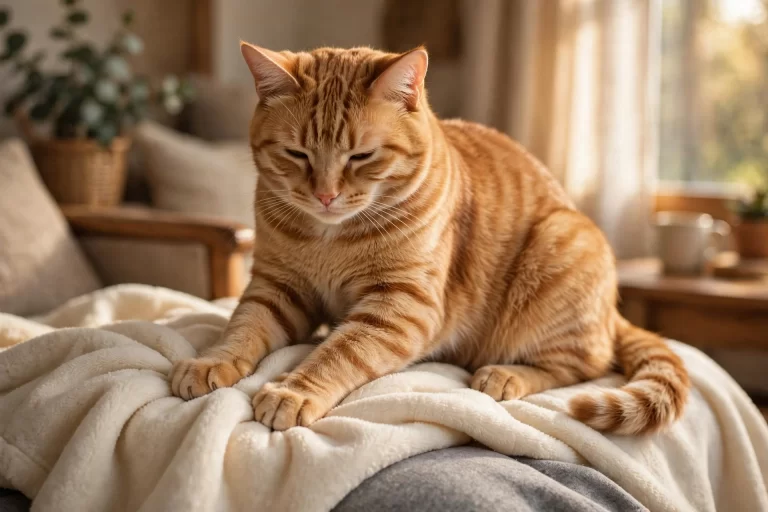
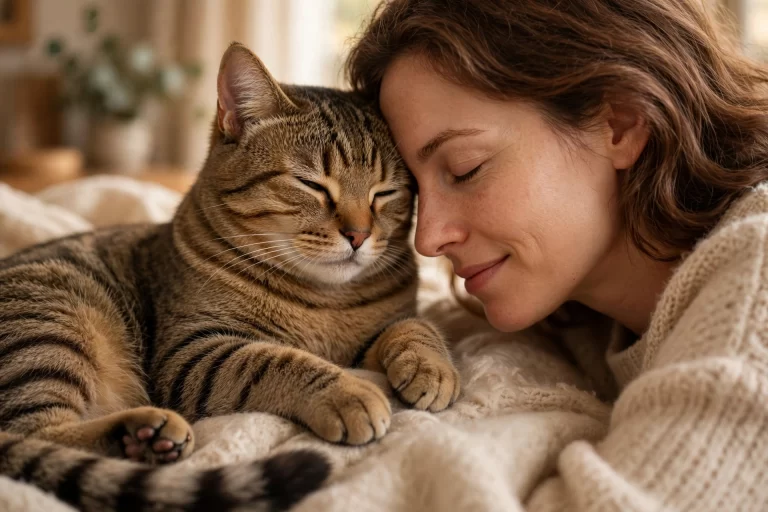
That Sandpaper Lick Means Something — Why Your Cat Licks You
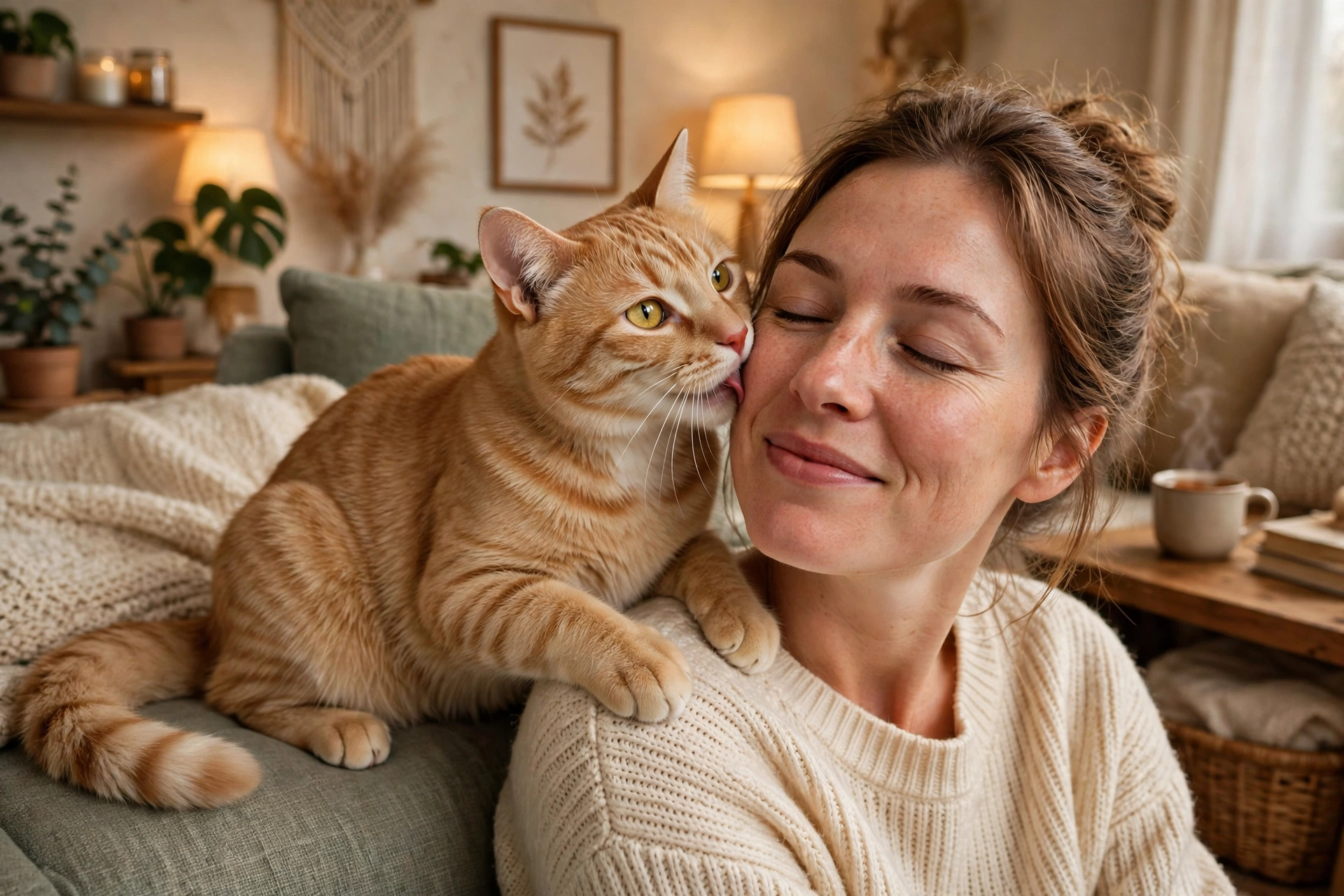
It is three in the morning. You are half asleep, and something rough is dragging across your forehead. You open one eye. Your cat is sitting on your chest, licking your face like she has just discovered a new hobby. You push her away gently. She comes back. And in that foggy half-awake way, you wonder: why do cats lick you?
It means something — usually several somethings at once. A cat’s lick is grooming, scent, taste, comfort, and communication, all in one small, sandpapery gesture. The trick is knowing which one you are getting, and when a lick stops being a quirk and starts being a message worth taking to the vet.
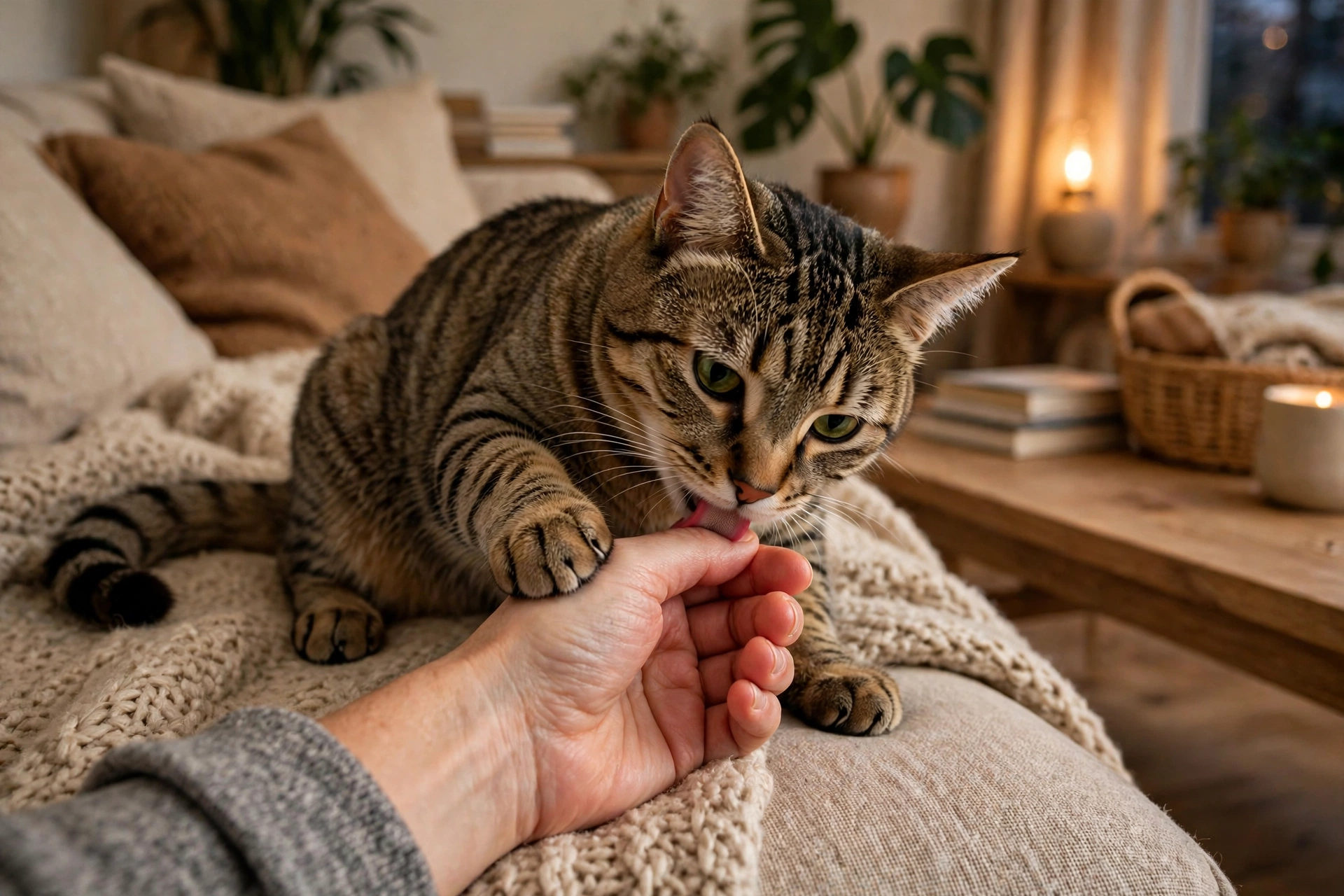
First, the tongue itself
Before the reasons, it helps to know what you are feeling. A cat’s tongue is covered in tiny, backward-facing spines called papillae, made of keratin — the same material as your fingernails. They point toward the throat, which is why a lick feels like sandpaper, and why a cat can use its tongue as a comb, stripping loose fur and dirt from its coat.
Those spines are also why licking can hurt. A few affectionate licks on your hand are harmless, but the same tongue applied to the same patch of a cat’s own belly, hour after hour, can break the skin — which matters when we get to over-grooming. For now, the point is simple: the tongue is a grooming tool first and everything else second. When a cat turns it on you, it is using that tool on a person it considers part of its world.
Cats spend an enormous share of their lives doing this to themselves — PetMD puts it at about two to five hours a day, and Cornell’s Dr. Pamela Perry puts it at 30 to 50 percent of a cat’s day. Grooming is not a side activity. It is close to a part-time job: cleaning, temperature control, stress relief, and social bonding, all in one motion.
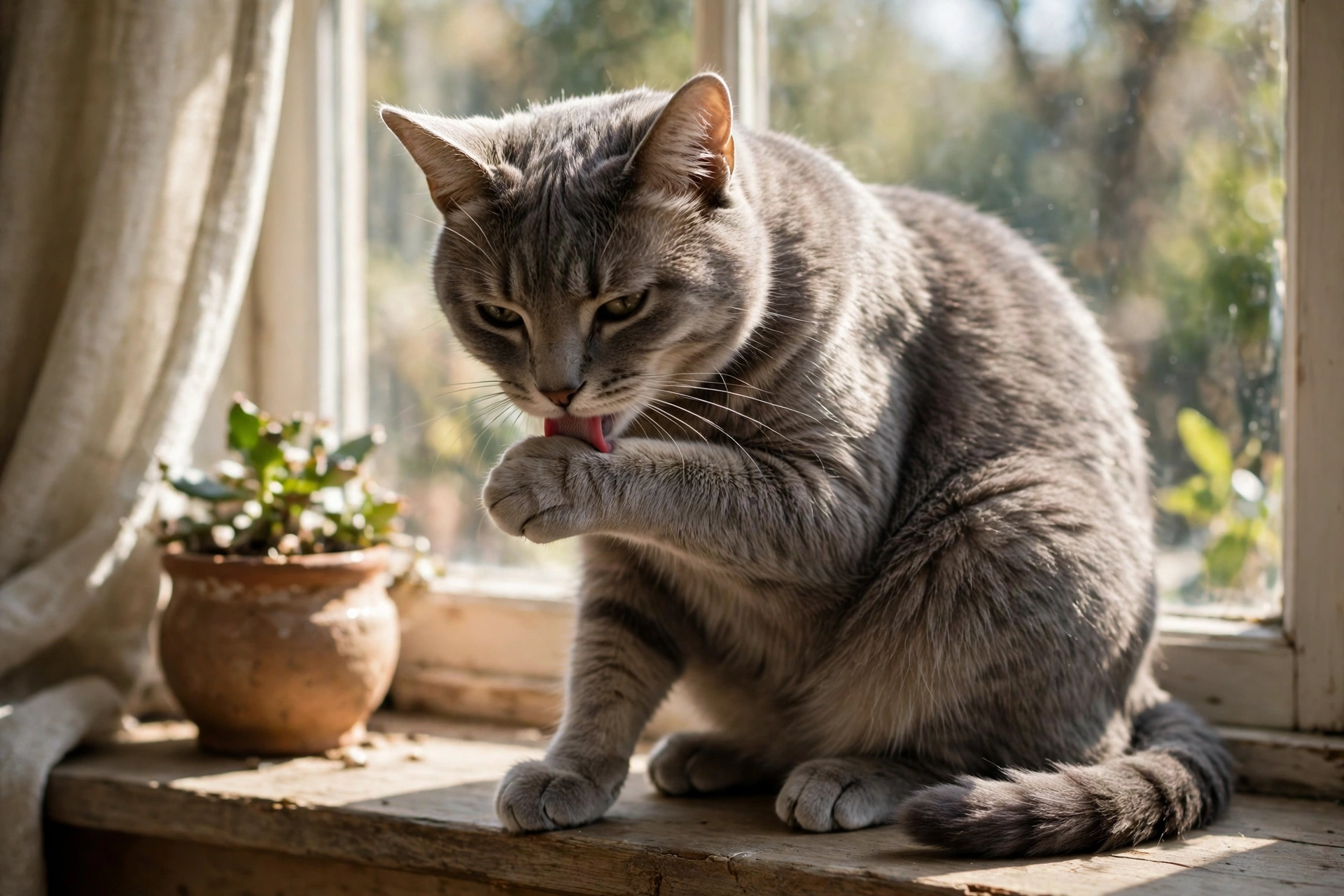
Reason 1: You are part of the group
The most common reason is also the most flattering, once you understand it in cat terms. Cats groom each other. The behavior has a name — allogrooming — and bonded cats do it constantly: a lick on the head, a pass over the ears, a shared session on the sofa.
Mother cats lick their kittens from birth, and adults that trust each other keep the habit. When your cat licks your hand or your face, it is very likely extending that behavior to you. You are not standing outside the group. You are in it, and group members get groomed.
Cats have scent glands on the top of the head and along the cheeks, and when they lick each other’s faces they combine scents into a shared “colony scent” — a smell that says these animals belong together. Your cat licking you does the same: mixing its scent with yours, so you smell like home.
Licking often comes with other bonding behaviors — headbutting, kneading on your lap, sleeping pressed against you — all saying the same thing: you are trusted, and you belong here.
Reason 2: Scent marking — you are theirs
Closely related is marking. Cats are territorial, and they mark what matters to them: they rub their cheeks on furniture, scratch their posts, and lick the people they consider theirs.
This is not dominance. It is the same instinct that makes a cat rub its face on a new bookshelf. Licking deposits scent and picks it up at the same time. Your cat does the same to you after you come home smelling of the outside world — re-marking you.
If your cat licks you more after you have been out all day, or after you have showered and changed, this is probably why. You came back smelling wrong. The licking is a correction.
Reason 3: A leftover from kittenhood
Some licking is a comfort behavior from kittenhood that never leaves. Kittens knead and suckle while nursing, and the two stay linked for life: a cat that kneads on your lap may start licking the same spot, and one weaned too early may lick more than most, seeking the comfort of nursing.
This is also why licking shows up at bedtime, or when a cat is settling in for a nap — a self-soothing rhythm, the adult version of a kitten’s nursing routine. The cat is not asking for anything. It is calming itself down, and you happen to be the warm surface it chose.
If your cat licks you and then drifts off to sleep, that is the most likely explanation: the feline equivalent of a child sucking its thumb.
Reason 4: You taste interesting
This one is less romantic and entirely honest. Human skin tastes interesting to a cat: sweat contains salts and sugars cats may find appealing, and your skin picks up food residue, lotions, shampoos, and perfumes all day. A cat that licks your hand after you have eaten, or your legs after a workout, may simply be investigating a flavor.
Hands carry food and petting scents, feet and legs carry sweat and new smells from outside, and hair can smell interesting or remind a cat of another cat’s coat. A cat licking your hair is treating it the way it would treat another cat’s fur — investigating it, grooming it, figuring out what it is.
There is a safety point hiding in this reason. Do not let your cat lick skin that has lotions, ointments, or other topical products on it — some ingredients in human skincare and medicines are toxic to cats. If you are concerned your cat has ingested a lotion or a medical ointment, PetMD advises calling your veterinarian or Pet Poison Helpline at 855-764-7661 (a fee applies) right away.
Reason 5: It works — licking gets your attention
Cats are fast learners, and licking gets results. You talk to the cat, pet it, laugh, or get up and open the treat cupboard. From the cat’s point of view, licking is a button that makes good things happen.
This is why licking can become a habit and escalate. A cat that earns a chin scratch with three licks will try five next time; one fed after licking you at 5 a.m. will do it again tomorrow. The cat is not being manipulative — it is doing what works.
The fix, if the licking bothers you, is to make it stop working — gently. Do not punish the cat or shove it away. Instead, redirect: offer a toy, move your hand calmly out of reach, or get up. Reward the calm that follows. The cat will learn a new button soon enough.
Reason 6: Licking calms the cat down
Licking is also self-soothing: cats lick themselves when stressed, and may lick you for the same reason. A new piece of furniture, a visitor, a thunderstorm, a change in routine — any of these can send a cat looking for something rhythmic and familiar.
Cornell lists the classic triggers — a recent move, the addition or loss of another pet, a change in the household schedule. Cats like consistency and predictability, and when those break down, licking is one of the ways they cope.
If licking clusters around stressful moments — a vet visit, a house move, guests arriving — anxiety is a likely contributor. The answer is not to stop the licking but to reduce the stress: keep routines steady, give the cat a quiet hiding place, play with it daily, and let it come to you on its own terms.
Reason 7: Trust and bonding — but not “love” the way you mean it
This is the reason most owners hope for. When a cat licks you, it is showing trust and affection in the way cats show those things: letting you close, offering you grooming, treating you as a member of its social group. Purina puts it simply — cats groom people they trust, so a lick can be a bonding moment.
But it is worth being honest about what that is not. A cat does not feel “love” the way a person does, and licking is not a declaration of it — cats do not have a human concept of love, and their social bonds work differently from ours. What a lick means, in cat terms, is trust, familiarity, and group membership, which for a cat is about as close to love as it gets.
That is not a lesser thing. A cat that trusts you enough to groom you feels safe with you. It has decided you are part of its world and is maintaining that bond the only way it knows how. If you want to return the favor, a slow blink and a calm hand will do.
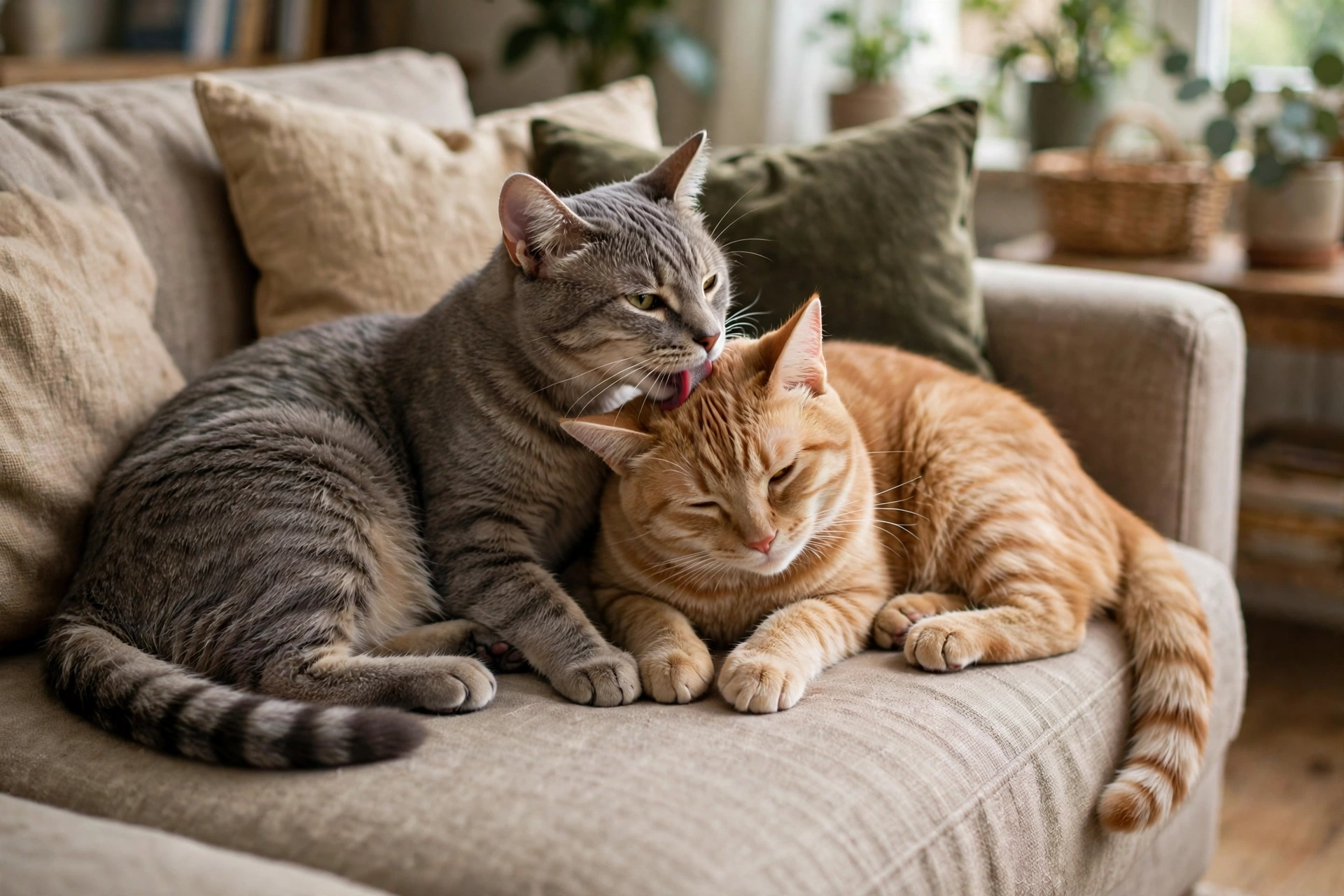
When licking becomes too much
Most licking is normal. Some of it is a warning. The line between the two is the amount, the target, and the damage.
Normal licking is occasional and relaxed, aimed at you or at the cat’s own coat in short sessions. The cat can be distracted from it, and the fur and skin stay intact.
Over-grooming is different. International Cat Care describes it as grooming past the point of coat care, often focused on the belly, the inner hind legs, and the flank. The signs are broken or thinning hair, bald patches, sore or red skin, and grooming the cat cannot be distracted from. Cornell adds that licking causing excessive hairballs or hair loss is abnormal, and that a rough tongue can break the skin and start an infection — which makes the cat lick more, in a cycle that worsens on its own.
The causes split into two groups. Pain makes licking focus on one spot. Itch makes it spread: Cornell’s Dr. William Miller calls itchy cats “fur mowers,” noting that licking at the tail base may point to fleas, while pollen or food allergies may drive licking of the back or abdomen. Stress can cause over-grooming too, but it is the less common cause — in one study reported by Clinician’s Brief, a medical cause of itch was found in 76 percent of cats first thought to be over-grooming from stress, and only 10 percent were purely behavioral. That is why the first step is always a vet visit, not a calming diffuser.
Here is what to do if you suspect over-grooming:
- Book a vet visit. Do not wait for the bald patch to grow. A vet can check for fleas, allergies, pain, and skin infection, and rule them out before anyone talks about stress.
- Check the basics first. Look for fleas, lice, and fur mats — then let a vet take over.
- Do not punish the licking. Punishment adds stress, which can make the behavior worse, and it damages the trust that brings the cat to you.
- Keep play and routine steady. Daily interactive play, regular mealtimes, and a calm, predictable home help a stressed cat settle. If the vet finds a stress cause, they can advise on next steps.
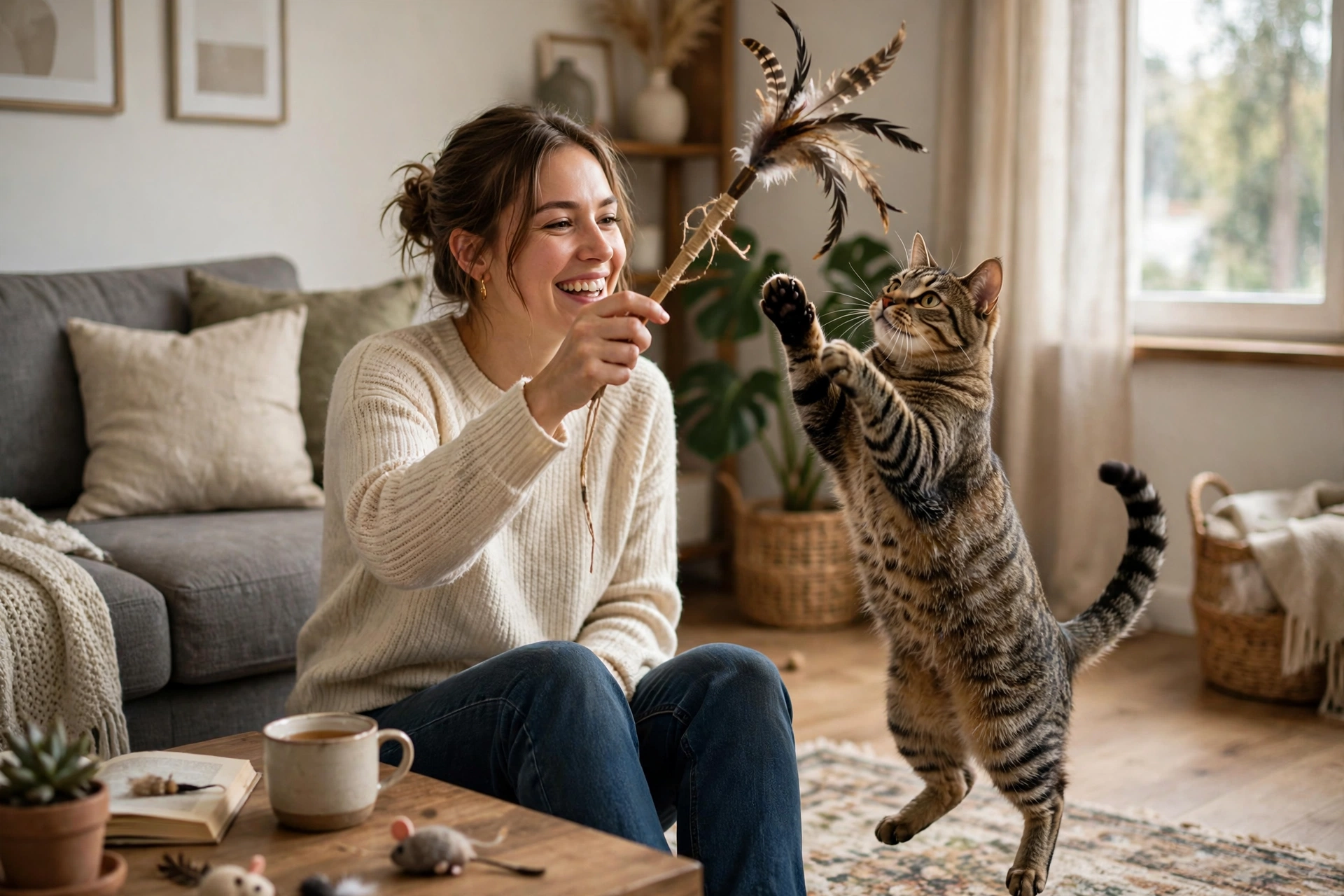
What to do when your cat licks you
If the licking is normal — and most of the time it is — you do not need to do anything at all. Enjoy it, if you can stand the sandpaper. If it bothers you, or it happens at 3 a.m. on your face, here is how to respond well:
- Redirect, don’t scold. Move your hand or face calmly away, offer a toy, or get up. Reward the cat when it settles.
- Skip scented products on lickable skin. Unscented moisturizer — or none at all on hands and arms before cuddle time — removes the temptation and the risk.
Frequently asked questions
Is it normal for cats to lick their owners?
Yes. Licking people is normal feline behavior, and most cats do it sometimes — the same social grooming cats do with each other, extended to you. It becomes a concern only when it is constant, cannot be interrupted, or comes with hair loss or sore skin.
Does my cat licking me mean it loves me?
Not in the human sense. A cat has no human concept of love, and licking is not a declaration of it. In cat terms it means trust, bonding, and group membership — your cat treats you as part of its social group and feels safe enough to groom you.
Why does my cat lick me and then bite me?
Usually play or overstimulation. A cat enjoying a grooming session can tip into excitement and give a small nip, the same way a cat being petted can suddenly bite when it has had enough. If the bite is hard or the cat seems tense, stop calmly and give the cat space.
Why does my cat lick my face or my hair?
Face licking is a sign of trust — the face is vulnerable, and a cat that licks it treats you the way bonded cats treat each other. Hair licking is usually about scent and texture: hair smells interesting, carries shampoo and product scents, and reminds a cat of another cat’s coat. Both are normal.
When should I worry about my cat licking too much?
Book a vet visit if the licking is constant, if the cat cannot be distracted from it, if there are bald patches or broken hair (often on the belly, inner hind legs, or flank), if the skin is red or sore, or if the cat brings up more hairballs than usual. Sudden changes matter too — a cat that starts licking excessively out of nowhere deserves a check-up.
So why do cats lick you? Because their tongue is sandpaper for a reason: a grooming tool, a scent brush, a taste tester, and a comfort blanket, all in one. Most of the time, when it lands on your hand at three in the morning, it is simply your cat doing what cats do with the creatures they trust. Let it lick. Just wash your hands first, and keep the lotion out of reach.