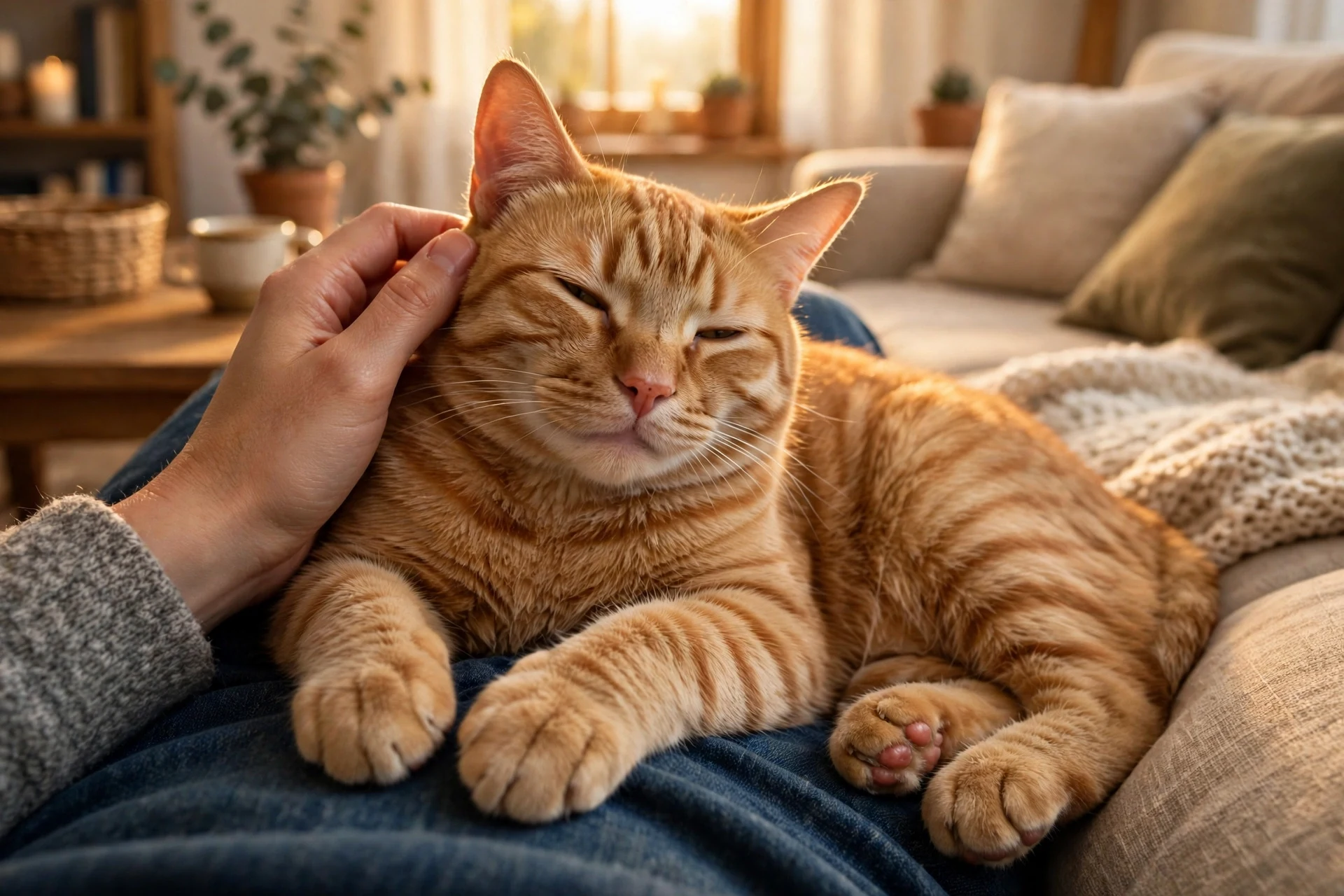
A cat is curled on a lap in the evening, eyes half-closed, a hand moving slowly along its back, the room quiet except for the low, steady rumble from the cat’s throat. Anyone watching would read the scene in a second: a happy cat, asking for nothing more than for the stroking to continue.
Now picture a different room. A cat is on a vet’s examination table, tense, ears back, body low, the vet checking a sore leg. And the cat is purring. Same low rumble. Same steady rhythm. Nothing else about the two scenes matches.
That is the puzzle at the heart of why do cats purr. The sound is one of the most familiar in a cat owner’s life, and one of the most misunderstood: it shows up in the happiest moments and in some of the worst, and until very recently scientists were not even sure how a cat made it at all. In 2023, a study rewrote that picture — without quite settling the argument.
How does a cat make a purr?
A purr is a low, continuous vibration, and the first thing to notice about it is how unlikely it sounds. A house cat is a small animal with a small throat, yet it produces a sound at roughly 25 cycles a second — far below a meow, which averages around 620 Hz (Nicastro and Owren, 2003, 100 meows measured). A purr is usually described in the range of 25 to 150 Hz, most concentrated at 25 to 50 Hz; Schötz and Eklund, recording four house cats in 2011, found purrs at about 21 to 27 cycles a second. A meow happens on the out-breath, while a purr runs through both the out-breath and the in-breath.
For half a century, the accepted explanation was a kind of clockwork. In 1972, Remmers and Gautier recorded the laryngeal muscles of purring cats firing in bursts 20 to 30 times a second, each burst snapping the glottis — the opening between the vocal folds — shut, driven, it was thought, by a neural oscillator, a sort of metronome in the brain. But the circuit keeping the rhythm was never pinned down. Nobody found the metronome.
Then, in November 2023, a study in Current Biology offered a very different answer. Researchers led by Christian Herbst at the University of Vienna worked with the larynges — the voice boxes — of eight domestic cats euthanised for terminal illness, with their owners’ consent. Mounted on a rig, with warm, humidified air blown through them and no brain, nerves, or muscle input, all eight produced self-sustained oscillations at 25 to 30 Hz — typical purring rates — with airflow alone. The reason lies in the vocal folds themselves: they contain pads of connective tissue, up to about 4 millimetres across, that add mass and let them vibrate at low frequencies on their own, through a myoelastic-aerodynamic mechanism — air pressure and tissue elasticity sustaining the vibration, similar in principle to human vocal fry.
The study — Herbst et al., “Domestic cat larynges can produce purring frequencies without neural input,” Current Biology 33(21), 4727–4732.e4, 6 November 2023 (DOI: 10.1016/j.cub.2023.09.014) — does not close the question. The tissue had been frozen and thawed; air flowed one way only, so the in-breath part of a real purr was not tested; and the authors explicitly wrote: “We therefore do not rule out cyclic neural control during cat purring in vivo.” In a living cat, the brain may still shape, time, or sustain the vibration. The most likely reading is that both mechanisms may work together: the folds are built to vibrate at purring rates on their own, and the brain may still conduct the performance — “all muscle, all air, or a bit of both?”, as a 2023 Current Biology commentary by Reby and Anikin titled it. The throat can do it alone. Whether it ever does, in a living cat, is still unknown.
Further reading on the 2023 study: Wondrik’s “Why Do Cats Purr?” and Great Pet Care’s “How Exactly Do Cats Purr?”
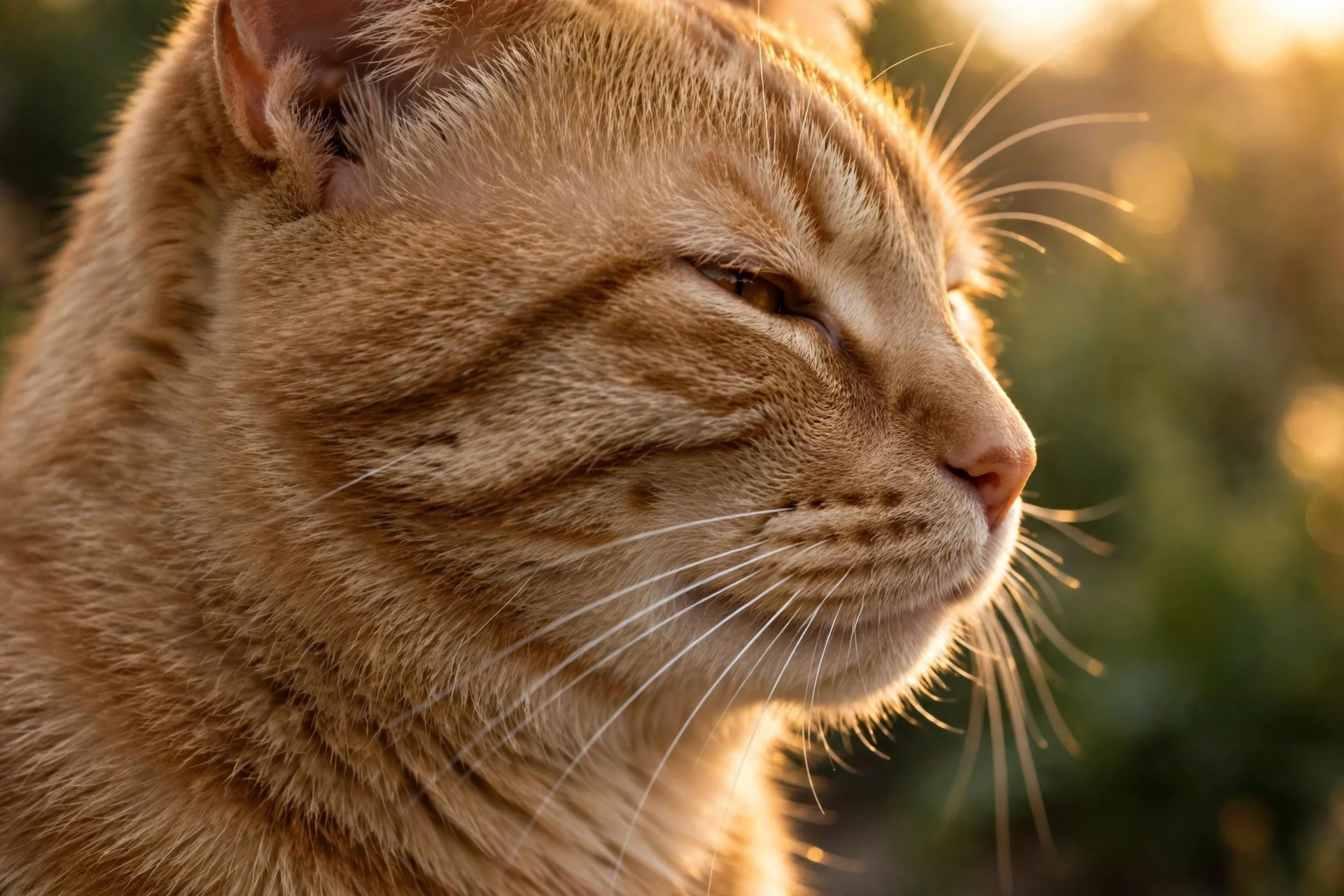
Which cats purr — and which roar instead?
Not every cat purrs. House cats purr, and they cannot roar. Lions, tigers, leopards, and jaguars roar, and they do not purr the way a house cat does. A lion can make a purr-like hum, but only on the out-breath — it cannot keep the sound going through the in-breath the way a house cat can. On the other side, cheetahs, ocelots, servals, and pumas all purr; the puma is the largest cat that purrs. A cheetah’s purr is strikingly slow, each breath phase lasting about three seconds against a house cat’s half-second.
For a long time, the split was explained by a single bone. In the 1830s, anatomist Richard Owen proposed that the hyoid bone — the small bone anchoring the tongue and larynx — decided it: roaring cats had a flexible hyoid, purring cats a rigid one. It survived for more than a century, but it is now considered too simple: the snow leopard has the hyoid of a roaring cat, yet cannot roar. A later explanation, put forward by Weissengruber and colleagues in 2002, looks at the whole voice box: roaring depends on big vocal folds and a long vocal tract. Purring belongs to cats whose vocal folds are built the other way — small, with those heavy connective-tissue pads that let them hum at 25 cycles a second.
Why do cats purr? It starts with kittens
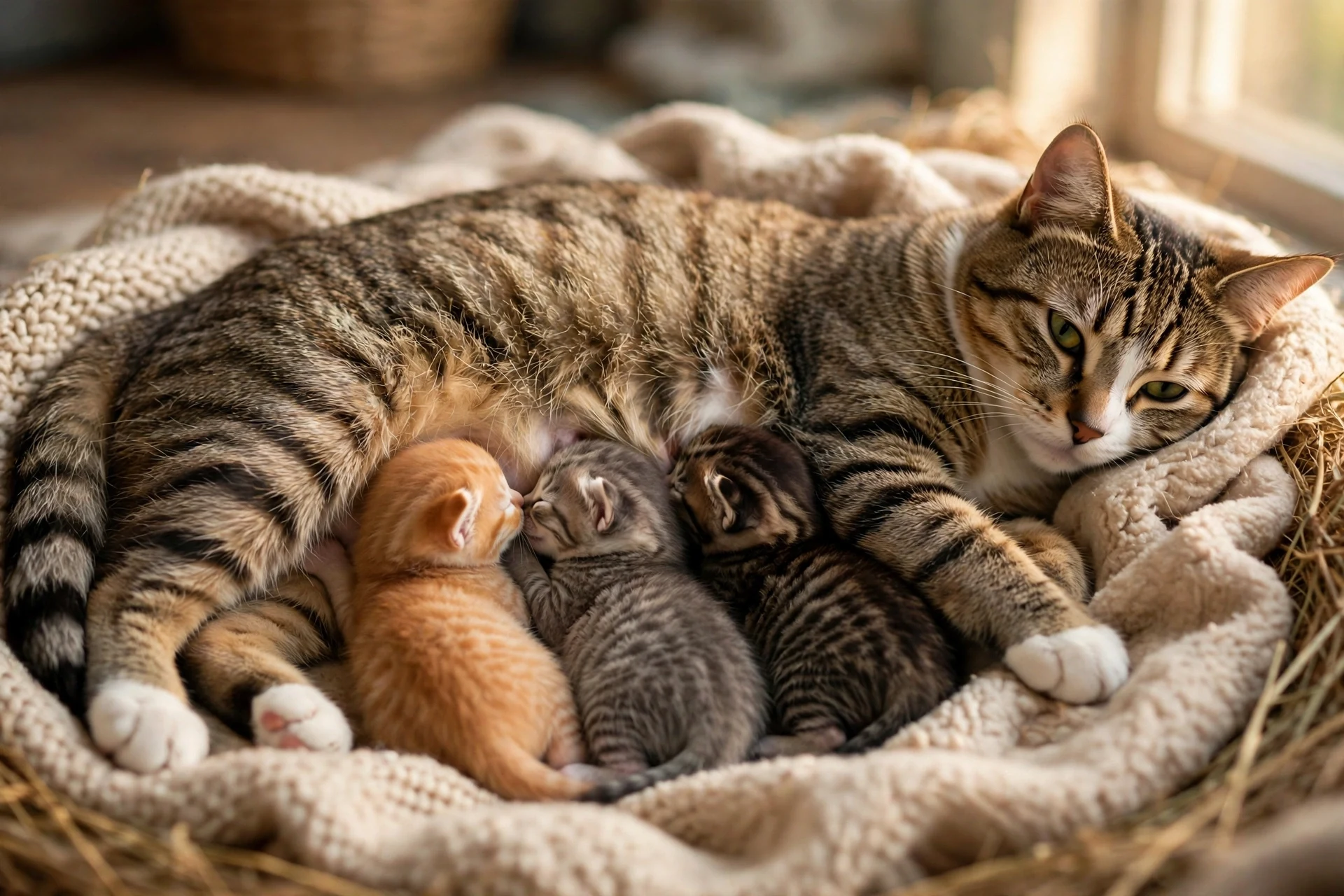
If the “how” was rewritten in 2023, the “why” has been understood for longer — and it starts before a kitten can even see or hear. Kittens are born with eyes sealed shut and ear canals closed; within the first couple of days they purr while suckling, and the mother purrs while nursing. PetMD notes kittens can purr from two days old, while nursing, and that purring while kneading is a residual kittenhood pattern.
The purr is, first of all, a practical tool for a newborn that cannot see its mother or hear her call: the vibration tells the kitten where the mother is, and the mother’s answering purr tells the kittens that all is well. Biologist John Bradshaw put it plainly: “It starts off with kittens purring to get their mothers to lie still while they’re suckling, and it goes on into adulthood.”
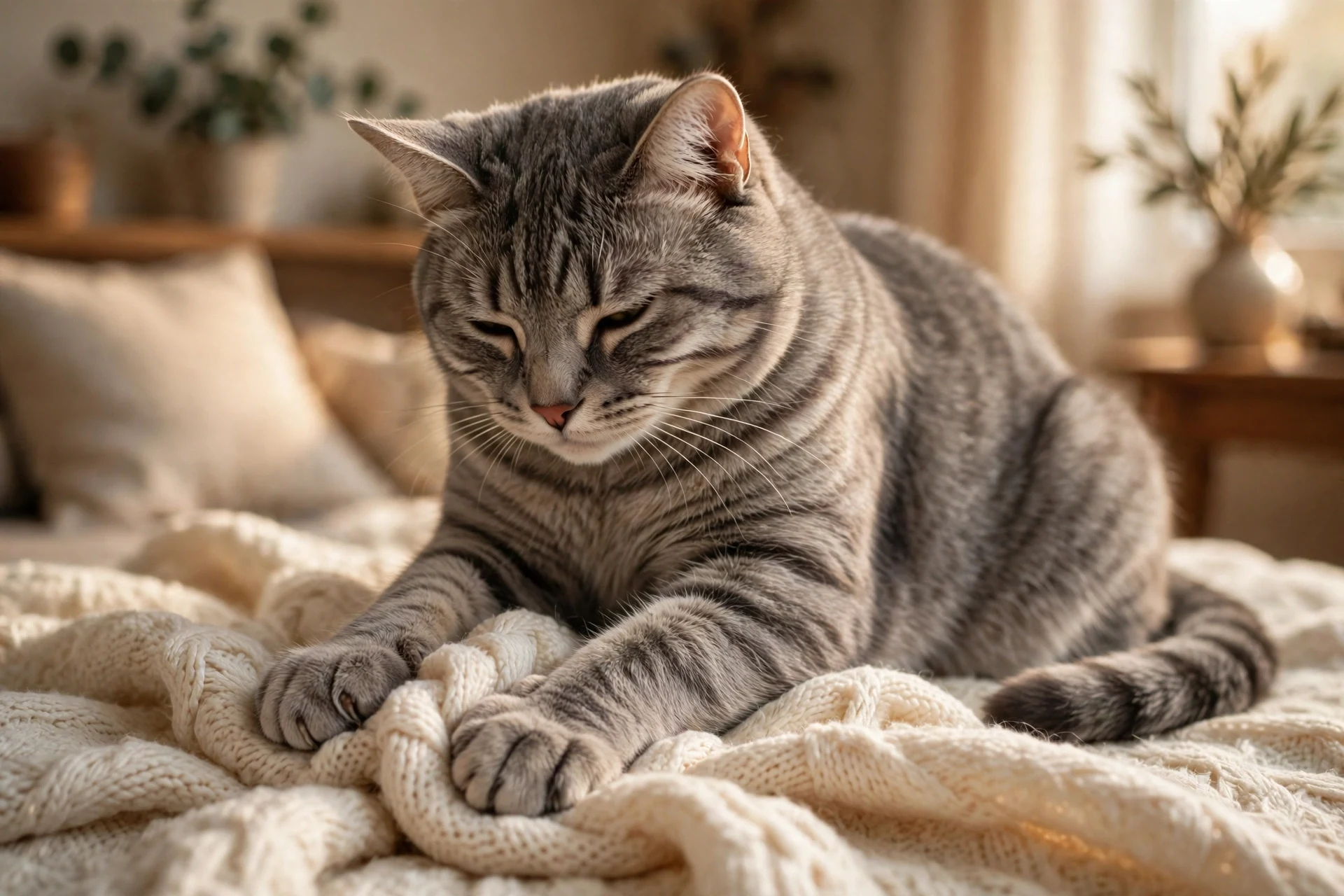
That early job never really goes away. An adult cat purring on a lap is, in one sense, still doing what it did as a kitten: using the sound to keep a companion close and settled. The kneading that often goes with it is part of the same picture: a kitten kneads its mother’s belly to stimulate milk flow, and many adult cats knead while they purr. PetMD describes purring while kneading as a residual kittenhood pattern. Why Do Cats Knead?
Contentment — but not only contentment
The most familiar meaning of a purr is contentment, and it is a real one: a cat stretched out in a sunny spot, being stroked on a lap, or settling down after a meal is comfortable, and the purr is part of that comfort. The mistake is treating it as the only meaning. PetMD, in “Why Do Cats Purr? 5 Meanings Behind a Purring Cat,” lists contentment alongside stress, a desire for attention, and illness — the same sound, with the meaning depending on the situation and the cat’s body language. Cats purr when injured, while giving birth, on the vet’s examination table, and when gravely ill.
That is why the lap scene and the vet’s table scene can both be true. The sound is the same; the situation is everything. A purr on its own does not tell you how a cat feels — the ears, tail, and posture do, and whether the body is loose or tense, seeking contact or trying to disappear. Bradshaw’s framing helps here. Signals like the purr, he argues, “don’t evolve just to convey emotions.” A purr looks less like a mood report and more like a request — “stay with me” — and it may also soothe the cat itself, although nobody has tested that. A cat in pain purring on the vet’s table may be asking for comfort, or calming itself, rather than announcing that it is fine. The practical point is blunt: a cat purring through an injury has not told you it is fine.
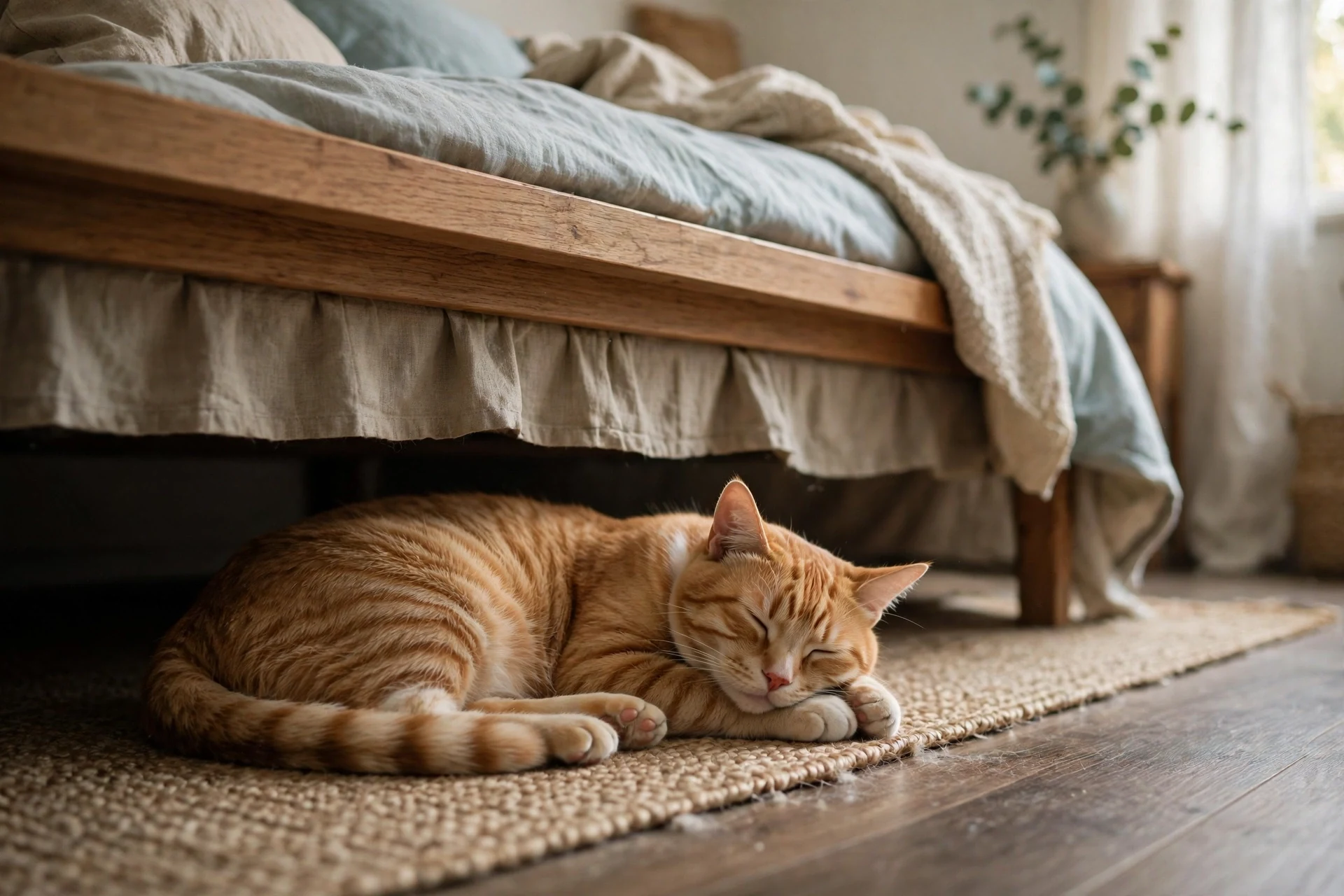
The solicitation purr: a cry hidden inside the rumble
There is one more use of the purr, and it is the cleverest. Inside some purrs sits a higher-pitched sound — a cry, woven into the rumble, that humans find very hard to ignore. Researchers at the University of Sussex, led by Karen McComb, recorded ten cats purring while relaxed and while angling for food, and played the recordings to 50 listeners, 20 of whom had never owned a cat. The food-seeking purrs were rated more urgent and less pleasant. The difference was a higher-pitched component — a cry peaking at around 380 Hz, inside the 300 to 600 Hz range of a healthy human baby’s cry. Removing that component made the purrs sound less urgent.
The study, published in Current Biology in 2009, is neat evidence that cats have learned to work on human instincts. McComb put the advantage plainly: “Solicitation purring is probably more acceptable to humans than overt meowing, which is likely to get cats ejected from the bedroom.” A cat purring insistently in the early morning is often not just being affectionate — it is using the one sound its owner is least likely to ignore.
Does purring heal bones? A hypothesis, not a fact
No claim about purring travels further than the idea that the sound itself heals. The evidence behind it is real — and the claim itself is not proven, so it needs labelling honestly. The idea comes from bioacoustician Elizabeth von Muggenthaler, who presented “The felid purr: A healing mechanism?” — question mark and all — to the Acoustical Society of America in 2001, having recorded 44 cats, from house cats to cheetahs and pumas; all produced strong frequencies between 25 and 150 Hz, overlapping frequencies used in bone and tissue research.
There is also a striking animal study behind the idea. In a 2001 Nature study, Rubin and colleagues stood adult sheep on a vibrating platform for 20 minutes a day for a year at 30 Hz; the spongy bone near the top of their thigh bones ended up about 34 percent denser than in untreated sheep.
What is missing is the step that would turn those two facts into a claim about cats. Nobody has measured how hard a purr shakes a cat’s own skeleton, and there are no controlled studies showing cats heal faster because they purr. International Cat Care presents healing properties as a theory, as it does self-soothing. Purring happens at frequencies that, in other settings, have been linked to bone density — an intriguing coincidence, not evidence that a purring cat is healing itself. A cat with a broken bone still needs a vet, however much it purrs.
When a purr is a worry
Most purring is nothing to worry about. The worry starts when the purr does not fit the situation — or when it comes with other changes. Call the vet if a cat is purring and also hiding, eating less or not at all, breathing unusually, or purring after an injury. A cat that has suddenly started purring much more than usual, or has suddenly stopped purring altogether, is also worth a call, especially if anything else about its behaviour has changed. None of those signs on its own proves something is wrong; together, they are the kind of change a vet should hear about.
The rule is simple: a purr is not proof that a cat is fine. The other signals — appetite, breathing, hiding, movement, posture — tell you whether the purr is a happy sound or a request for help. If you are unsure, describe what you see to your vet and let them decide.
Frequently asked questions
Do cats purr only when they’re happy?
No. Cats purr when content, but also when stressed, injured, giving birth, or seriously ill. PetMD lists contentment, stress, a desire for attention, and illness as meanings a purr can carry; the meaning depends on the situation and body language.
Can big cats purr?
Some can, and some cannot. House cats, cheetahs, ocelots, servals, and pumas purr; the puma is the largest cat that purrs. Lions, tigers, leopards, and jaguars roar instead and do not purr the way a house cat does, although a lion can make a purr-like hum on the out-breath only. The old hyoid-bone explanation is now considered too simple: the snow leopard has the hyoid of a roaring cat but cannot roar.
Why does my cat purr and knead at the same time?
Both come from kittenhood. Kittens purr while suckling, from as early as two days old, and knead their mother’s belly to stimulate milk flow; many adult cats carry both into later life. PetMD describes purring while kneading as a residual kittenhood pattern.
Does purring heal bones?
This is a hypothesis, not a proven fact. Von Muggenthaler found in 2001 that cats produce strong frequencies between 25 and 150 Hz, overlapping frequencies used in bone research, and a 2001 Nature study found sheep on a platform vibrating at 30 Hz for 20 minutes a day for a year ended up with about 34 percent denser thigh bone. But nobody has measured how hard a purr shakes a cat’s own skeleton, and no controlled studies show cats heal faster because they purr.
Should I worry if my cat suddenly purrs more than usual — or stops purring?
A change in either direction is worth noticing. A cat purring much more than usual, especially alongside hiding, not eating, unusual breathing, or an injury, should be seen by a vet; a cat that has suddenly stopped purring is also worth mentioning to a vet. A purr on its own is not proof a cat is fine — it is the change, and what comes with it, that matters.