The British Shorthair Is a Teddy Bear Who Prefers the Sofa to Your Lap
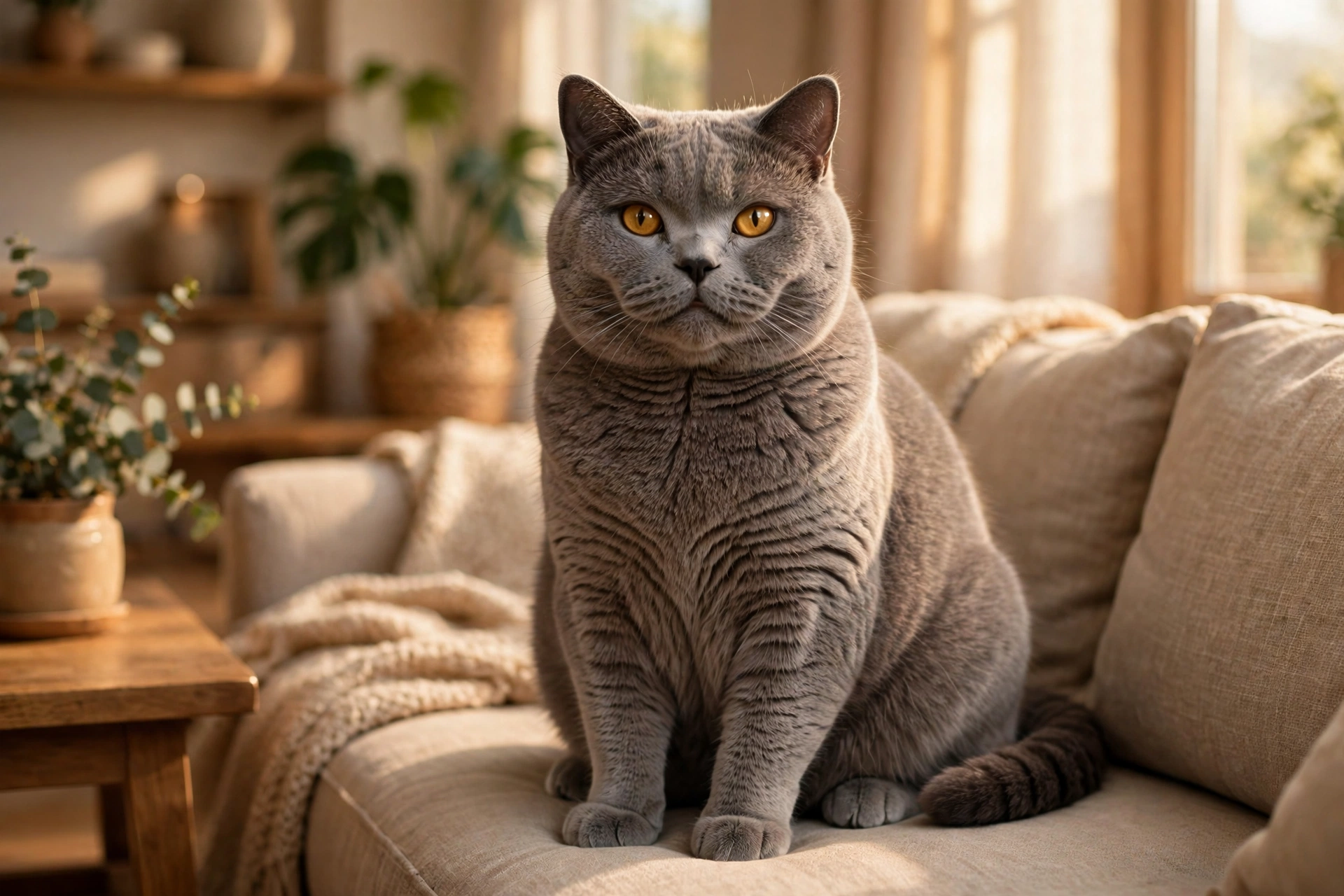
The British Shorthair does not rush. It walks into the room, considers the sofa, and settles itself with the air of a cat that has already decided this is its house and you are a welcome guest in it. It is round, plush, and calm — PetMD calls it “the teddy bear of cat breeds” — and it will sit beside you for hours, purring quietly, as long as you do not pick it up. That last part matters, because it is the one thing about the British Shorthair that surprises new owners most. This is what the British Shorthair cat personality is really like.
What a British Shorthair actually is
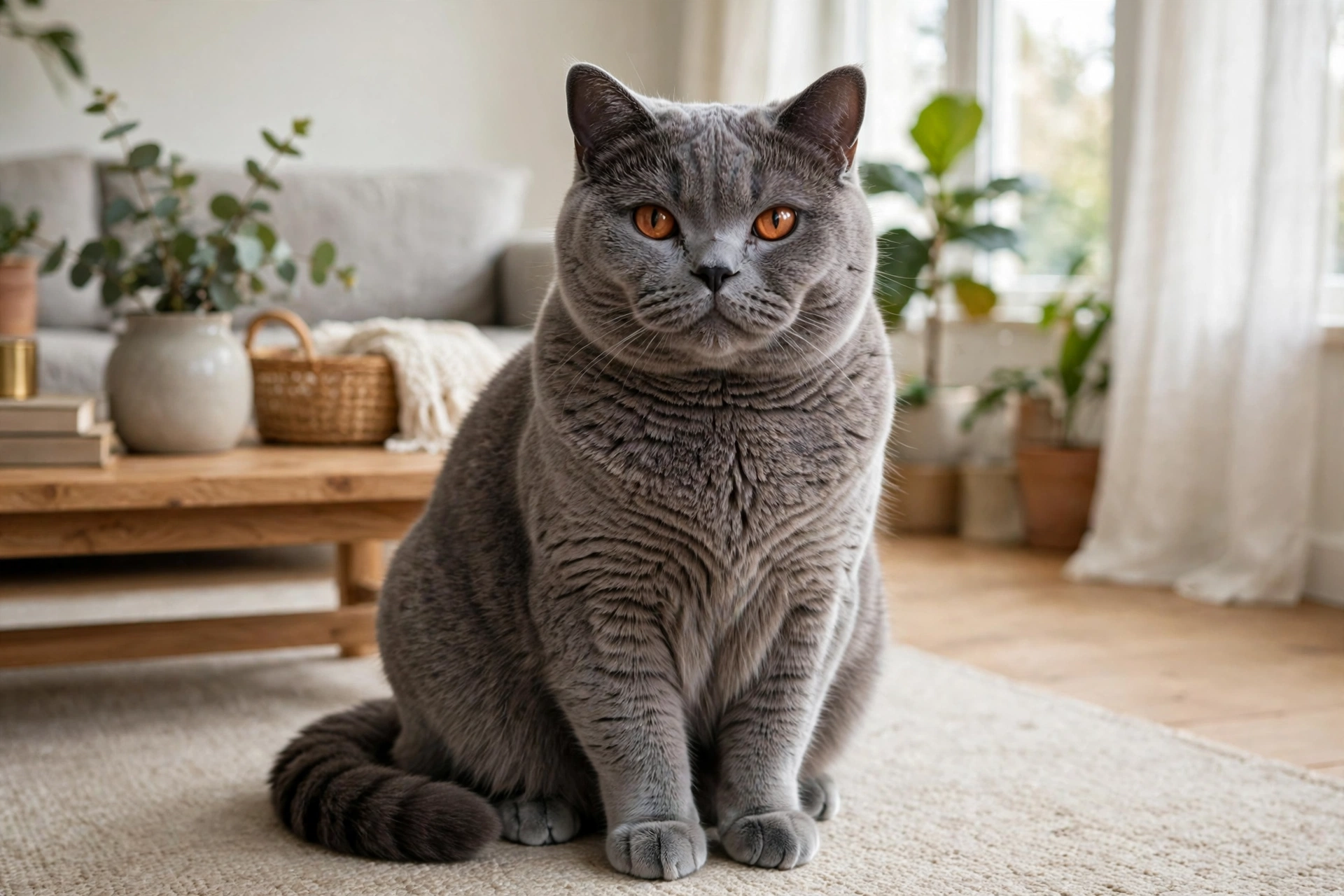
The British Shorthair is the pedigree version of Britain’s ordinary domestic cat — the landrace of British street and farm cats, shaped over a century and a half into one of the first pedigree breeds. It is a medium-to-large cat, compact and powerfully built, with a broad chest, thick legs, and a big round head with full cheeks. The CFA’s standard describes a round head, round eyes, round paws, and a dense “crisp” coat that “breaks” over the body’s contours.
Size is the first thing people notice. PetMD puts adult males at up to 17 pounds and females at up to 12 pounds. It is a heavy cat — denser than it is tall — and it does not get there quickly: like the Maine Coon, it is slow to mature, still growing and kitten-like well into its third or fourth birthday, and not fully developed until three to five years old.
The most famous colour is blue — the solid grey the breed is known for, the “British blue” — but the breed comes in dozens of colours and patterns, from black and white to cream, tabby, and silver-tipped Chinchilla.
The personality: a dignified companion, not a lap cat
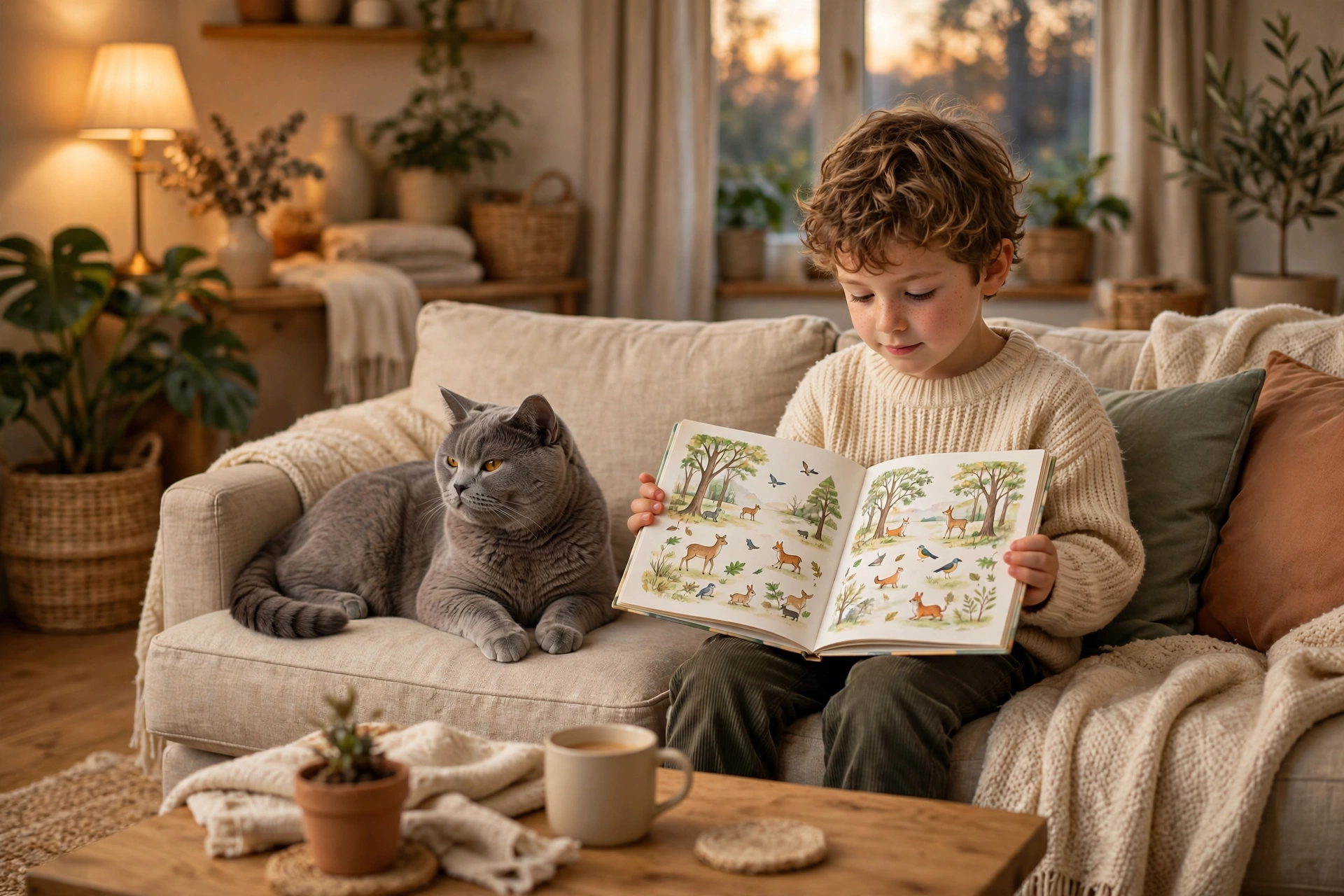
The words the registries use are the same words owners use: calm, dignified, affectionate, and loyal. TICA describes British Shorthairs as friendly and affectionate in an undemanding way — “not lap cats but want to be where you are, snuggling up beside you on the sofa”. PetMD says the same thing from the other side: although they enjoy sitting on laps, they prefer all four paws to be left on the ground rather than being lifted or carried. The CFA notes that the breed bonds with the whole family rather than a single person, learns household routines quickly, and usually gets along with dogs and other cats.
That easy-going nature does not mean the British Shorthair is a decoration. It is quiet — rarely loud, rarely demanding — and it has an independent side that PetMD says “relishes time spent on their own”. A British Shorthair does not mind being left alone for a few hours, and it is not prone to separation anxiety, which makes it a good choice for a household where people work. It will greet you at the door when you come home, follow you into the kitchen, and then sit a polite distance away while you cook.
There is one thing a British Shorthair usually is not: a cat that likes to be picked up. Most dislike being carried, and many will tolerate a brief hold and then wriggle free. It is not unfriendliness — it is dignity. The breed’s affection is expressed by presence, not by being held: beside you on the sofa, not on your lap; near you in the room, not in your arms. If what you want is a cat that lives on your knees, a British Shorthair will disappoint you. If what you want is a calm companion who is simply there, it will not.
The coat: plush, dense, and easy to keep
The coat is the breed’s signature. Short, dense, and plush, it stands away from the body rather than lying flat, and the CFA’s standard describes it as “crisp”, dense enough to “break” over the body’s contours. Run a hand through it and it feels like plush upholstery — firm, springy, and thick. The famous blue coat is the one most people picture, with copper or deep gold eyes, but the same dense coat comes in every colour the breed allows.
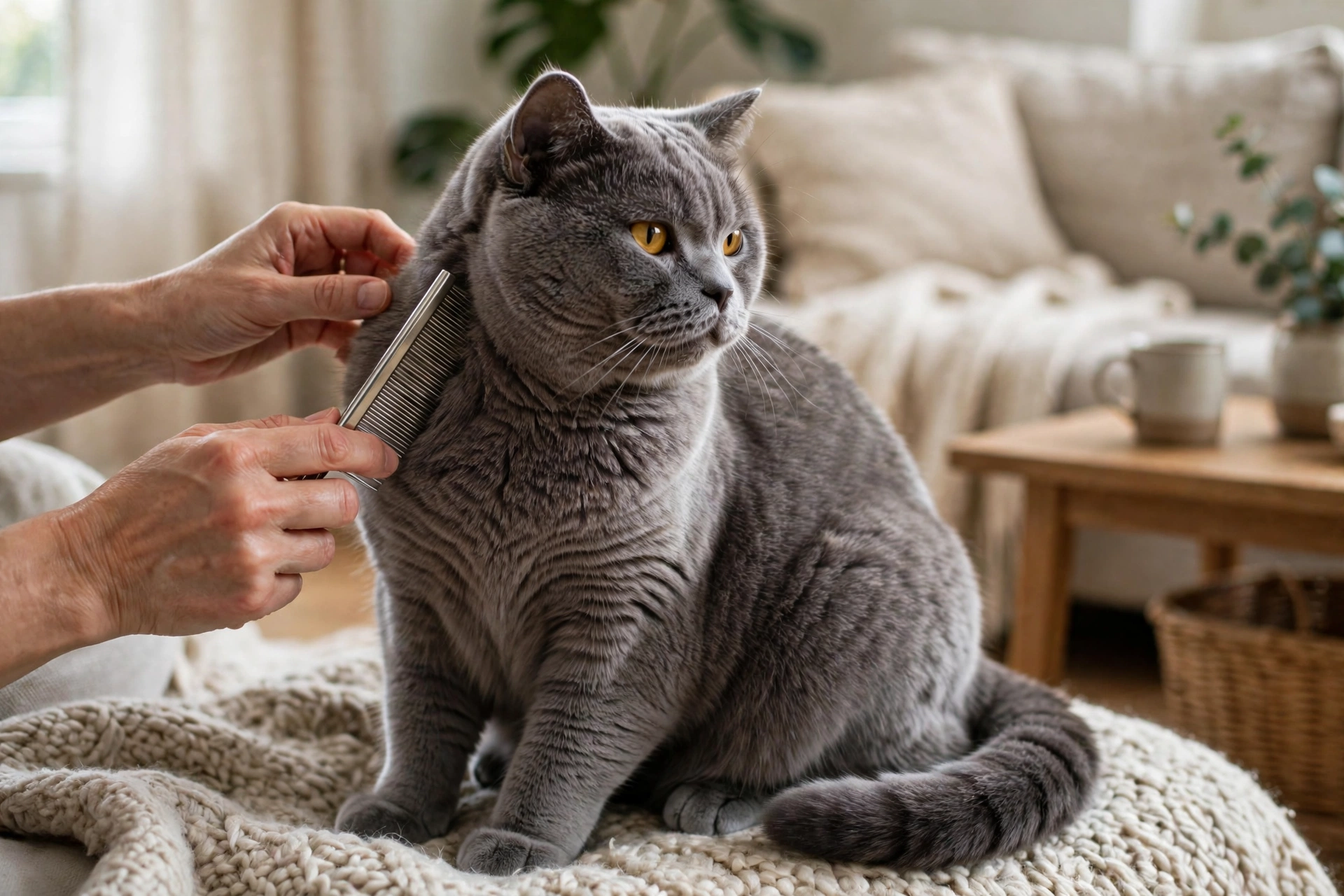
Keeping it is easy. A weekly comb with a steel comb or a rubber curry brush is usually enough to lift the loose undercoat; during the spring and autumn sheds, when the thick undercoat drops in clumps, brush two or three times a week. Baths are rarely needed. Check the ears weekly and clean them only if there is wax. Trim the nails every two to three weeks. Brush the teeth several times a week, since gingivitis is common in the breed.
The Cheshire Cat connection
There is a reason a British Shorthair looks familiar. The breed is often said to have inspired John Tenniel’s famous illustration of the Cheshire Cat in Alice’s Adventures in Wonderland — the round face, the full cheeks, the slow, knowing grin. The CFA’s own breed profile plays on it: “When gracelessness is observed, the British Shorthair is duly embarrassed, quickly recovering with a ‘Cheshire cat smile’.” It is a joke with a point. The British Shorthair’s expression — round, calm, faintly amused — is the breed’s most recognisable feature, and it is the reason the cat photographs so well. A British Shorthair does not need to do anything to look like a character. It just sits there, round and grey, smiling slightly, and the room comes to it.
Daily care: grooming, play, food, and a house built for a heavy cat
A British Shorthair is not a high-maintenance cat, but it is a heavy cat with a dense coat, and the routine is built around that.
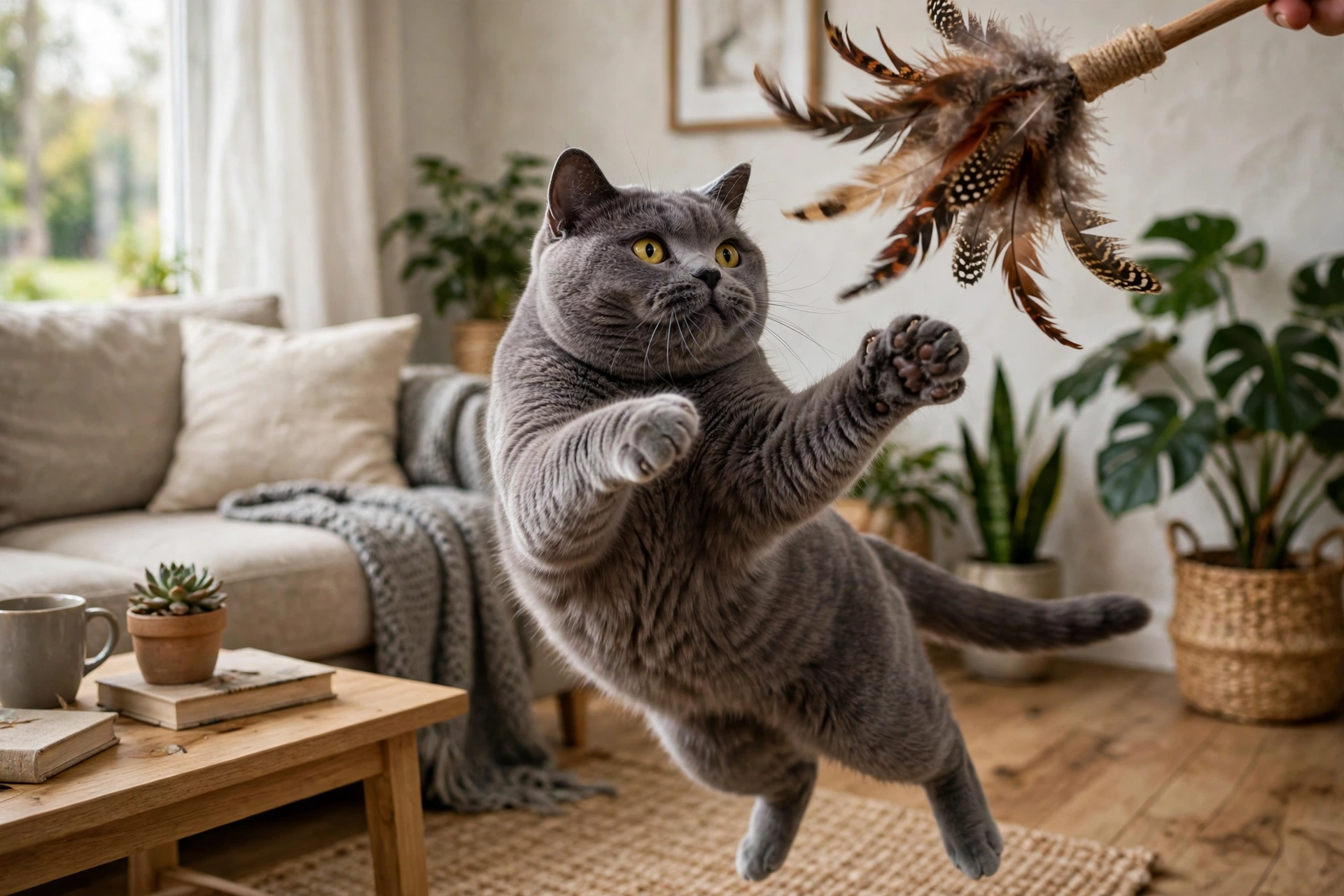
Play is not optional, even for a calm cat. The breed is low-energy and would rather watch than chase, which is exactly why it needs you to provide the exercise. Two short play sessions a day, ten to fifteen minutes each, with a wand toy, a thrown mouse, or a ball to chase, keep a naturally stocky cat from becoming a heavy one. Food puzzles and lick mats help too — PetMD suggests them to relieve mealtime boredom, and they make a cat work a little for its food.
Food is straightforward, and it is where the breed needs the most attention. PetMD advises a food with an AAFCO nutritional adequacy statement, a growth or all-life-stages food for kittens and an age-specific food for adults, and supplements only if a vet recommends them. Because British Shorthairs are relatively low-energy and not particularly athletic, PetMD says to talk to your veterinarian about the ideal portion size — and not to let the cat become obese, as this can lead to many health issues. Measured meals beat free feeding for this breed.
And the house needs to be ready for a heavy cat: a large, sturdy litter box for a cat that can weigh 17 pounds, a strong scratching post, and a cat tree with a wide, heavy base. A British Shorthair is not a high jumper — TICA notes that the breed “definitely look[s] before they leap and do[es] not engage in high-flying acrobatics” — so a low, sturdy perch suits it better than a tall, wobbly one.
Health to discuss with your vet or breeder
None of this is a diagnosis, and none of it is a reason to avoid the breed — it is the conditions the breed is predisposed to, exactly as reported by PetMD and TICA, so you know what to ask your vet or breeder about.
Hypertrophic cardiomyopathy (HCM) is the most common heart disease in cats, and the most important condition to ask about in this breed. PetMD notes that HCM can go undiagnosed in its early stages and is often only diagnosed once congestive heart failure symptoms arise — breathing difficulties and lethargy as the disease progresses. TICA is blunt about it: breeders should screen diligently with an echocardiogram performed by a veterinary cardiologist. Ask a breeder whether HCM runs in the lines and what screening they do; if your cat is a rescue, PetMD notes that at-home DNA kits may detect HCM before symptoms appear.
Dental disease is the other condition PetMD names for the breed. Early signs include bad breath and gingivitis, and PetMD says brushing the teeth and scheduling regular veterinary checkups and dental cleanings are the most effective ways of preventing oral disease. It is a routine matter, not an emergency — but it is one this breed needs more attention on than most.
Polycystic kidney disease (PKD) is reported in some British Shorthair lines, where it entered through Persian outcrosses used to rebuild the breed after the wars; a DNA test exists for it. Ask a breeder whether their lines have been tested.
Weight is the everyday health issue. A British Shorthair’s low energy and stocky build make weight gain easy, and PetMD warns not to let the cat become obese. Keep the cat lean, feed measured portions, and ask your vet about the ideal portion size.
PetMD puts the typical British Shorthair lifespan at 12 to 20 years. Ask the breeder what screening they do, and ask your vet what to watch for.
A short history
The British Shorthair’s history is the history of the British cat itself. The breed descends from the ordinary working cats of Britain, which probably arrived with the Romans in the first century AD and spent centuries hunting mice on farms and in streets. It became a formal pedigree breed in the nineteenth century, when Harrison Weir — the artist often called the “father of the cat fancy” — organised the first cat show at the Crystal Palace in London in 1871. A 14-year-old blue tabby shorthair took Best in Show, and the British Shorthair was on its way.
The two World Wars nearly ended it. Breeding programmes were disrupted, numbers collapsed, and breeders rebuilt the lines with carefully planned crosses to Persians and domestic shorthairs — which partly explains today’s round face and dense coat. The breed reached the United States around the start of the twentieth century, and the Cat Fanciers’ Association granted it championship status in 1980; the first British Shorthair champion was a white female, GC Tikikats Snowmaiden of Denimar. By the end of the 1970s it had full recognition from all the major registries, including TICA. Today it remains the most popular cat breed in the United Kingdom, according to PetMD, and ranks among the most popular pedigree breeds in the United States.
Who a British Shorthair suits — and who it doesn’t
A British Shorthair suits a household that wants a companion, not a performer. It suits a quiet home or an apartment, because the breed is calm indoors and does not need a garden. It suits families with respectful children, because it is patient and tolerant — TICA notes that the breed is tolerant with children and dogs. It suits someone who works during the day, because a British Shorthair does not mind being alone for a few hours and will not punish you for it. And it suits a first-time cat owner, because the breed is easy-going, healthy, and undemanding.
It does not suit everyone. It does not suit someone who wants a lap cat that stays on their knees, or a cat that enjoys being picked up and carried — most British Shorthairs dislike both. It does not suit someone who wants a high-energy playmate or a cat that talks all day; this breed is quiet and would rather watch. It does not suit a household that will not watch the food bowl, because a British Shorthair gains weight easily. And it does not suit a tight budget without planning: PetMD puts the cost of a kitten from a reputable breeder at $500–$4,500, and a large cat eats more and needs bigger equipment.
If that sounds like your household, a British Shorthair is one of the steadiest companions a cat can be. It will not demand much. It will simply be there — round, grey, and calm — on the sofa beside you.
Frequently asked questions
How big do British Shorthair cats get?
Big for a shorthair, and heavy. PetMD puts adult males at up to 17 pounds and females at up to 12 pounds. They are denser than they are tall, and they take three to five years to reach full size.
Do British Shorthair cats like being picked up?
Most do not. They prefer all four paws on the ground, and many dislike being carried — though they enjoy a stroke and a chin rub. They show affection by sitting beside you, not by being held.
Are British Shorthair cats hypoallergenic?
No. PetMD is direct about it: because allergens are found in a cat’s skin and saliva, not just the fur, there is no such thing as a hypoallergenic cat. The British Shorthair’s dense coat also sheds, especially in season.
How often should I groom a British Shorthair?
Once a week with a steel comb or a rubber curry brush is usually enough, and two or three times a week during the spring and autumn sheds, when the thick undercoat drops in clumps. Nails every two to three weeks, ears checked weekly, and teeth brushed several times a week.
How much does a British Shorthair cat cost?
PetMD puts kittens from a reputable breeder at $500–$4,500, depending on location, age, and pedigree. British Shorthairs may also be available from specialty purebred rescues.
The British Shorthair is not the cat for everyone. It is the cat for a quiet house, a steady routine, and an owner who is happy with a companion that sits beside them rather than on them. Round, grey, calm, and a little bit amused — that is the British Shorthair cat personality, and it is enough.