$ USD
$ USD





















The Cat Who Lived in the Background
At first, most people didn’t notice Luna.
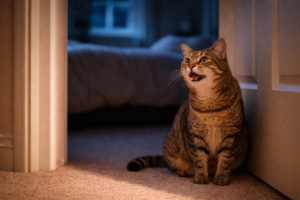
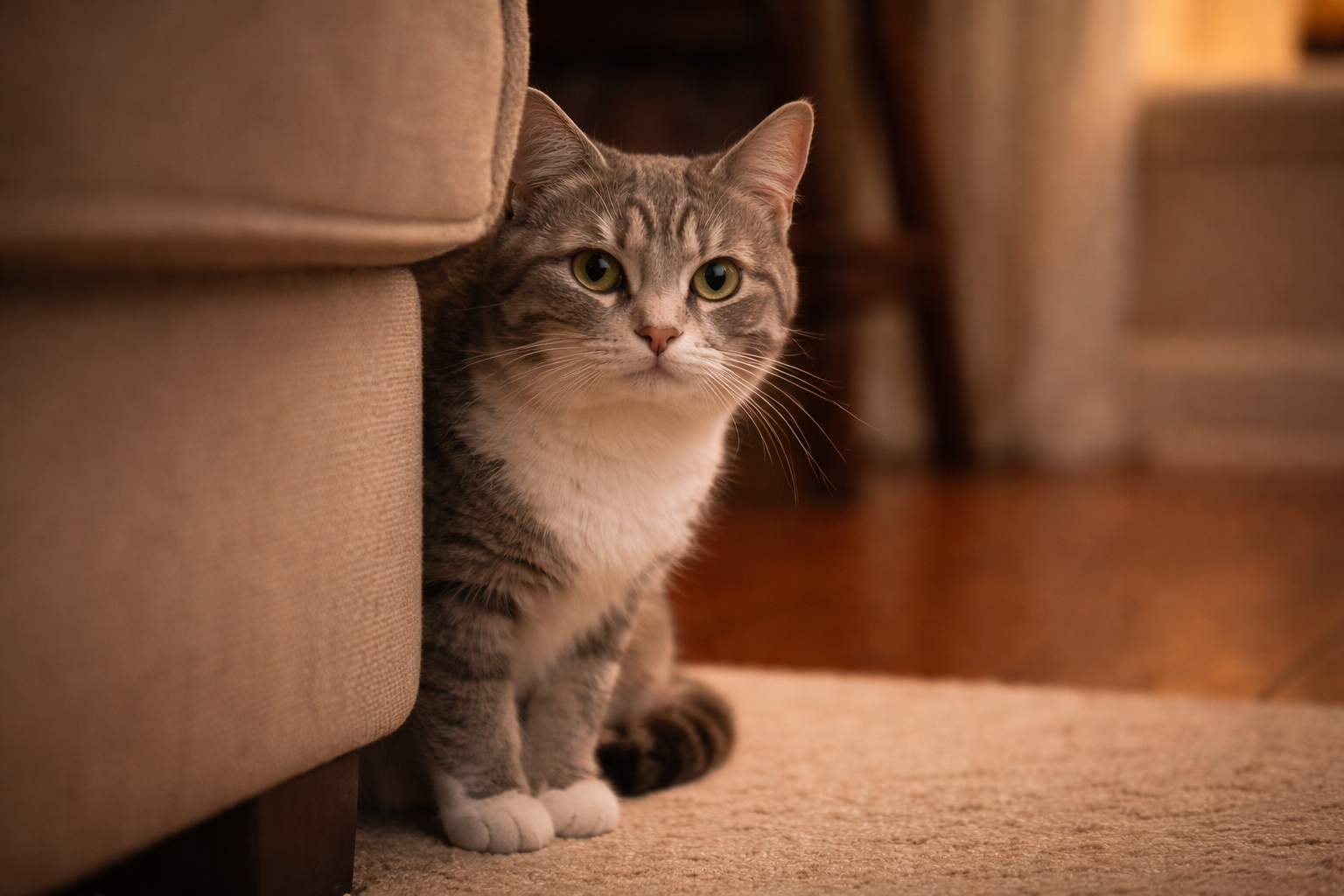
She blended into the background of the room the way shadows do at dusk—present, but easy to miss. While other cats wandered out to greet visitors or stretched lazily across furniture, Luna stayed close to the edges of the world.
Corners felt safer.
Spaces behind chairs felt quieter.
Distance felt necessary.
She wasn’t unfriendly. She didn’t hiss or swat or growl. She simply kept her heart wrapped tightly around itself, as if it had learned long ago that closeness came with risks.
A Past That Taught Her to Be Careful
Luna arrived at the foster home after being found alone near a quiet apartment complex. No collar. No microchip. No signs that anyone was looking for her.
She was clean. Well-fed enough. But wary.
The kind of wary that doesn’t come from one bad day, but from a lifetime of uncertainty.
The foster caregiver—let’s call her Maya—noticed it immediately. Luna accepted food and water without hesitation, but hands made her tense. Sudden movement sent her disappearing behind furniture in seconds.
Maya didn’t chase.
She didn’t coax.
She didn’t rush.
Instead, she made the house predictable.
Food arrived at the same times.
Voices stayed calm.
Doors opened and closed gently.
And Luna watched.
Trust Doesn’t Announce Itself
Trust didn’t show up with fireworks.
It crept in quietly.
At first, Luna stayed hidden whenever Maya entered the room. Then, one day, she remained behind the couch instead of fleeing to another room.
A few days later, she stayed visible when Maya sat down.
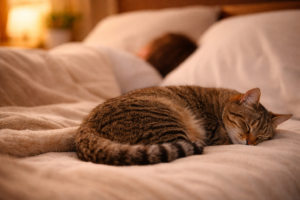
Eventually, she slept in the same room.
Still distant.
Still cautious.
But closer.
Cats like Luna don’t leap toward affection. They test it from a distance, watching how the world behaves when they don’t disappear.
🌙 The Night No One Was Watching
The moment everything changed didn’t happen during the day.
It happened at night.
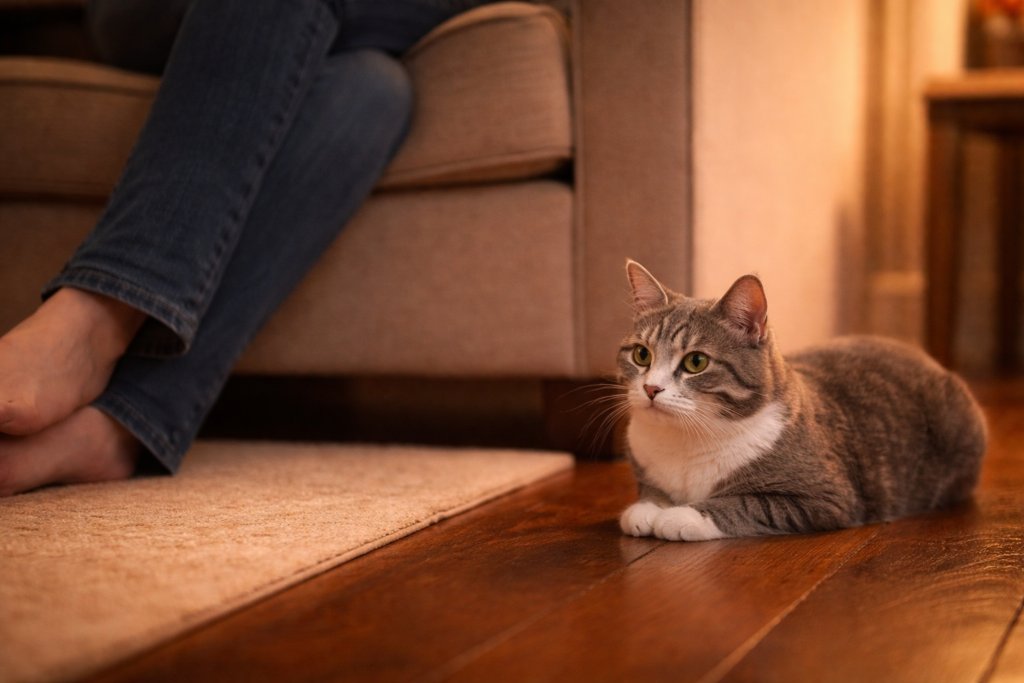
Maya had fallen asleep on the couch, the television murmuring softly in the background. The lights were dim. The house felt different—slower, quieter, less demanding.
Luna stepped out of her hiding spot.
Slowly.
Carefully.
She approached the couch, pausing every few steps, ready to retreat if needed. Maya didn’t move. Her breathing stayed steady.
Luna sniffed the air.
Then Maya’s hand.
She froze.
Nothing happened.
After a long pause, Luna leaned forward just enough for her fur to brush against Maya’s fingers.
It was barely noticeable.
But it was intentional.
And it was brave.
🧡 When Love Decides the Timing
Luna didn’t stay long that first night. She pulled away after a few minutes and returned to her safe place.
But something inside her had shifted.
The next evening, she came closer again.
Then she stayed longer.
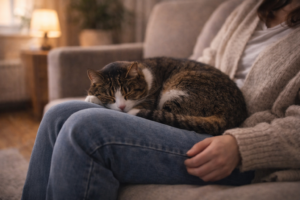
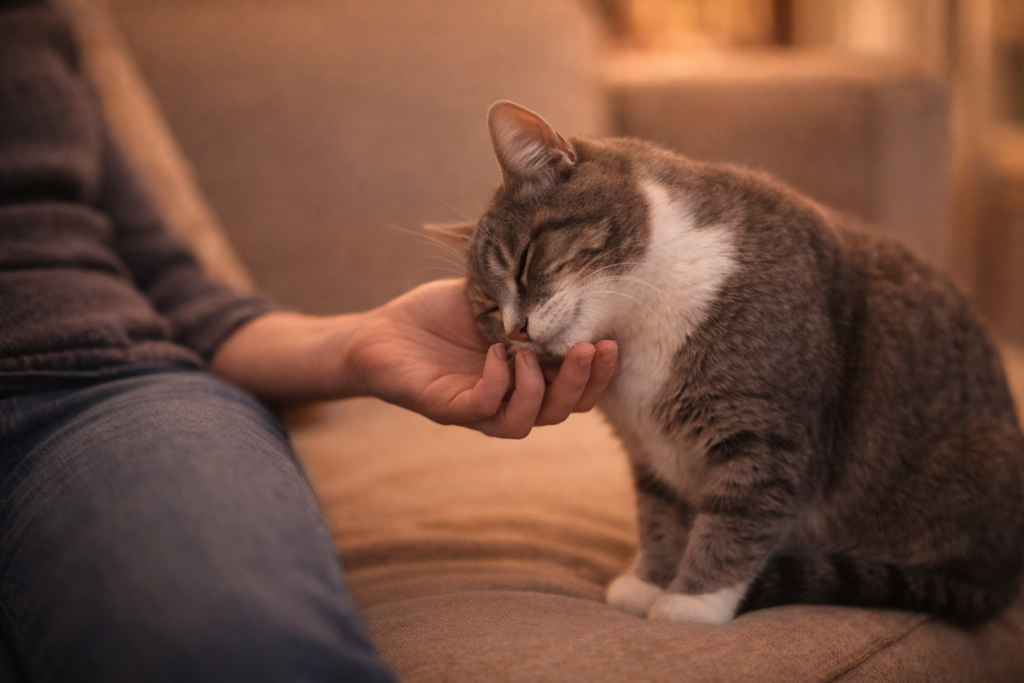
Soon, Luna began sitting beside Maya instead of across the room. She allowed light touches. Gentle strokes. Quiet moments where nothing was expected of her.
Her purrs came softly at first—like she wasn’t sure she was allowed to make them.
🌱 A Cat Who Chose to Be Seen
Weeks passed, and Luna slowly expanded her world.
She explored new rooms.
She stretched out in open spaces.
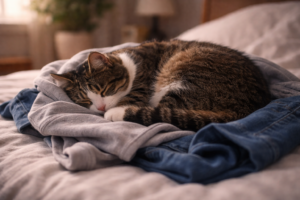
She claimed spots near windows and sunny patches on the floor.
The cat who once lived in corners now slept openly on the couch.
Not because she was pushed.
Not because she was trained.
But because she felt safe enough to choose it.
🧠 What Shy Cats Teach Us
Cats like Luna teach patience in a way nothing else can.
They remind us that trust isn’t earned by attention—it’s earned by consistency.
That love doesn’t need to be loud to be real.
That some hearts open quietly, when no one is watching.
Luna didn’t change overnight. She didn’t transform into a clingy lap cat.
She simply allowed herself to be close.
And for a cat like her, that meant everything.
🌟 Conclusion: Love That Arrives Gently
Luna never disliked people.
She just needed proof that closeness didn’t come with consequences.
And when she finally stepped forward—on her own terms—she showed that even the quietest hearts carry immense love.
Sometimes, the most meaningful moments aren’t dramatic.
Sometimes, they sound like a soft purr in the dark.
❓ FAQs
Why are some cats extremely shy?
Many shy cats have experienced instability, neglect, or lack of early socialization, making them cautious around people.
Can a shy cat ever become affectionate?
Yes. With patience, calm routines, and respect for boundaries, many shy cats become deeply loving companions.
Should you force interaction with a timid cat?
No. Forced interaction often increases fear. Letting the cat set the pace builds trust naturally.
How long does it take for a shy cat to adjust?
It varies. Some cats take weeks, others months. Progress often happens quietly and unexpectedly.
What’s the best way to help a shy cat feel safe?
Consistency, gentle behavior, predictable routines, and allowing the cat control over interactions.