The Silent Conversations Happening Right Under Your Nose
Every cat lover knows that sound — the meow that means “feed me,” or the chirp that says “look at this bird outside!”
We think we’ve mastered the language of cats… but here’s the twist: cats rarely meow to each other.
Behind every purr, tail flick, and slow blink lies a silent code — a deep, emotional form of communication that humans barely notice. From invisible scent messages to flickering whiskers and posture cues, cats have evolved their own rich social language that’s both mysterious and heartwarming.
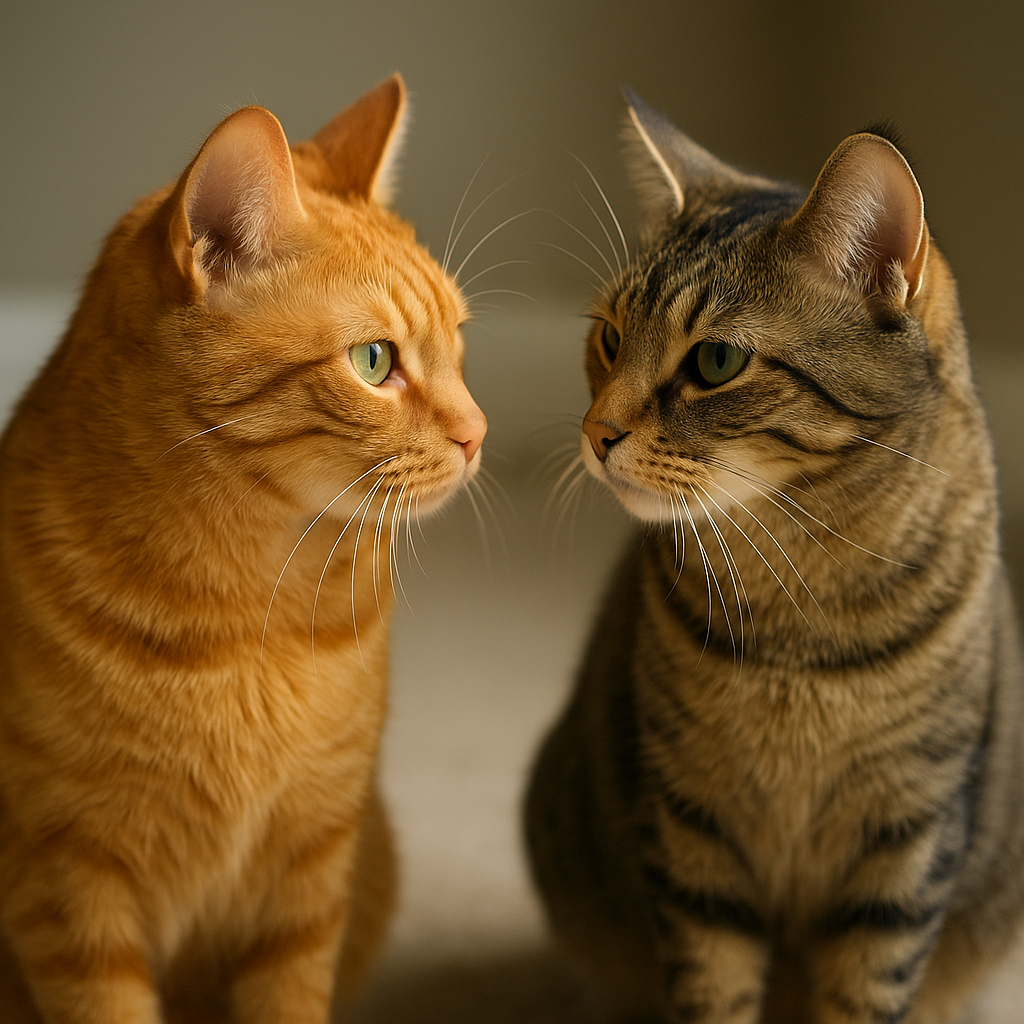
The Power of Scent — The Invisible Messages That Rule the Cat World
Before cats speak, they scent.
To a cat, the world isn’t seen or heard first — it’s smelled.
Cats have scent glands scattered across their bodies — near their mouth, cheeks, forehead, paws, tail base, and even between their toes. When they rub against furniture, walls, or even you, they’re not just being affectionate — they’re leaving a personal signature.
Think of it as a feline social network.
Each rub or head bump posts a status update like:
- “I was here.”
- “This spot belongs to me.”
- “You’re part of my family.”
When a new cat enters a space, they instantly “read” the area by sniffing it — decoding who lives there, who passed by, and whether the environment feels safe.
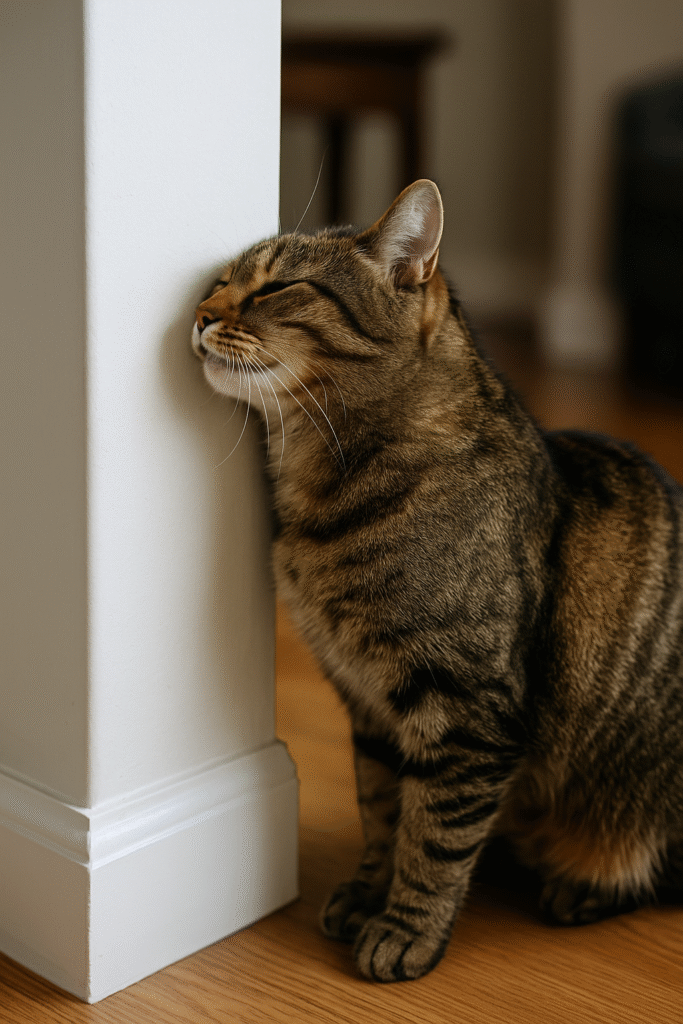
The Flehmen Response — When Cats “Taste” Smells
Ever seen your cat pause with a weird open-mouth face? That’s called the Flehmen Response. It’s a half-smelling, half-tasting process that lets them analyze pheromones — chemical signals carrying powerful emotional information.
Through pheromones, cats can identify:
- Another cat’s mood (calm, stressed, or ready to mate)
- Territorial boundaries
- Health and social status
This hidden olfactory world is why cats instantly recognize whether a stranger cat is friend or foe — before a single sound is made.
Body Language — The True Cat Conversation
While humans rely on words, cats use movements.
Every flick of an ear or curve of a tail can mean something entirely different.
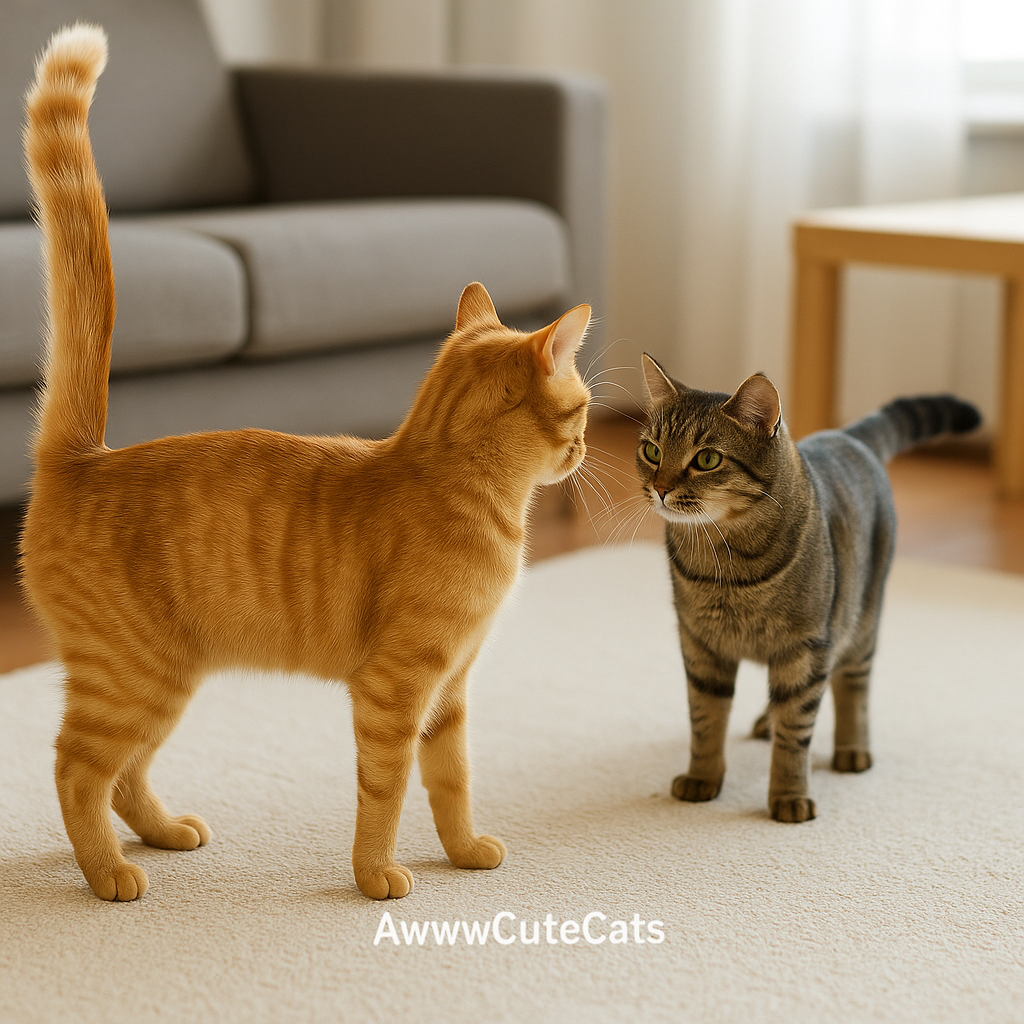
Tail Talk: The Mood Barometer
- Tail up & softly curved: Friendly and confident.
- Tail puffed up: Fear or defense.
- Tail low or tucked: Anxiety or submission.
- Twitching tail tip: Mild irritation or excitement.
Ear Signals: Instant Emotion Markers
- Ears forward: Curious or relaxed.
- Ears sideways (“airplane mode”): Unsure or cautious.
- Ears flat back: Warning — “back off.”
Cats often combine these cues to express complex feelings. For instance, a cat may approach with an upright tail but slightly turned ears — signaling curiosity mixed with caution.
The “Butt Greeting” — A Warm Hello in Cat Language
It might make humans blush, but among cats, showing the rear is a polite greeting. It’s like saying, “I trust you enough to turn my back.”
Kittens learn this gesture from their mothers, and adult cats keep using it throughout life.
When two cats meet, they may sniff each other’s faces first — but the true friendship check comes from the other end!
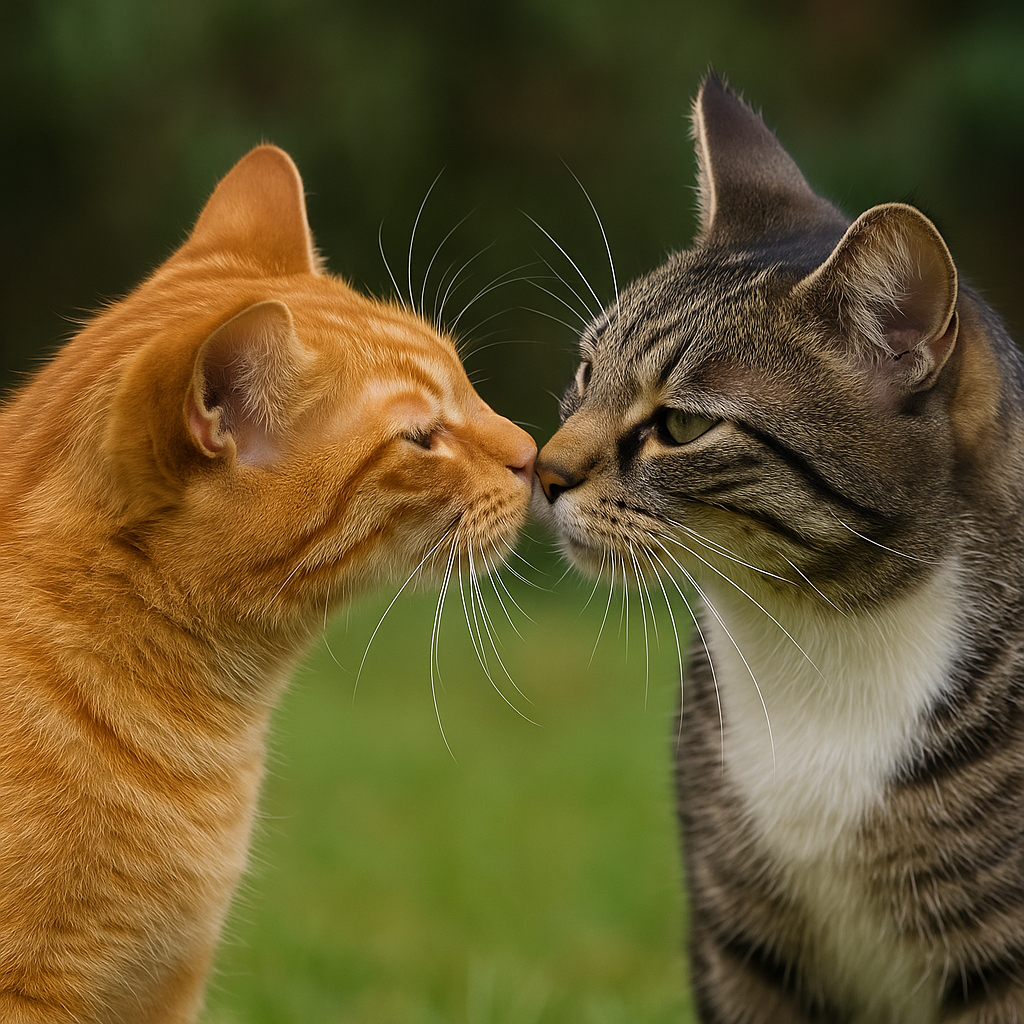
This behavior helps cats exchange scent data and establish mutual comfort. It’s weird to us — but to them, it’s a warm “hello.”
The Sounds Cats Use — Growls, Yowls, and Hisses
Contrary to what many believe, adult cats rarely meow to each other.
That vocalization is reserved mainly for communicating with humans — because they’ve learned that we respond to it.
Between themselves, cats rely on other sounds:
| Sound | Meaning | Common Situation |
|---|---|---|
| Growl | “Stay back” or “I’m warning you.” | Territorial disputes or fear. |
| Yowl | Distress, mating call, or serious protest. | Cats in heat or feeling anxious. |
| Hiss | Fear, anger, or self-defense. | When startled or cornered. |
| Chirps/Trills | Friendly greeting or attention signal. | Between mother cats and kittens. |
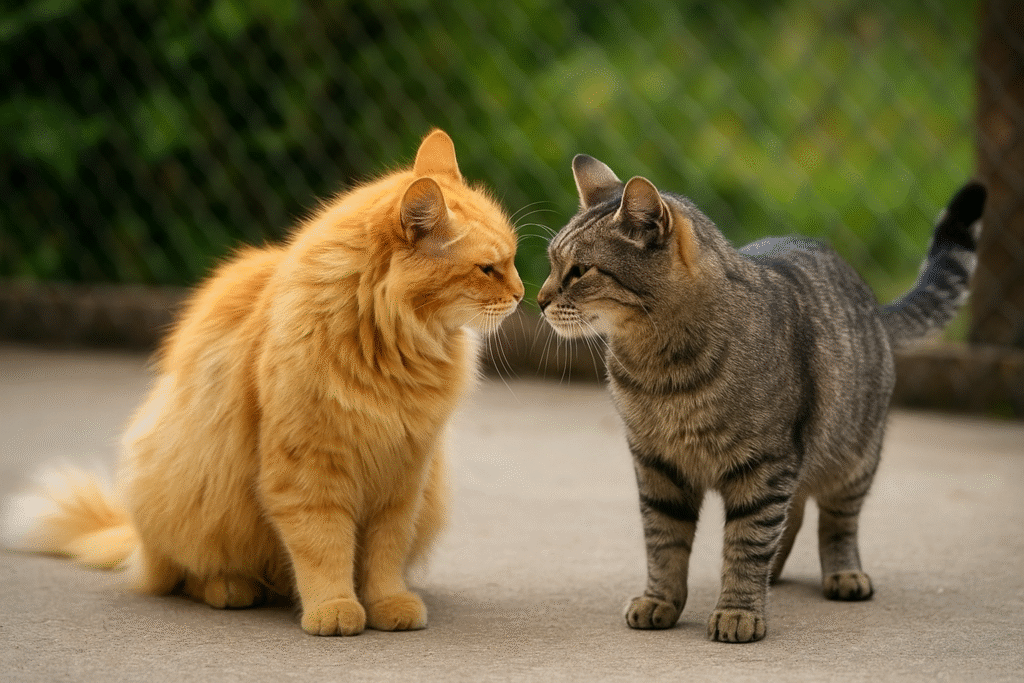
Cats are non-confrontational by nature. A hiss or growl is almost always a request for space — not an invitation to fight. When they appear aggressive, they’re often just scared or overwhelmed.
The Role of Eye Contact — The Power of the Slow Blink
The eyes of a cat are like open diaries — filled with emotion.
When a cat slowly blinks at another cat, it’s the ultimate gesture of trust and peace.
Researchers call this the “cat kiss.”
It means, “I see you, I’m relaxed, and I feel safe with you.”
You’ll often see two bonded cats exchanging slow blinks from across the room — a quiet way of saying everything’s okay.
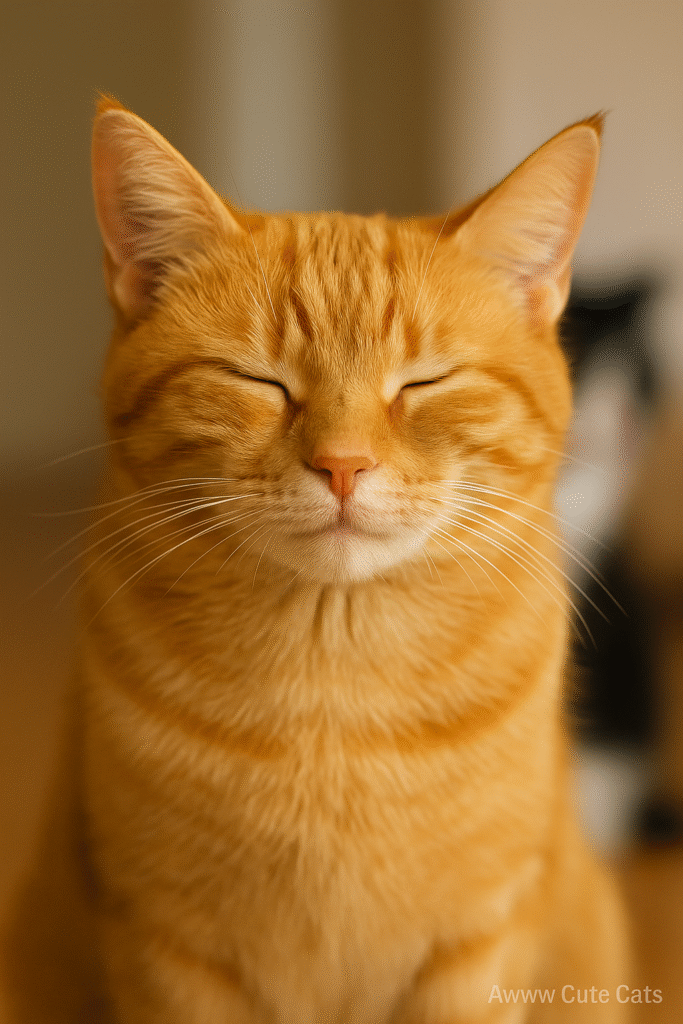
If your cat ever gives you that same blink, return it — congratulations, you’re fluent in cat love language.
The Silent Hierarchy — Respect and Territory
Cat communication isn’t just about friendliness — it’s about survival and boundaries.
Every group of cats quietly follows a social order based on territory, confidence, and familiarity.
A dominant cat may claim high perches or favored spots, while a submissive cat respects those spaces.
There’s no loud debate — just subtle posture changes, slow walks, and avoidance gestures that keep peace.
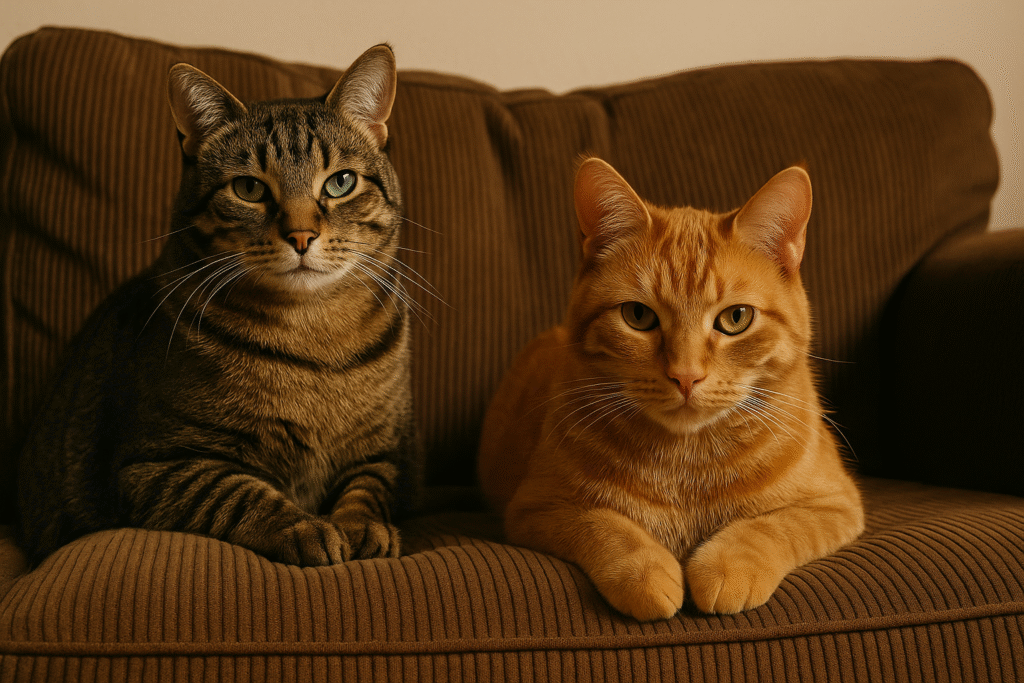
This mutual respect prevents unnecessary conflict and helps multi-cat households find balance — as long as humans provide enough space, litter boxes, and affection for all.
Emotional Communication — Comfort, Affection, and Connection
Cats may be independent, but emotionally, they’re surprisingly expressive.
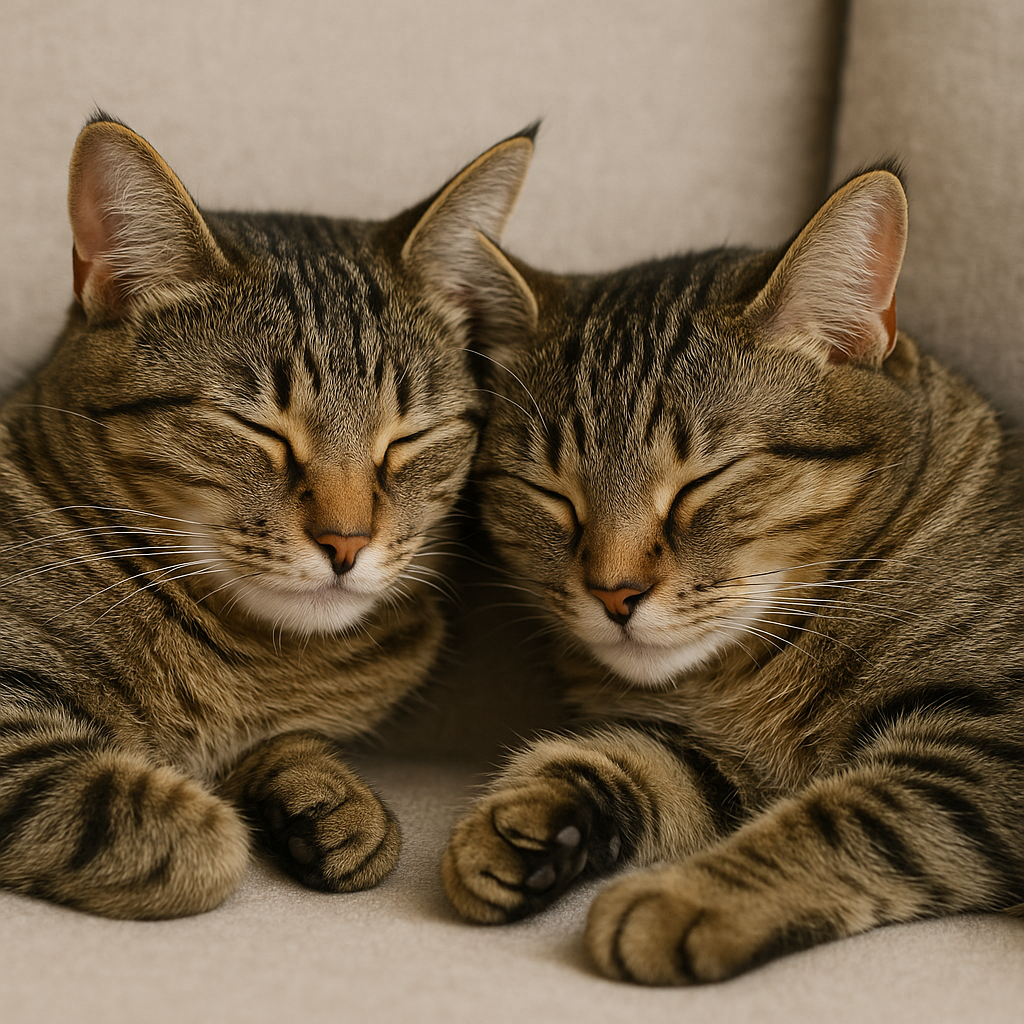
They comfort one another through gentle grooming (called allogrooming) and sleep close for warmth and safety.
When one cat grooms another, it’s not just cleaning — it’s emotional bonding.
It releases endorphins and strengthens trust.
So, when your cats curl up together or lick each other’s ears, know that they’re speaking the most peaceful language of all: affection.
How Humans Can “Talk Back”
You can actually communicate back — without saying a word.
Try these:
- Return a slow blink to show love.
- Keep a calm posture when meeting new cats.
- Avoid direct, prolonged eye contact (it can seem aggressive).
- Let cats initiate scent exchange by rubbing against you.
The more you mirror their behavior respectfully, the more they’ll trust you as one of their own.
Conclusion — A Language Beyond Words
Cats don’t need “meow” to understand each other.
They speak a richer, deeper language — written in scent trails, gentle gazes, and tail poetry.
Learning to read their cues opens a doorway into their secret world — one where silence says everything, and love is expressed through the smallest gestures.
FAQ Section
Q1: Do cats meow to each other?
No. Adult cats mostly meow to humans. Between themselves, they rely on scent, body language, and subtle vocal sounds like yowls or trills.
Q2: Why does my cat sniff another cat’s rear?
That’s a polite feline greeting. Cats exchange scent information through glands near the tail — it’s like shaking hands.
Q3: What does it mean when cats blink slowly?
It’s a gesture of trust and affection. Slow blinking shows emotional comfort and non-threat.
Q4: Why do cats hiss at each other suddenly?
Usually because of fear, stress, or territory disputes. It’s a defensive signal, not necessarily aggression.
Q5: How can I tell if two cats like each other?
Look for calm body posture, grooming each other, or resting together. Those behaviors show peace and trust.